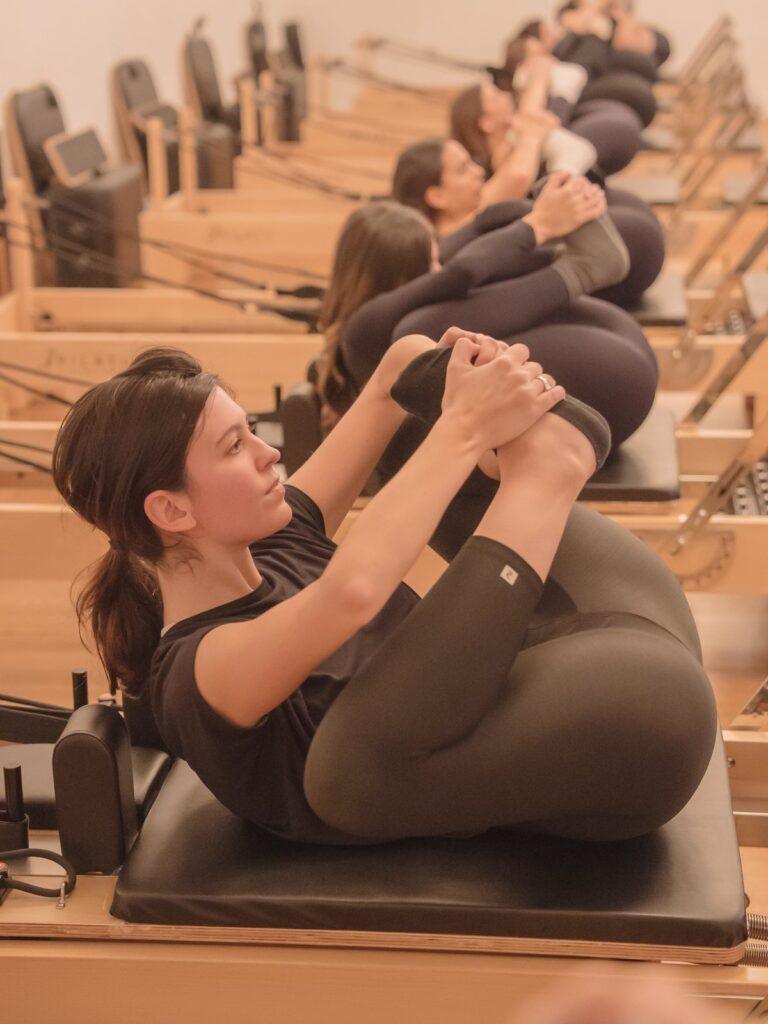
They are two of the trendiest disciplines of recent years. They share space in the imagination of modern fitness, but they represent opposite philosophies of how the human body should move. CrossFit bets on maximum intensity, competition and variety. Reformer Pilates works from control, precision and mindful movement.
If you are torn between Pilates or CrossFit, this comparison gives you the information you need to decide without us selling you anything. We analyse the real differences in philosophy, intensity, injury risk, results and the type of person each discipline suits.
What CrossFit Is
CrossFit is a fitness programme created in 2000 by Greg Glassman in Santa Cruz, California. Its premise is high-intensity functional training: basic human movements (running, jumping, lifting, pushing, pulling) performed at the highest possible speed.
Each session is organised around the WOD (Workout of the Day), a different workout every day that combines weightlifting, gymnastics and cardiovascular work. WODs are done against the clock or for a fixed number of repetitions, which introduces a competitive element even within the same class.
CrossFit boxes (as their centres are called) usually have between 10 and 25 people per class. The atmosphere is one of intense community, collective motivation and tracking of personal records.
What Reformer Pilates Is
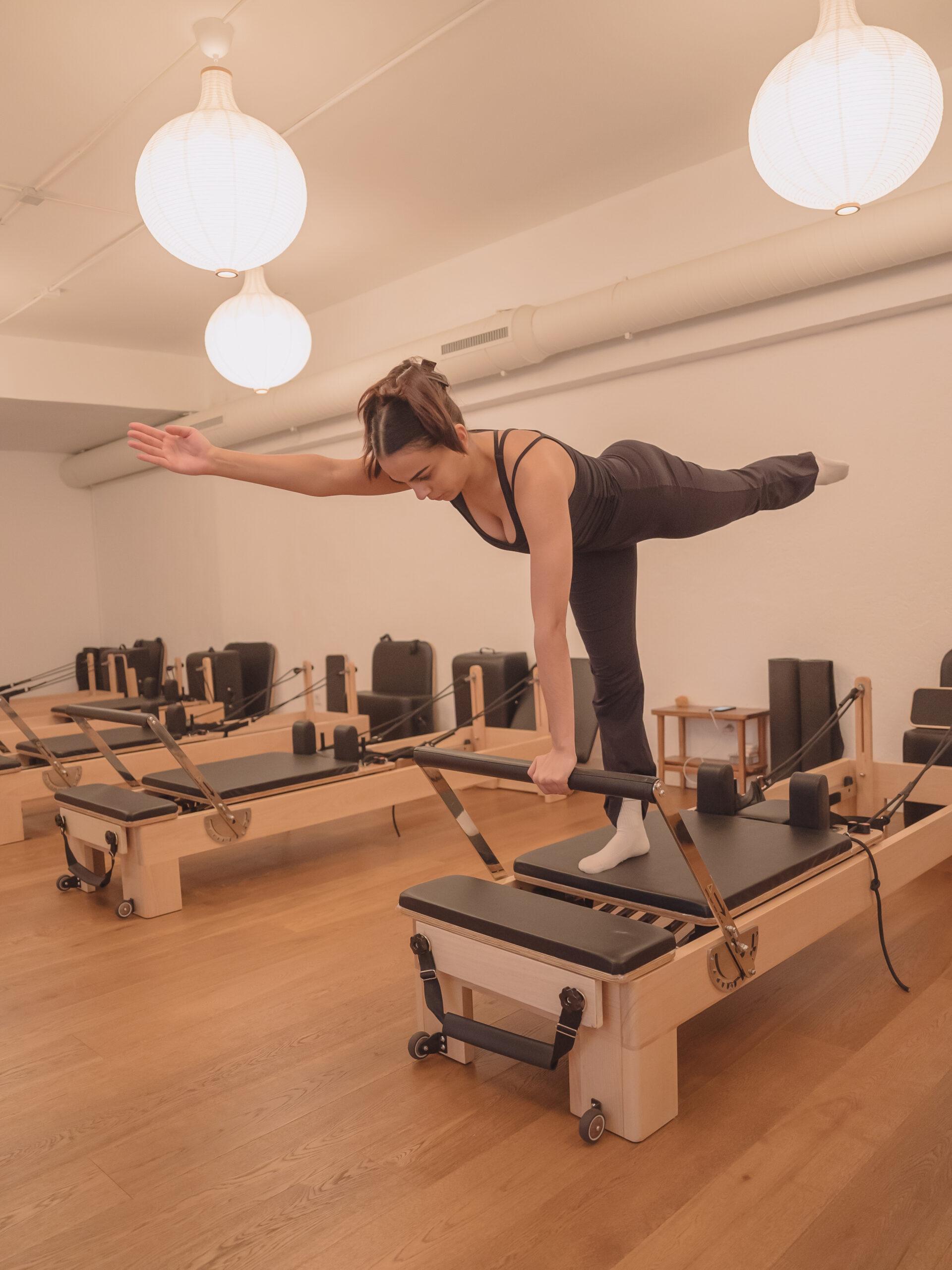
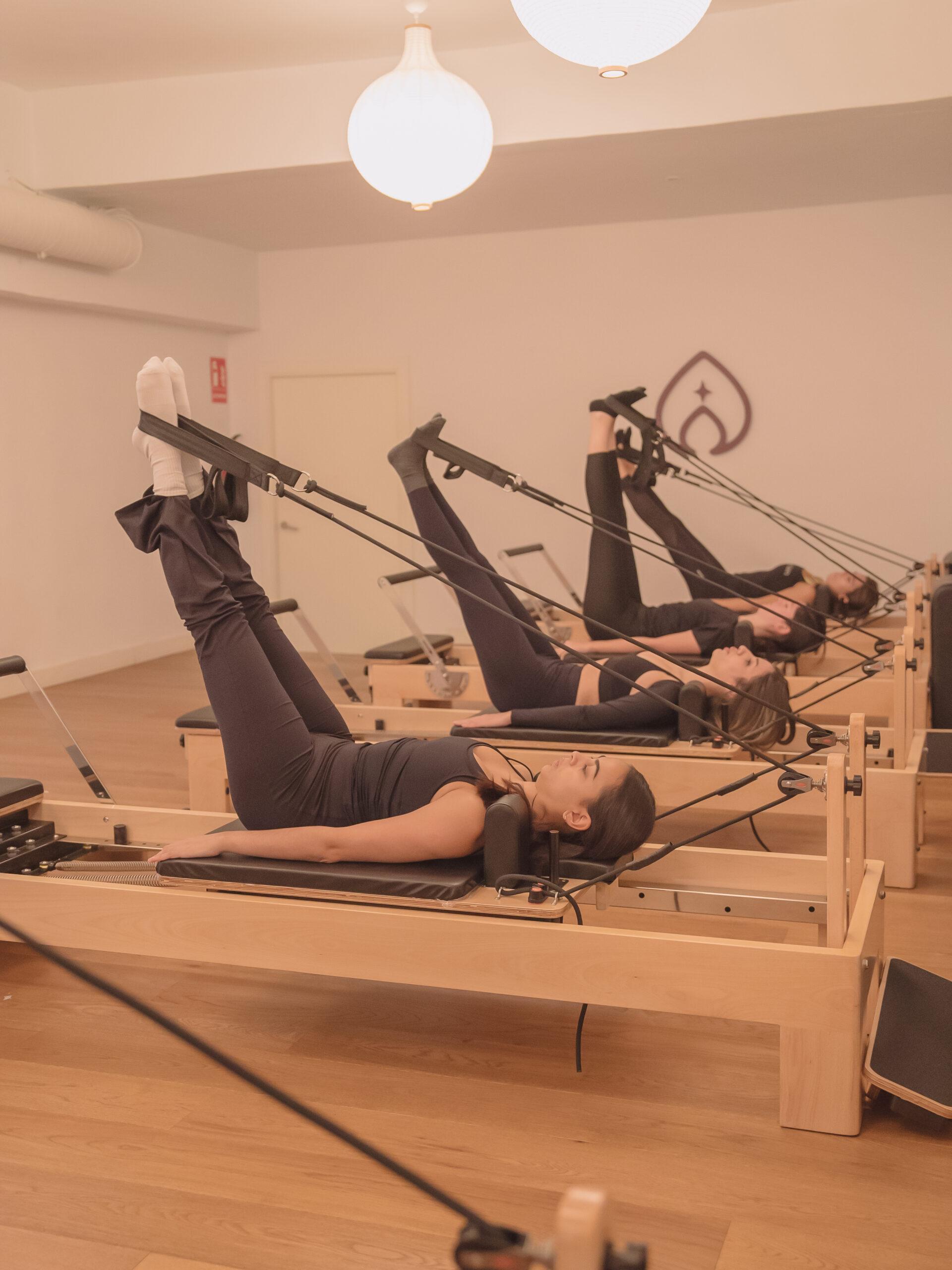
Reformer Pilates is a form of the method created by Joseph Pilates in the first half of the 20th century. It is practised on a machine with a sliding carriage, springs of variable tension, a footbar and straps. Resistance is adjusted by changing the springs, which allows each exercise to be adapted to each person’s body and stage.
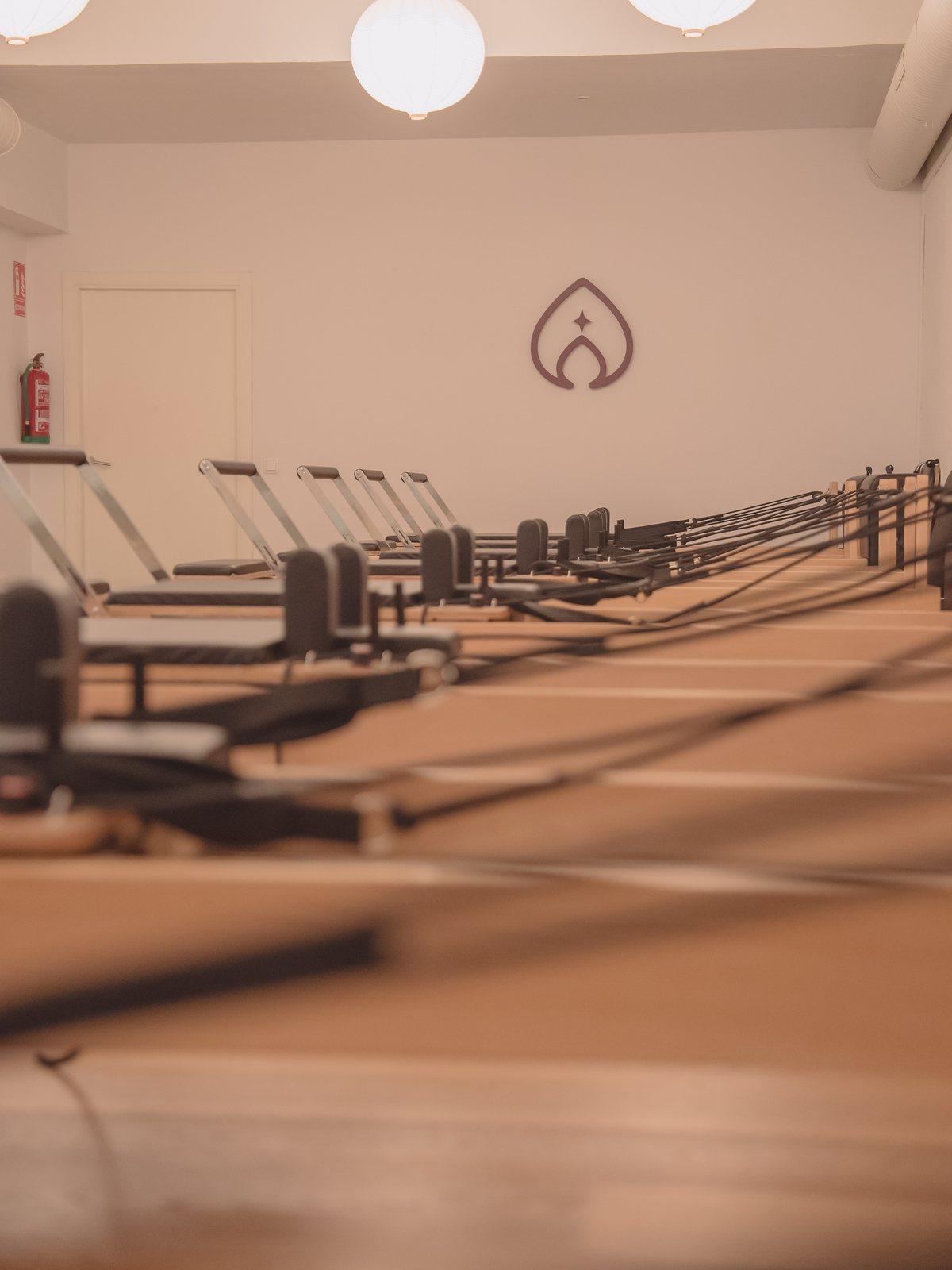
The central principle is not intensity but control: every movement is performed with precision, with awareness of posture and with the deep muscles engaged. Classes at Pinar Pilates, in the heart of Madrid’s Salamanca district, have a maximum of 8 people so the instructor can observe and correct each student in real time.
If you want to go deeper into the benefits of Reformer Pilates, we have an article dedicated to it.
Key Differences: Philosophy and Intensity
The fundamental difference between Reformer Pilates and CrossFit is not technical: it is philosophical.
CrossFit starts from the premise that maximum effort produces the best results. Intensity is the engine of physical change. Exercises are done as fast as possible within a set time. Discomfort is part of the process. Community and competition are motivational tools.
Pilates starts from the premise that conscious control produces the best results. The quality of each repetition matters more than quantity or speed. The goal is not to reach the limit of exhaustion, but to train so precisely and efficiently that the body works better on and off the mat.
This difference in philosophy translates into concrete differences in format, equipment, user profile and results.
Comparison Table: Reformer Pilates vs CrossFit
| Criterion | Reformer Pilates | CrossFit |
|---|---|---|
| Impact level | Low | High |
| Injury rate | Low | High (one of the disciplines with the highest incidence) |
| Flexibility gains | High | Low-moderate |
| Strength gains | Moderate (functional strength) | High (maximal strength and power) |
| Cardiovascular capacity | Moderate | Very high |
| Group size | Small (max. 8 at Pinar Pilates) | Medium-large (10-25 people) |
| Personalisation | High (springs, positions, level) | Low (same WOD for everyone, scaled) |
| Learning curve | Moderate | Steep (complex Olympic technique) |
| Estimated price (Madrid) | 30-250 EUR/month | 80-150 EUR/month |
| Accessibility by age | All ages, including older people | Mainly young adults |
| Risk during pregnancy | Adaptable and safe | Not recommended at high intensities |
| Equipment required | Reformer (provided by the studio) | Barbells, plates, rings, boxes |
Injury Risk: Data and Studies
This is one of the most relevant differences between Pilates and CrossFit, and also one of the least openly discussed.
A study published in the Journal of Strength and Conditioning Research (Hak et al., 2013) found that 73.5% of CrossFit practitioners had suffered an injury during their training. The most affected areas were the shoulder (25%), the lower back (19%) and the knee (16%). Most injuries were associated with accumulated fatigue, poor technical execution under load and excessive training volume.
A later study published in the Orthopaedic Journal of Sports Medicine (Tafuri et al., 2016) confirmed an injury rate of 2.3 per 1,000 hours of CrossFit training, comparable to moderate-contact sports.
By contrast, Pilates has one of the lowest injury rates among exercise disciplines. The absence of high axial load, the controlled speed and the individual supervision drastically reduce the risk. The available studies, such as one published in the Journal of Bodywork and Movement Therapies, indicate that injuries in Pilates are rare and usually mild (minor muscle strains) when they do occur.
This does not mean CrossFit is a dangerous discipline per se. It means that the combination of high intensity, technically demanding movements and internal competition raises the risk of injury when progression is not well managed.
Who CrossFit Is Best For
CrossFit has real advantages for specific profiles. It is not a discipline for everyone, but for those it suits, it can be very effective.
People seeking high-intensity athletic performance. CrossFit improves power, anaerobic endurance and explosive strength. For someone whose goal is to perform in competition or continually beat their personal records, the CrossFit environment is stimulating.
Those who need the motivation of a community. The atmosphere of CrossFit boxes is one of their strengths. The group culture, shared WODs and collective tracking of results build adherence in people who get bored training alone.
Young adults with no pre-existing conditions. For people aged 20 to 35 with a good physical base, no active injuries and a willingness to learn the technique of the Olympic lifts, CrossFit offers fast, measurable results in body composition and cardiorespiratory capacity.
The goal of maximum calorie burn. CrossFit WODs generate high calorie expenditure during and after the session (the EPOC effect). For someone who wants to lose weight with high intensity and has no physical restrictions, it is a valid option.
Who Reformer Pilates Is Best For
Reformer Pilates has a broader user profile than CrossFit precisely because it can adapt to almost any body and any stage of life.
People recovering from injury. Reformer Pilates was born as a rehabilitation tool. The springs can assist the movement or add progressive resistance, which makes it ideal for recovering mobility and strength after an injury. Our guide on Pilates and injury rehabilitation goes deeper into this point.
People with joint or back problems. The absence of impact and the controlled axial load protect the joints. For anyone with chronic knee, hip, neck or lower back pain, the Reformer allows you to keep training without aggravating the condition.
Postural correction. If you spend many hours sitting in front of a screen and accumulate tension in the neck, trapezius and lower back, Reformer Pilates works directly on the muscle imbalances that posture creates.
Pregnant and postnatal women. Prenatal and postnatal Pilates is endorsed by physiotherapists and gynaecologists. It strengthens the pelvic floor, keeps the muscles active during pregnancy and helps with postnatal recovery.
The over-50s. The low impact intensity, the adaptability and the balance and coordination work make it one of the best options for staying active as the years go by without overloading the musculoskeletal system.
Athletes who want to complement their training. Runners, for example, accumulate muscle imbalances that Reformer Pilates corrects. We have a specific article on Reformer Pilates for runners that explains why more and more athletes are adding it to their routine.
Comparison with the Conventional Gym
If you are weighing up all the options available, you may also be interested in our comparison of Reformer Pilates vs the gym, where we analyse the differences from conventional weight training in the same level of detail.
You Can Combine Reformer Pilates and CrossFit
The question rarely asked in these debates is whether you need to choose at all. The short answer is no.
Reformer Pilates and CrossFit are not incompatible: they are complementary. CrossFit practitioners who add Reformer sessions report improvements in areas the box does not work on directly:
- Joint mobility. The Olympic movements of CrossFit (clean, snatch, squat) require hip, ankle and shoulder mobility that the Reformer specifically develops.
- Deep core activation. CrossFit works core strength globally. Pilates works the deep stabilising muscles (transversus abdominis, multifidus) that protect the spine under load.
- Active recovery. A Reformer Pilates session the day after an intense WOD activates circulation, works on range of motion and speeds up recovery without generating additional fatigue.
- Injury prevention. Many of the most common injuries in CrossFit (shoulder, lower back, knee) are related to muscle imbalances the Reformer corrects.
A reasonable combination for someone who does CrossFit three times a week would be to add one or two Reformer Pilates sessions as complementary work. Not as a substitute but as a supporting tool.
If you would like to know what a first session at Pinar Pilates is like before committing, read our guide to the first Reformer Pilates class in Madrid.
Frequently Asked Questions
Is CrossFit suitable for complete beginners?
Technically, yes, because boxes scale the exercises to each person’s level. In practice, the learning curve of the Olympic movements is demanding and the risk of injury is higher when technique is not consolidated. For someone starting from scratch, a prior period of general conditioning (where Reformer Pilates fits well) significantly reduces that risk.
Can I lose weight with Reformer Pilates?
Reformer Pilates is not a discipline designed for massive calorie burn, but it contributes to weight loss through improved body composition (more muscle mass, less fat), postural improvement that encourages everyday movement and the reduction of stress-related cortisol, which has a direct effect on abdominal fat storage. For optimal weight-loss results, combining Pilates with moderate cardiovascular exercise is more effective than either discipline on its own.
Which discipline is better for back pain?
Reformer Pilates. There is no real debate here. CrossFit with active back pain can aggravate the injury, especially in exercises such as the deadlift or loaded squats. Reformer Pilates, with an instructor who knows your history, can specifically work the muscles that stabilise the spine without generating additional stress on the affected area.
At what age is it best to start each discipline?
CrossFit is designed mainly for adults in good physical condition, and its practice is most common in the 20-to-40 age range. Reformer Pilates has no real age limit: at Pinar Pilates we have students from 20 to 70 and beyond. The adaptability of the springs and the possibility of modifying every exercise make it valid at any stage of life.
How much does CrossFit cost compared with Reformer Pilates in Madrid?
CrossFit boxes in Madrid charge between 80 and 150 EUR a month for unlimited access. At Pinar Pilates, the first class costs only 15 EUR (50% off the usual price of 30 EUR), and monthly packs range from 100 EUR (4 classes) to 250 EUR/month for unlimited classes. The difference is that at Pinar Pilates classes have a maximum of 8 people, which guarantees individual attention that is not possible in a CrossFit box with 15 or 20 people.
Pinar Pilates: Reformer Pilates in the Salamanca District
Pinar Pilates is at Calle del Pinar 8, 28006 Madrid, in the Salamanca district. We offer more than 40 classes a week with a maximum of 8 students per session to guarantee that each person receives the attention they need.
We have more than 490 Google reviews (average 4.9 out of 5). Our instructors work with students of every profile: from athletes who want to improve their performance to older people who want to stay active, as well as pregnant women, people recovering from injuries and professionals with postural pain from office work.
If you have any doubts about whether Reformer Pilates is the right option for you, call +34 611 994 729 and we will guide you with no obligation.
Book your first class with 50% off
Pinar Pilates · Salamanca district, Madrid
Your first reformer class, €15
Groups of 8 people maximum, specialist instructors and more than 40 classes a week. Your first class is half price.
Book my first classCalle del Pinar 8, Madrid · Questions? Message us on WhatsApp