When you are looking for an exercise method that works, the question soon comes up: Pilates or functional training. Both have become very popular in recent years and both have convinced advocates. But they are not the same, they do not pursue the same goals and they are not designed for the same kind of person.
This guide analyses the two disciplines objectively to help you make the right decision, or to understand why combining them may be the smartest answer.
What functional training is
Functional training is an exercise approach that aims to improve the body’s ability to perform everyday and athletic movements more efficiently. It does not focus on isolated muscles but on complete movement patterns: pushing, pulling, twisting, squatting, carrying, jumping.
It is done with a wide variety of equipment:
- Free weights: dumbbells, barbells, kettlebells
- TRX and suspension systems: train stability and body weight
- Multi-joint movements: squats, deadlifts, lunges, rows
- Bodyweight exercises: burpees, push-ups, jumps
- Assorted accessories: medicine balls, resistance bands, plyo boxes
The main goal is to transfer the physical improvement to real performance, whether in sport or in daily life. Intensity is usually high, the pace is fast and the variety of exercises is wide. There is no single way to structure a functional session, which also means the quality depends a lot on who is leading it.
What Reformer Pilates is
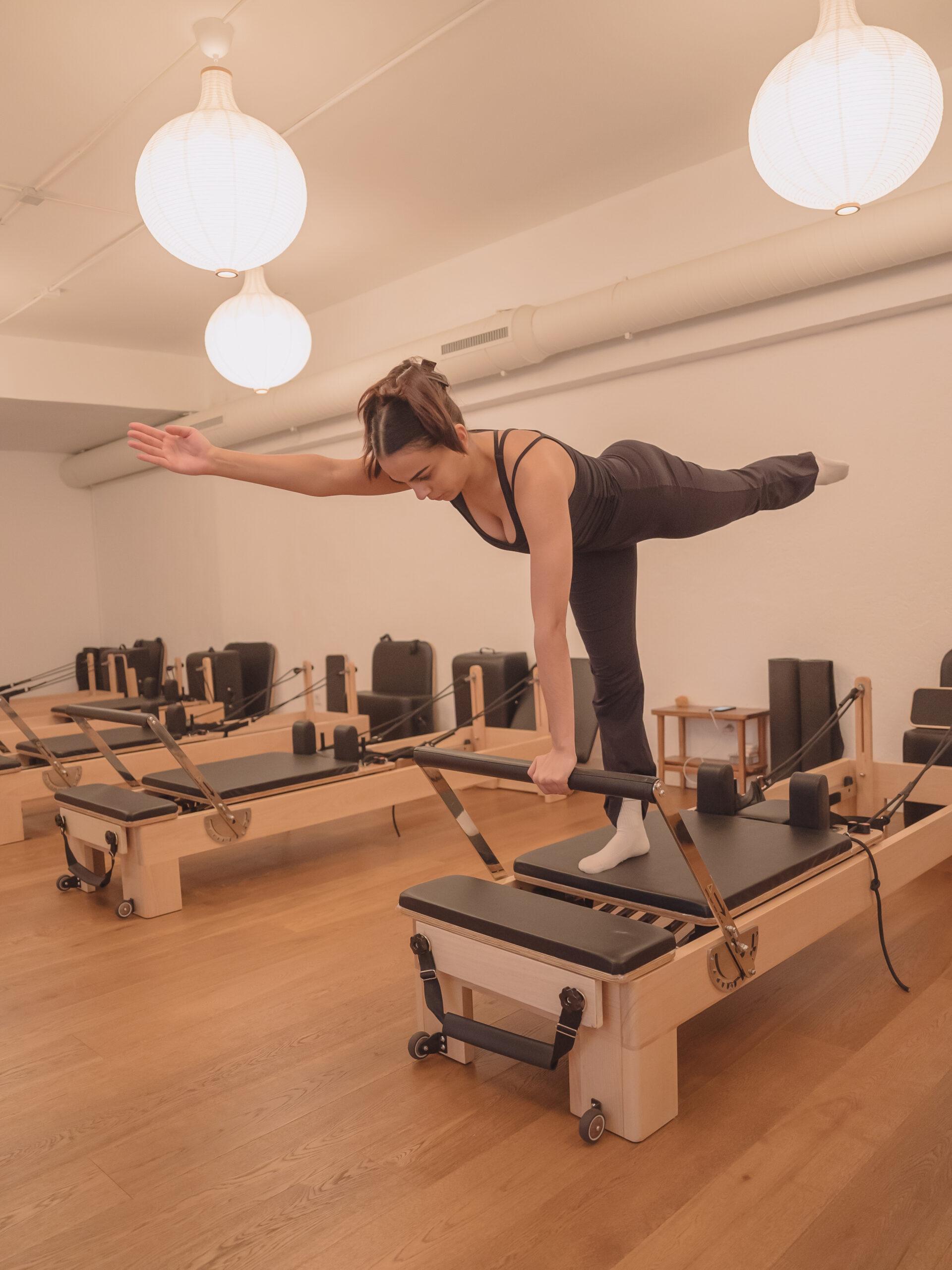
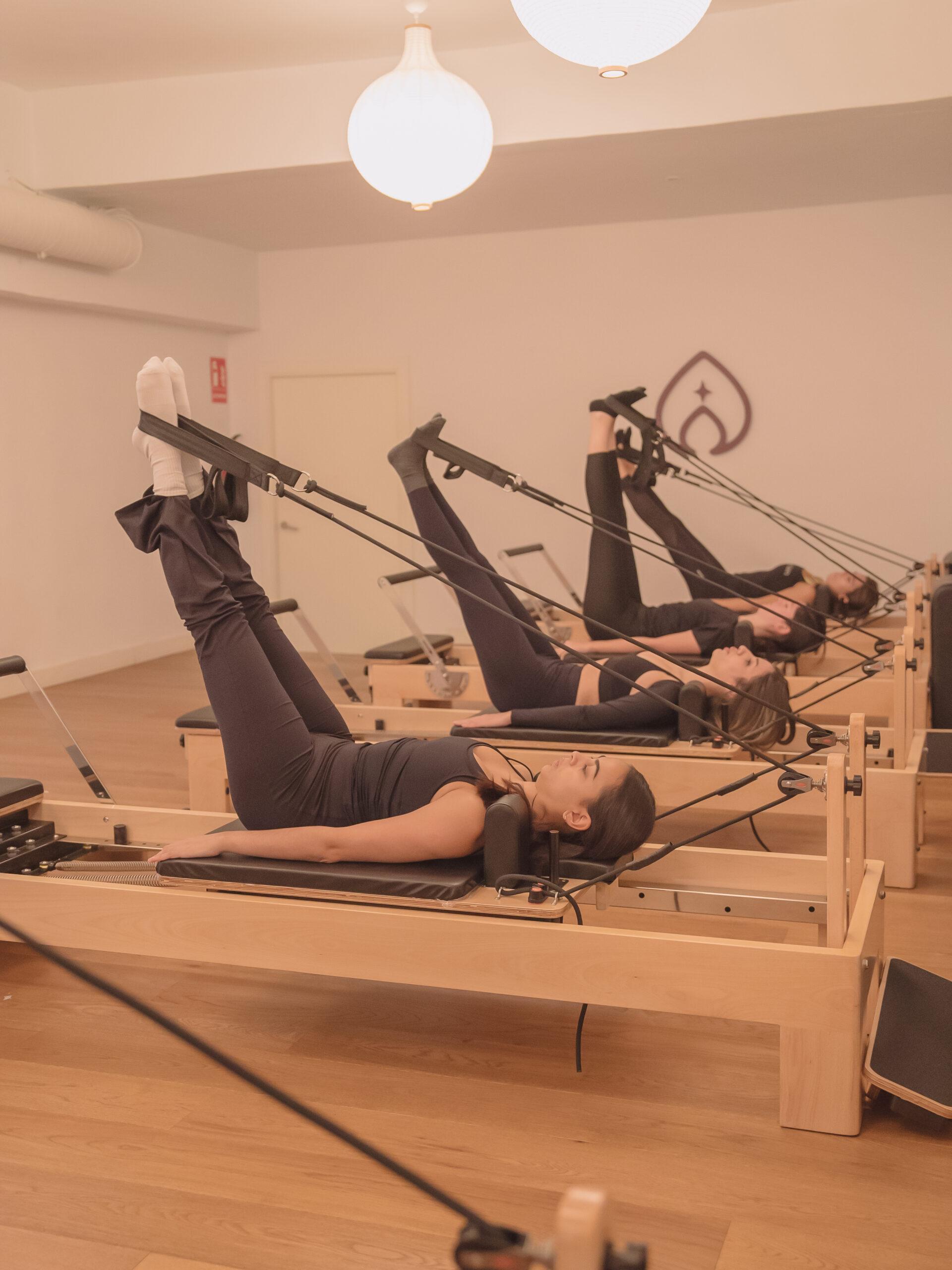
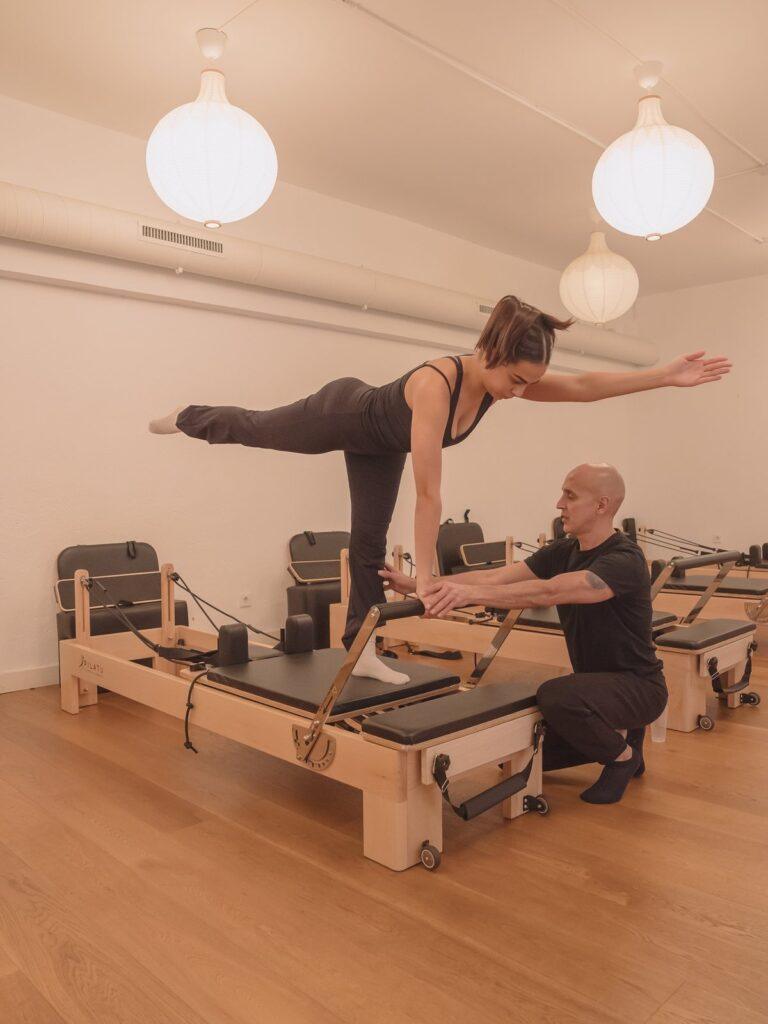
Reformer Pilates is a method of conscious movement developed by Joseph Pilates in the 20th century. It is practised on a machine with pulleys, springs and a sliding carriage that lets you work with variable, controlled resistance.
Unlike functional training, Reformer Pilates does not only aim for the body to work better: it aims for it to work correctly. There is an important difference. Precision of movement, deep core activation, spinal alignment and the connection between mind and body are fundamental pillars.
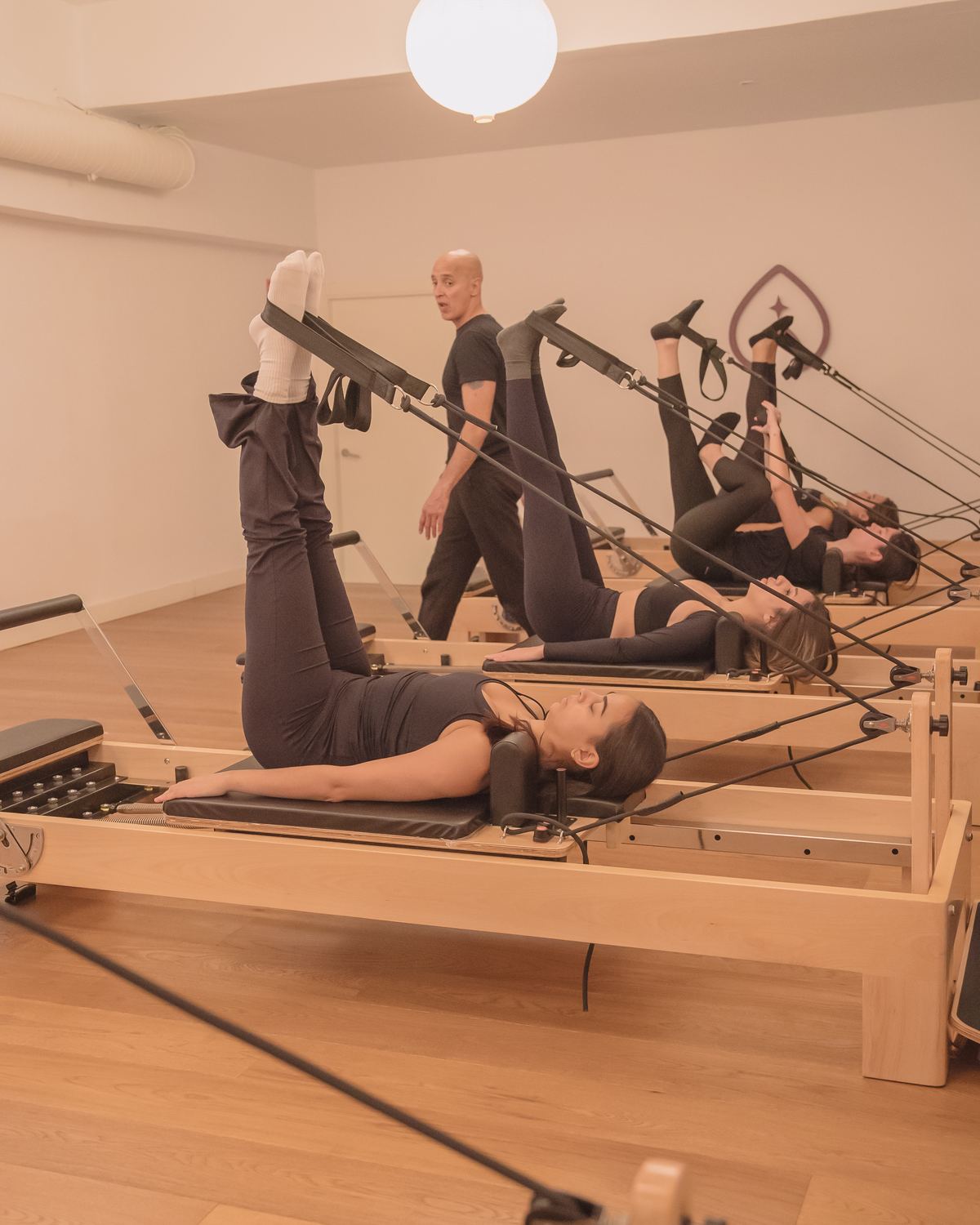
At Pinar Pilates, we work in groups of 8 people maximum to guarantee that every session has the personal attention this method requires.
Differences in philosophy and approach
Functional training starts from the premise that the body improves with effort, progressive load and complex movements. Muscle fatigue is an indicator of a job well done.
Reformer Pilates starts from a different premise: the body improves when it learns to move efficiently. Every exercise has a correct form and the goal is to achieve it before increasing the resistance. Quality always comes before quantity.
This does not mean one is harder or easier than the other. It means they measure progress differently.
Comparison table: Reformer Pilates vs Functional Training
| Criterion | Reformer Pilates | Functional Training |
|---|---|---|
| Philosophy | Precise, conscious movement | Performance and motor efficiency |
| Main goal | Postural correction, control, rehabilitation | Functional strength, power, endurance |
| Equipment | Reformer, springs, pulleys | Free weights, TRX, kettlebells, body weight |
| Intensity | Moderate, controlled | Variable, can be high |
| Injury risk | Low, closely guided | Moderate to high if technique fails |
| Joint impact | Minimal, no impact | Variable, may include impact |
| Core | Deep, constant activation | Global activation, not always deep |
| Suitable for rehabilitation | Yes, excellent | With reservations, depends on the case |
| Calorie burn | Moderate | High, especially in intense sessions |
| Variety of stimuli | High within the method | Very high, unlimited exercises |
| Learning curve | Requires technical learning | More accessible at the start |
| Mind-body connection | Central to the method | Secondary, the focus is execution |
| Muscle groups | Global, with emphasis on stabilisers | Global, with emphasis on movers |
Where functional training stands out
Athletic performance and power
If you are an athlete or want to improve your athletic capacity, functional training has clear advantages. Strength exercises with progressive load, complex kinetic chains and power work are more specific for anyone who competes or trains with performance goals.
Calorie burn and metabolism
A high-intensity functional training session burns more calories in the same time than a Pilates session. If rapid weight loss or improving cardiovascular capacity are immediate priorities, functional training has the edge on this specific point.
Variety and adaptability
Functional training has no fixed catalogue of exercises. It can be adapted in almost unlimited ways, which makes it especially useful for people who get bored quickly with routines. Every session can be completely different.
Strength development with external load
If you want to gain muscle mass or develop strength with progressive weights, functional training with loads offers a direct stimulus that Reformer Pilates cannot match with the same efficiency.
Where Reformer Pilates stands out
Precision and movement re-education
The Reformer forces every movement to be correct. The springs and the machine’s resistance give immediate feedback on the quality of execution. This makes it very effective for correcting altered movement patterns, something functional training often overlooks.
Rehabilitation and injuries
The benefits of Reformer Pilates for rehabilitation are widely documented. The ability to work with very low loads, in positions without joint load and with millimetre control makes it the preferred method of physiotherapists and doctors for recovery from spine, knee, hip and shoulder injuries.
If you have been through an injury or have a chronic condition, Reformer Pilates offers a far safer environment than conventional functional training.
Joint safety
Impact-free work, the gradual resistance of the springs and the ability to modify every exercise to individual needs make the Reformer an especially advisable option for people with joint problems, hypermobility, osteoporosis or conditions that require extra care.
Long-term postural correction
Functional training can strengthen, but it does not always correct. Reformer Pilates systematically works spinal alignment, pelvic position, the balance between muscle groups and the activation of deep stabilisers. The long-term result is a more efficient posture and less chronic pain.
If you spend many hours sitting or standing and suffer tension in your neck, back or shoulders, the Reformer is probably the most effective tool for solving it at the root.
Mind-body connection
The Pilates method is one of the few exercise systems that deliberately trains conscious attention to movement. You learn to feel what your body is doing, not only to execute. This has effects that go beyond the physical: it improves stress management, concentration and overall body perception.
Who should choose functional training
Functional training suits people who:
- Have a good fitness base and want to improve sports performance
- Want high-intensity sessions with a high calorie burn
- Have no active injuries or conditions that limit joint impact
- Enjoy variety and intense physical challenges
- Want to gain muscle strength and power with progressive load
- Already have good basic movement mechanics
Who should choose Reformer Pilates
Reformer Pilates is the most advisable option for people who:
- Have chronic back, neck, knee or hip pain
- Are in rehabilitation or recovering from surgery
- Want to correct their posture in a lasting way
- Are over 50 and want safe, effective exercise
- Prefer controlled, conscious movement over intensity
- Have had bad experiences with injuries in high-intensity training
- Want to complement their sport with stability and control work
If you identify with any of these profiles, at Pinar Pilates you can start with your first class at half price.
Who benefits from combining both methods
For many people the smartest answer is not to choose between Pilates and functional training, but to know how to combine them.
A typical example would be someone who does functional training two or three times a week to build strength and stay fit, and complements it with one or two Reformer Pilates sessions to work on quality of movement, prevent injuries and correct the imbalances that intense work creates.
This combination is especially useful for:
- Athletes: Reformer Pilates improves core stability, joint mobility and body awareness, which reduces injury risk and improves performance in any discipline
- People with a history of injuries: the Reformer can be the complementary work that lets them keep training intensely without compromising the damaged structures
- Those who want a balanced body: combining functional strength with precision and control gives more complete results than either method on its own
Unlike CrossFit or the conventional gym, Reformer Pilates does not compete with other methods: it complements them.
Frequently asked questions about Pilates vs functional training
Can I do functional training and Reformer Pilates in the same week?
Yes, and it is an advisable combination. Ideally, space the sessions out so the nervous and muscular systems can recover. For example, functional training on Mondays and Wednesdays, and Reformer on Tuesdays and Thursdays. Many of our students at Pinar Pilates follow exactly this pattern.
Is Reformer Pilates a good substitute for functional training?
It depends on the goal. If you want maximum strength or a high calorie burn, the Reformer is not a direct substitute. If you want efficient, pain-free movement that is sustainable over time, it may be the only method you need. For most people who are not high-performance athletes, the Reformer more than covers every exercise need.
Which is more effective for losing weight?
High-intensity functional training burns more calories per session. But weight loss depends mainly on diet and long-term consistency. Reformer Pilates, being more comfortable and less exhausting, can be easier to keep up regularly, which in practice produces better sustained results.
Is Reformer Pilates suitable if I already do functional training?
Yes, and especially if you have been doing functional training for a while. Many people who have spent years doing intense exercise accumulate muscle imbalances, chronic tension and postural compensations. Reformer Pilates is an excellent tool for identifying and correcting them before they turn into injuries.
Which has a higher risk of injury?
In general, poorly supervised functional training carries a higher risk of injury, especially when working with heavy loads or technically complex exercises. Reformer Pilates, because of its controlled nature and the instructor’s close supervision, has a very high safety profile. In groups of 8 people like those at Pinar Pilates, the instructor can correct every movement individually in every session.
Conclusion: Pilates vs functional training
There is no universal answer. Functional training is a powerful tool for anyone seeking performance, intensity and strength development. Reformer Pilates is the smarter option for anyone seeking precision, joint health, postural correction and long-term sustainability.
If you are unsure which suits your body and your goals better, the best way to find out is to experience it for yourself.
At Pinar Pilates, in the heart of the Salamanca district (Calle del Pinar 8, 28006 Madrid), we offer Reformer classes in groups of 8 people maximum, with more than 40 sessions a week to fit your schedule. We have more than 490 Google reviews (average 4.9 out of 5) from students who have already felt the difference.
First class: €15 (50% off).
Book your first class at 50% off
For any questions, call +34 611 994 729. We are here to help you find the exercise method that suits you best.
Pinar Pilates · Salamanca district, Madrid
Your first reformer class, €15
Groups of 8 people maximum, specialist instructors and more than 40 classes a week. Your first class is half price.
Book my first classCalle del Pinar 8, Madrid · Questions? Message us on WhatsApp