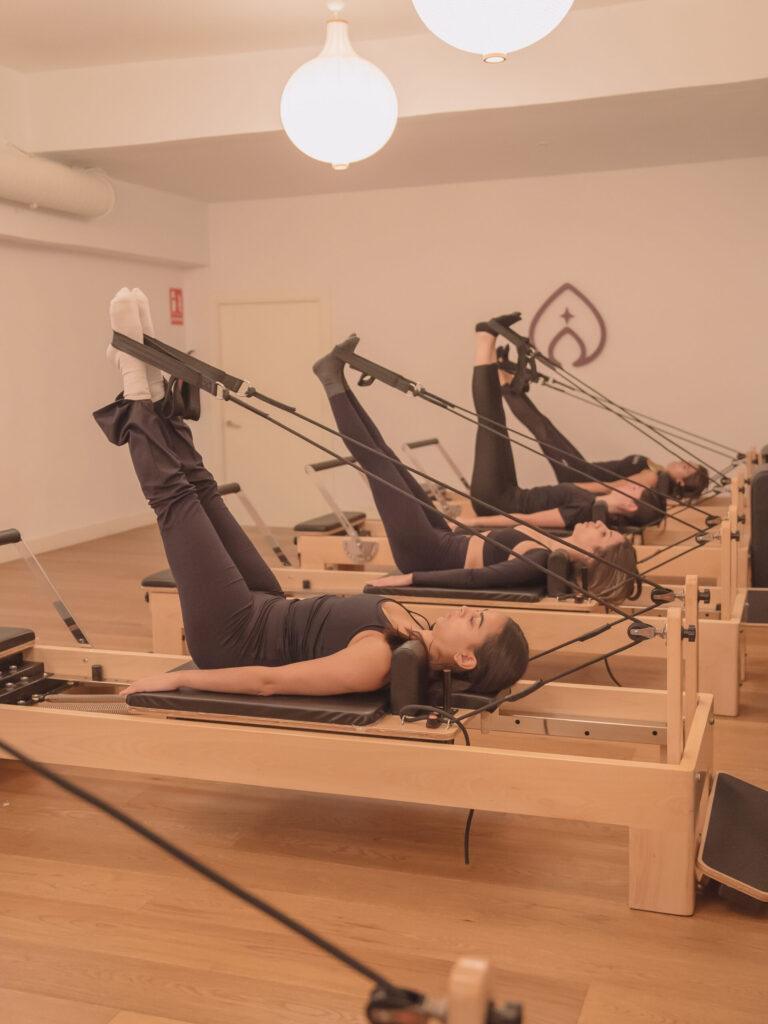
Reformer Pilates has become one of the most popular disciplines in Spain. Its growth has come with claims about all kinds of benefits: that it improves posture, that it gets rid of back pain, that it completely transforms the body. But of all those promises, which ones are backed by scientific research?
In this article we have reviewed dozens of studies published in leading medical and scientific journals to separate fact from speculation. The result is 10 benefits of Reformer Pilates that have real evidence behind them, with specific studies you can look up. Because if you are going to spend time and money looking after your body, you deserve to know exactly what to expect.
Key facts backed by science
- A meta-analysis of 118 clinical trials with 9,710 participants identified Pilates as the exercise most likely to reduce pain (93%) and disability (98%) in adults with chronic low back pain.
Source: Fernández-Rodríguez R et al. (2022). Journal of Orthopaedic & Sports Physical Therapy, 52(8):505-521. - Experienced Pilates practitioners activate the external oblique 35% more than beginners when performing the same mat exercise (54.6% vs 40.3% of maximum voluntary contraction, measured by electromyography).
Source: Ko et al. (2024). Frontiers in Physiology, 15:1435671. - A randomised controlled trial (2025) showed that Reformer Pilates notably reduces pain, fatigue and fear of movement in patients with chronic pain after only 6 weeks (2 sessions/week).
Source: Şahan N, Uluğ N, Özeren A (2025). BMC Psychology, 13(1):836. DOI: 10.1186/s40359-025-03207-9. - Regular Pilates practitioners show notably lower levels of anxiety (p < 0.001), depression (p < 0.05) and somatisation (p < 0.01) than sedentary people.
Source: Fossati C et al. (2024). PMC11988874. - An 8-week mat Pilates programme (two 45-minute sessions a week) improved sit-and-reach flexibility from 27.69 cm to 34.89 cm (+26%), while the control group was unchanged (22.74 cm to 22.91 cm; p = 0.849).
Source: Phrompaet S, Paungmali A, Pirunsan U, Sitilertpisan P (2011). Asian Journal of Sports Medicine, 2(1):16-22. PMID 22375213.
1. It reduces chronic back pain
Key answer: Yes, Reformer Pilates reduces chronic back pain. A meta-analysis of 118 clinical trials (JOSPT, 2022) identified it as the most effective exercise for reducing low back pain and functional disability, with significant improvements between weeks 4 and 15 of regular practice.
Chronic low back pain affects people all over the world and is one of the main causes of sick leave in Spain. Many turn to anti-inflammatories or passive treatments, but science points to a more sustainable solution: controlled movement.
Reformer Pilates works the deep muscles that stabilise the spine. Unlike conventional exercise, the reformer’s system of springs and variable resistance lets you strengthen that area without compressing the vertebrae. Every exercise is performed with control and precision, which allows people with low back pain to move safely and progressively.
What the science says: A systematic review by Wells et al. (2014), published in PLOS ONE, analysed 14 randomised clinical trials and concluded that Pilates produces statistically significant improvements in pain and functional capacity compared with usual care and general physical activity, over periods of 4 to 15 weeks.
At Pinar Pilates, many students arrive precisely with low back pain. Our instructors adapt every exercise to each person’s condition, using the reformer’s variable resistance to progress without forcing. With groups of 8 people maximum per class, supervision is real, not symbolic.
2. It strengthens the core deeply
Key answer: Reformer Pilates activates the deep muscles of the core — transversus abdominis, multifidus, pelvic floor and diaphragm — more effectively than traditional ab exercises. Experienced practitioners show 35% more external oblique activation than beginners in the same mat exercise (Ko et al., 2024, Frontiers in Physiology, 15:1435671).
When we talk about the core, we do not only mean the visible “six-pack”. The deep muscles of the trunk include the transversus abdominis, the multifidus, the pelvic floor and the diaphragm. These muscles are the ones truly responsible for the stability of your spine and pelvis. The problem is that traditional abdominal exercises barely activate them.
The reformer changes this completely. Its exercises force the body to keep control in unstable positions and against variable resistance, which drives activation of those deep muscles. It is not about doing more repetitions, but about activating the right muscles.
What the science says: Endleman and Critchley (2008) published in Archives of Physical Medicine and Rehabilitation an ultrasound study that measured the thickness of the transversus abdominis during classic Pilates exercises. The results showed that exercises such as the hundred, the leg circle and the roll-up produce a significant increase in transversus thickness compared with rest. Using the reformer generated greater transversus activation in some exercises compared with the mat.
If you feel your abs “don’t work” or that your lower back takes too much load, Reformer Pilates may be the missing piece in your training. Book your first class at 50% off and see for yourself.
3. It improves posture
Key answer: Reformer Pilates improves posture by strengthening the stabilising muscles and correcting muscle imbalances. A 2025 study (BMC Sports Science) showed significant improvements in postural alignment in office workers after 8 weeks of Reformer Pilates (2 sessions/week).
We spend hours sitting in front of a computer, driving or looking at our phones. Over time, these sustained positions create muscle imbalances: rounded shoulders, excessive thoracic kyphosis, a forward head. It is not only an aesthetic issue. Poor posture can cause neck, lower back and head pain.
Reformer Pilates systematically works the muscles that hold good body alignment: spinal extensors, scapular stabilisers, deep trunk muscles. The reformer, with its system of pulleys and springs, lets you perform chest-opening and extension exercises that are hard to replicate on the floor.
What the science says: Li, Omar Dev and Soh (2024) published in BMC Sports Science, Medicine and Rehabilitation a systematic review of 9 studies with 643 participants. Their conclusions indicate that Pilates is effective for correcting postural and spinal deformities, as well as improving quality of life and reducing pain associated with postural problems.
In our Reformer Pilates classes in Madrid, postural correction is a constant component. The instructors watch and correct each student’s alignment in every exercise, something made possible by our format of 8 people maximum per session.
4. It increases flexibility without risk of injury
Flexibility is not about being able to touch your toes. It is about your joints having a functional range of movement that lets you move without restrictions or discomfort in daily life. Many people avoid intense stretching for fear of injury, and rightly so: forced static stretching can cause muscle damage.
The reformer solves this problem. Its spring system offers resistance that accompanies the movement, letting you gain range progressively and with control. The body stretches while it works, not while it is passively forced. It is active, safe and measurable stretching.
What the science says: Phrompaet et al. (2011) published in the Asian Journal of Sports Medicine a randomised controlled trial with 40 participants. After 8 weeks of Pilates (two 45-minute sessions a week), the experimental group significantly improved flexibility (p<0.001) at both 4 and 8 weeks, with results far superior to the control group. In addition, 85% of the Pilates group passed the lumbopelvic stability test at 8 weeks, compared with 0% of the control group.
If you feel stiff when you bend down, turn your trunk or climb stairs, Reformer Pilates can help you recover a healthy range of movement without exposing your joints to unnecessary risks.
5. It relieves neck pain
Neck pain is a silent epidemic. Hours in front of screens, built-up stress and lack of movement create chronic tension in the muscles of the neck and shoulders. Many people normalise this discomfort until it becomes disabling: headaches, dizziness, difficulty turning the head.
Reformer Pilates includes specific exercises that work the deep cervical muscles, the neck flexors and extensors, and the scapular stabilisers. The reformer allows gentle cervical traction and mobilisation movements that are hard to perform with body weight alone.
What the science says: De Araujo Cazotti et al. (2018) published in Archives of Physical Medicine and Rehabilitation a randomised clinical trial that showed the effectiveness of the Pilates method in treating chronic mechanical neck pain. Participants in the Pilates group experienced significant improvements in pain, function, quality of life and reduced use of painkillers.
At Pinar Pilates we work with many students who arrive with neck discomfort from office work. Our studio in the Salamanca district is set up to offer a personalised approach, adapting the intensity and the exercises to each situation.
6. It reduces stress and anxiety levels
Key answer: Yes. An observational study (Fossati et al., 2024) showed that regular Pilates practitioners have notably lower levels of anxiety (p<0.001), depression (p<0.05) and somatisation (p<0.01) than sedentary people of the same age.
Stress is not only a mental feeling. It has measurable physiological effects: higher cortisol, chronic muscle tension, sleep disturbances, digestive problems. Physical exercise is one of the most effective tools for regulating it, but not all types of exercise work the same way.
Pilates combines controlled movement with attention to breathing and mental concentration. This combination makes it a form of exercise with a meditative component that goes beyond simple calorie burning. On the reformer, the need to coordinate the spring resistance with the breath and control of the movement demands a mental presence that leaves little room for rumination.
What the science says: Fleming and Herring (2018) published in Complementary Therapies in Medicine a meta-analysis of 8 controlled trials with 261 participants. The results showed that Pilates produces significant, large reductions in both depressive symptoms (delta = 1.27, p ≤ 0.003) and anxiety symptoms (delta = 1.29, p ≤ 0.02).
Many of our students at Pinar Pilates describe the class as “their hour to switch off”. It is no coincidence. The combination of movement, breathing and concentration that Reformer Pilates offers has a measurable effect on your mental state.
7. It tones the body without joint impact
Not everyone can, or wants to, pound their body running or jumping. People with joint problems, previous injuries, excess weight or simply those who prefer more controlled exercise need alternatives that strengthen and tone without punishing the joints.
Reformer Pilates is low-impact exercise by design. The feet do not strike the ground, the joints do not bear excessive compressive loads and the resistance is graded with the reformer springs. This lets you work strength, muscular endurance and body definition with minimal joint load.
What the science says: Pereira et al. (2022) published in Applied Sciences a systematic review on the effectiveness of Pilates for functional body composition. After analysing studies from 2017-2021, they found a significant trend towards improvement in body weight, fat percentage, hip and waist circumference, and skinfold measurements. In addition, a randomised controlled trial published in Scientific Reports (2025) showed that 8 weeks of Reformer Pilates, three times a week, produced significant improvements in body composition and muscle strength in overweight women.
If you want the benefits of Pilates on machines without the joint wear of other sports, the reformer is the option science backs. Book your first class at 50% off and find out how it feels.
8. It improves balance and coordination
Balance is not only important for older people. Anyone who plays sport, walks around the city or simply wants to move safely needs good control of balance and coordination. And this ability can be trained.
The reformer is an especially effective tool for it. The moving carriage creates an unstable surface that forces the nervous system to constantly recruit the stabilising muscles. Every exercise on the reformer is, in part, a balance exercise. This constant neuromuscular demand improves proprioception, that is, your body’s ability to know where it is in space.
What the science says: Sampaio et al. (2023) published in Healthcare a systematic review and meta-analysis of randomised controlled trials on Pilates and balance in older adults. The review found robust evidence of the effectiveness of Pilates programmes for improving both static and dynamic balance, with 8 of the 15 interventions analysed showing significant effects.
The advantages of Reformer Pilates for balance are relevant at any age. At Pinar Pilates, we adapt the difficulty of the stability exercises to each level, from beginners discovering the reformer to advanced students seeking more complex proprioceptive challenges.
9. It is safe for injury rehabilitation
After an injury or surgery, moving again can be frightening. Many people get trapped in a cycle of inactivity and pain because they cannot find a form of exercise that is safe and effective at the same time. Reformer Pilates has established itself as a rehabilitation tool precisely because it lets you grade resistance and range of movement with a precision few methods offer.
The reformer springs are adjusted to offer anything from assistance to the movement to progressive resistance. This means the same exercise can be gentle and assisted for someone in the early phase of recovery, or intense and demanding for an athlete in the final phases of rehabilitation.
What the science says: Byrnes, Wu and Whillier (2018) published in the Journal of Bodywork and Movement Therapies a systematic review of 23 studies carried out between 2005 and 2016. They assessed the effectiveness of Pilates in the rehabilitation of low back pain, ankylosing spondylitis, multiple sclerosis, postmenopausal osteoporosis, non-structural scoliosis and hypertension. 19 of the 23 studies found Pilates more effective than the control group for improving outcomes, especially in reducing pain and disability.
If you are in rehabilitation and your physiotherapist has cleared you to start supervised exercise, our classes at Pinar Pilates can be an ideal complement. We always recommend consulting your healthcare professional before starting.
10. It improves sleep quality
Key answer: Reformer Pilates improves sleep quality in people with chronic pain. A controlled trial (Şahan et al., 2025, BMC Psychology) showed significant improvements in sleep quality, fatigue and pain-coping strategies after 6 weeks of practice (2 sessions of 45 minutes/week).
Sleeping well is not a luxury, it is a physiological necessity. Lack of quality sleep affects concentration, mood, the immune system and even metabolism. And although we know physical exercise improves sleep, not all types of activity have the same effect.
Pilates, with its combination of moderate muscular work, diaphragmatic breathing and nervous system regulation, seems to have a particularly positive effect on the quality of rest. Activation of the parasympathetic nervous system during practice facilitates a state of relaxation that extends beyond the class.
What the science says: Chen et al. (2020) published in Frontiers in Neurology the first systematic review and meta-analysis on Pilates and sleep quality. They analysed 6 randomised controlled trials with 477 participants and found that Pilates significantly improves sleep quality measured with the Pittsburgh Sleep Quality Index (PSQI), lowering the total index score compared with non-exercising control groups.
Several Pinar Pilates students have told us they sleep better since they started practising regularly. If you have trouble resting and want to try an approach that combines movement and nervous regulation, book your first class at 50% off
How to Experience These Benefits in Madrid
Knowing the benefits of Reformer Pilates is a first step. Experiencing them is another. And for that, the setting where you practise matters more than you think.
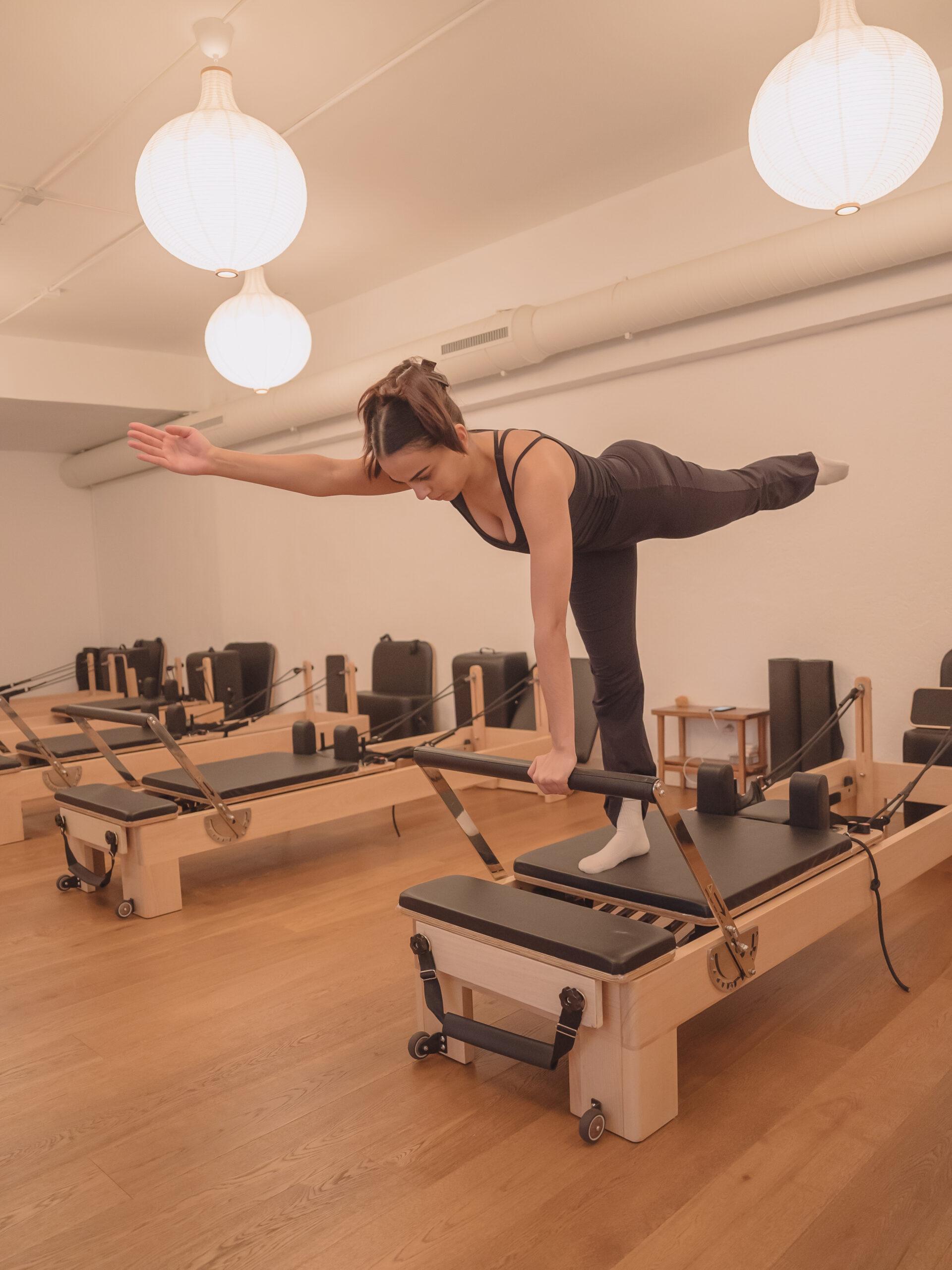
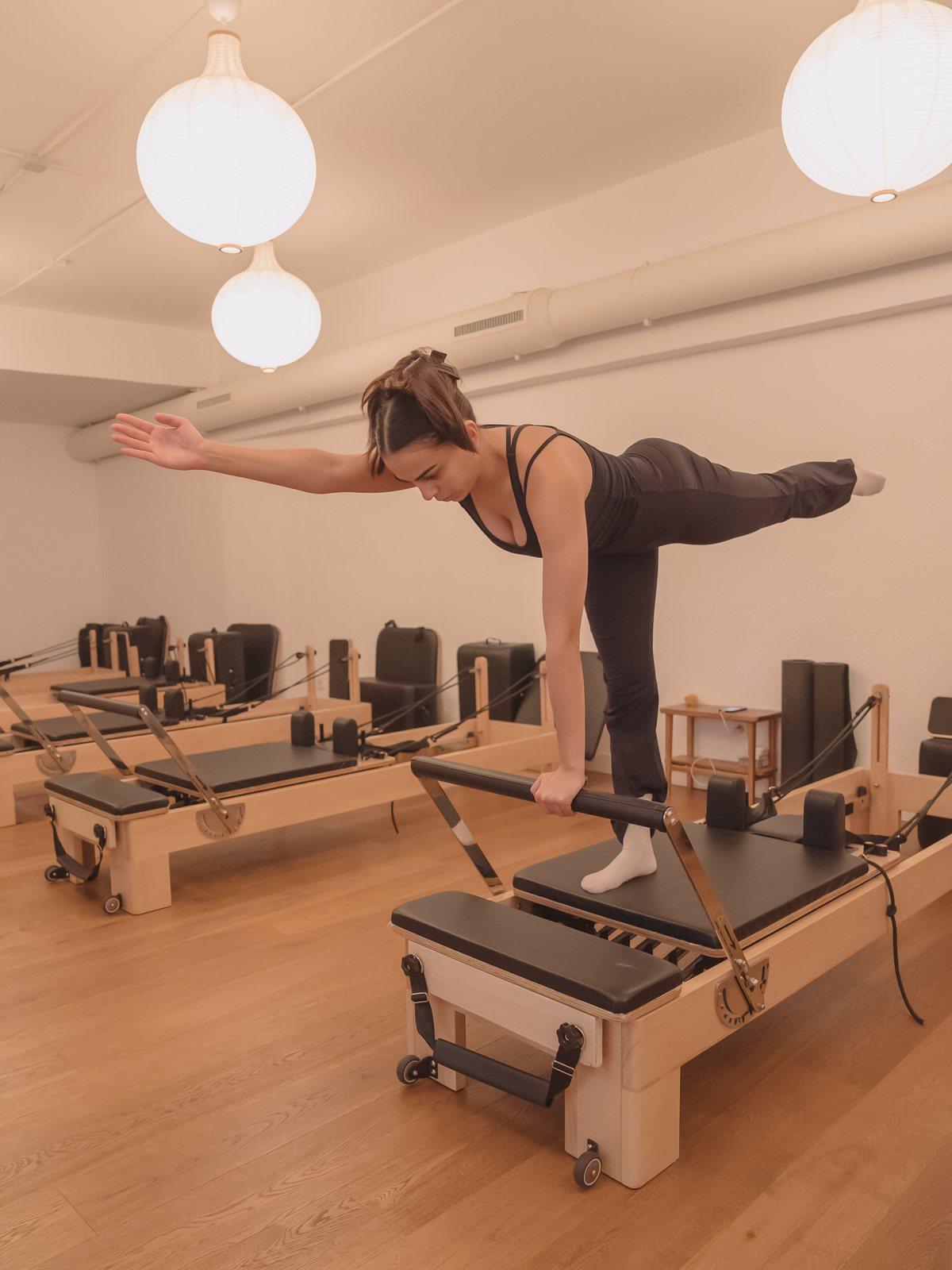
At Pinar Pilates, our studio in the Salamanca district (Calle del Pinar 8, 28006 Madrid), we have designed every detail so that every student can get the most out of the advantages of Reformer Pilates:
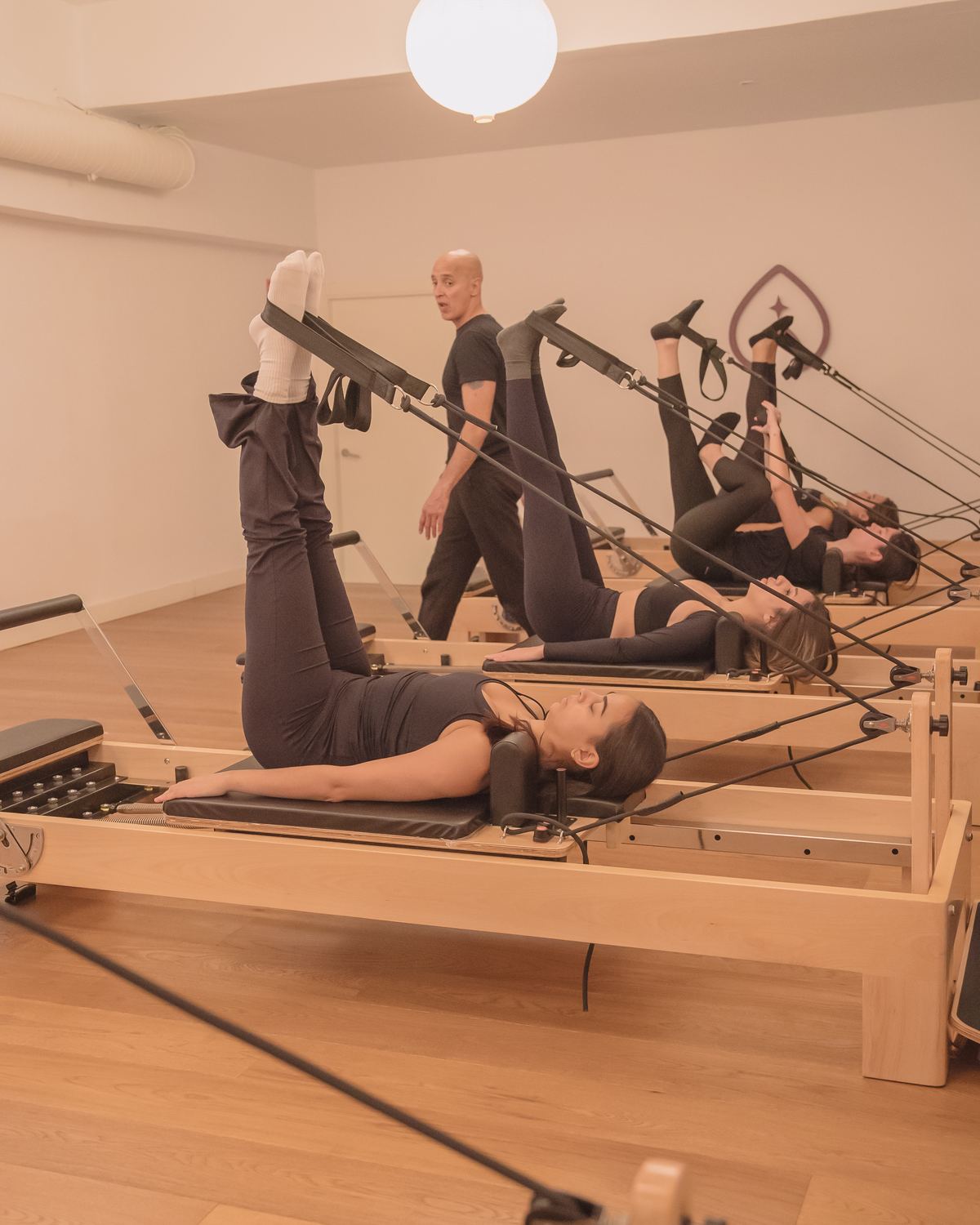
- Small groups of 8 people maximum per class. This allows real technical correction and attention that is not possible in crowded classes.
- Qualified instructors who adapt every exercise to your level, your goals and your limitations.
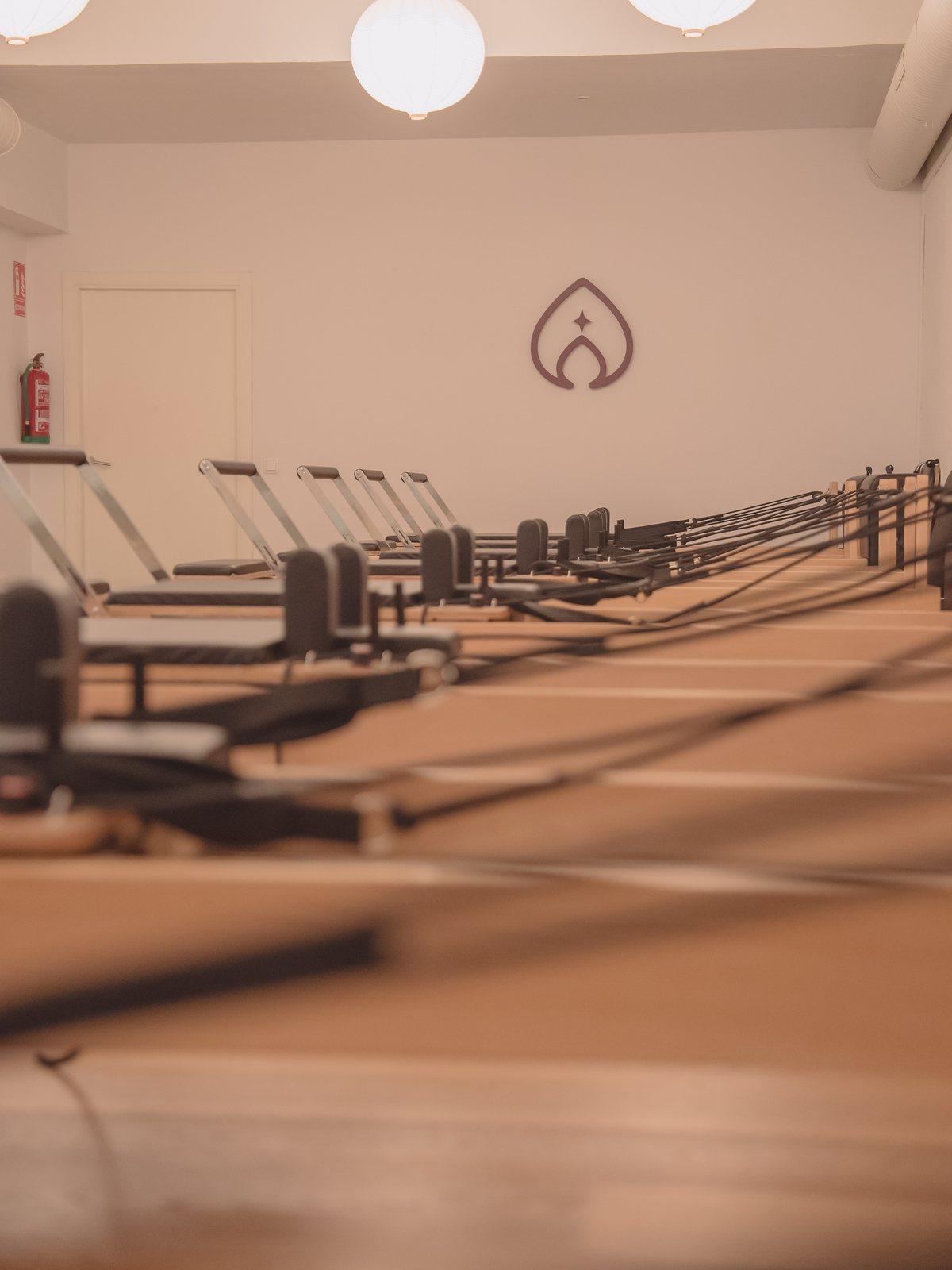
- Professional-quality reformers with precise resistance settings for every level.
- 4.9 out of 5 on Google with hundreds of reviews from students who are already experiencing these benefits.
Our prices
| Plan | Price |
|---|---|
| Drop-in class | €30 |
| 4 classes/month | €100/month |
| 8 classes/month | €150/month |
| 12 classes/month | €200/month |
| Unlimited | €250/month |
To get started:
- Book your first class at 50% off, perfect whether you already have experience or it is your first time on a reformer.
For any questions, you can call us on +34 611 994 729
Frequently Asked Questions
How many times a week do I need to practise Reformer Pilates to notice benefits?
Most of the scientific studies cited in this article used protocols of 2 to 3 sessions a week over periods of 8 to 12 weeks. With two classes a week it is possible to notice improvements in flexibility, pain and posture in the first weeks. For more complete results in body composition or strength, three sessions a week are more effective. Our 8-class monthly plan lets you keep a frequency of twice a week.
Is Reformer Pilates suitable for people with injuries or back problems?
Yes. In fact, several of the studies we reviewed were carried out specifically with people who suffered from chronic low back pain, neck pain or who were in rehabilitation. The key is that classes are supervised by professionals who can adapt the exercises. At Pinar Pilates, our groups of 8 people maximum allow that individual supervision. We always recommend consulting your doctor or physiotherapist before starting if you have an active injury.
Does Reformer Pilates help you lose weight?
Reformer Pilates is not high-intensity cardiovascular exercise, so it is not the main tool for losing weight if that is your only goal. However, the evidence shows that it improves body composition: it reduces fat percentage and increases muscle mass. Combined with a balanced diet and, if desired, additional cardiovascular activity, Reformer Pilates is a valuable complement for body transformation.
From what age can you practise Reformer Pilates?
There is no strict minimum or maximum age. Several of the meta-analyses cited include studies with older adults who obtained significant benefits in balance, strength and quality of life. At Pinar Pilates we work with students of different ages and conditions, always adapting the intensity and complexity of the exercises to each person.
Your body deserves more than promises
The 10 benefits we have reviewed are not marketing lines. They are conclusions drawn from studies published in journals such as Archives of Physical Medicine and Rehabilitation, PLOS ONE, Frontiers in Neurology, Complementary Therapies in Medicine and BMC Sports Science, Medicine and Rehabilitation. It is peer-reviewed science, with real data and controlled samples.
If you have been thinking about trying Reformer Pilates for a while, you no longer need more convincing. You need experience.
Book your first class at 50% off and see for yourself what science has already shown.
Pinar Pilates | Calle del Pinar 8, Salamanca district, 28006 Madrid | +34 611 994 729
Scientific references
- Wells, C., Kolt, G.S., Marshall, P., Hill, B., & Bialocerkowski, A. (2014). The effectiveness of Pilates exercise in people with chronic low back pain: a systematic review. PLOS ONE, 9(7), e100402.
- Endleman, I. & Critchley, D.J. (2008). Transversus abdominis and obliquus internus activity during Pilates exercises: measurement with ultrasound scanning. Archives of Physical Medicine and Rehabilitation, 89(11), 2205-2212.
- Li, F., Omar Dev, R.D., & Soh, K.G. (2024). Effects of Pilates exercises on spine deformities and posture: a systematic review. BMC Sports Science, Medicine and Rehabilitation, 16, 55.
- Phrompaet, S. et al. (2011). Effects of Pilates training on lumbo-pelvic stability and flexibility. Asian Journal of Sports Medicine, 2(1), 16-22.
- De Araujo Cazotti, L., Jones, A., Roger-Silva, D., Ribeiro, L.H.C., & Natour, J. (2018). Effectiveness of the Pilates method in the treatment of chronic mechanical neck pain: a randomized controlled trial. Archives of Physical Medicine and Rehabilitation, 99(9), 1740-1746.
- Fleming, K.M. & Herring, M.P. (2018). The effects of Pilates on mental health outcomes: a meta-analysis of controlled trials. Complementary Therapies in Medicine, 37, 80-95.
- Pereira, M.J. et al. (2022). Efficacy of Pilates in functional body composition: a systematic review. Applied Sciences, 12(15), 7523.
- Sampaio, T. et al. (2023). The effectiveness of Pilates training interventions on older adults’ balance: a systematic review and meta-analysis of randomized controlled trials. Healthcare, 11(23), 3083.
- Byrnes, K., Wu, P.J., & Whillier, S. (2018). Is Pilates an effective rehabilitation tool? A systematic review. Journal of Bodywork and Movement Therapies, 22(1), 192-202.
- Chen, Z. et al. (2020). Effect of Pilates on sleep quality: a systematic review and meta-analysis of randomized controlled trials. Frontiers in Neurology, 11, 158.
Pinar Pilates · Salamanca district, Madrid
Your first reformer class, €15
Groups of 8 people maximum, specialist instructors and more than 40 classes a week. Your first class is half price.
Book my first classCalle del Pinar 8, Madrid · Questions? Message us on WhatsApp