If you sleep badly, you probably already know that physical exercise helps with sleep. You will have read it somewhere. But there is an important difference between knowing that “exercise is good for sleep” and understanding why some types of exercise work better than others, what time of day is best to practise them and which physiological mechanisms explain that relationship. Reformer Pilates is not simply another type of exercise: it has specific characteristics that make it particularly effective for improving sleep, and they go far beyond “tiring yourself out to sleep”.
This article explains the mechanisms behind that relationship, what the available scientific evidence says, when to train to optimise your rest and how to apply Pilates breathing techniques directly before going to bed.
Why Physical Exercise Improves Sleep
The link between physical activity and sleep quality has well-documented physiological foundations. It is not about accumulated fatigue: there are at least three distinct mechanisms working in parallel.
Adenosine Build-Up
Adenosine is a molecule that accumulates in the brain during waking hours as a by-product of neuronal energy metabolism. The more adenosine there is, the greater the sleep pressure, that is, the signal your central nervous system receives to sleep. Physical exercise speeds up cellular metabolism in both muscle and brain tissue, which increases the rate of adenosine production. This explains why, after a session of moderate-to-intense physical activity, the feeling of drowsiness at night arrives earlier and more strongly.
That is why caffeine works as a stimulant: it blocks adenosine receptors. And that is why exercise helps you sleep: it increases the adenosine load your brain has to manage at the end of the day.
Body Temperature Regulation
During exercise, core body temperature rises. In the following hours, the body works actively to dissipate that heat, and that subsequent drop in temperature is one of the physiological signals that trigger the onset of sleep. The fall in core body temperature is one of the most reliable markers of the start of deep slow-wave sleep (N3 sleep), the most restorative phase. Moderate exercise, done far enough ahead of bedtime, takes advantage of this mechanism: the rise and subsequent fall in temperature act as a natural catalyst for deep sleep.
Cortisol Reduction
Cortisol is the stress hormone, with a clear circadian profile: it peaks in the morning and falls during the day to minimal levels at night, which allows sleep to begin. Chronic stress, anxiety and hyperactivation of the sympathetic nervous system disrupt this pattern and keep cortisol elevated at night, making both falling asleep and deep sleep harder.
Regular physical exercise, and in particular moderate-intensity exercise, improves the regulation of the hypothalamic-pituitary-adrenal (HPA) axis and contributes to a healthier cortisol profile: lower at night, with a faster and more efficient response during the day.
Why Reformer Pilates Is Especially Effective for Sleep
Physical exercise in general helps with sleep, but Reformer Pilates acts on three additional mechanisms that set it apart from other modalities such as intense cardio or conventional strength training.
Activation of the Parasympathetic Nervous System
Pilates is based on conscious breathing, coordinated with movement, which activates the parasympathetic nervous system, the branch of the autonomic nervous system responsible for rest and recovery. Deep diaphragmatic breathing stimulates the vagus nerve, increases heart rate variability (HRV) and reduces the activity of the sympathetic nervous system, which is what keeps the body in a state of alert.
This parasympathetic activation does not disappear when the session ends: studies show that its effects persist for hours, contributing to a state of physiological calm that makes it easier to fall asleep and stay asleep that night. If you struggle with work stress and notice that your mind will not switch off when you try to sleep, this mechanism is especially relevant.
Release of Chronic Muscle Tension
Reformer Pilates works systematically on accumulated muscle tension: the controlled movement on the carriage, the stretches guided by the springs and the conscious attention to the body during the session allow you to release the patterns of tension that stress and a sedentary lifestyle install in the muscles. The neck muscles, the trapezius, the psoas and the paravertebral muscles are the ones that most often accumulate chronic tension in people with office jobs or high stress levels.
A body that arrives in bed with less muscle tension enters the deep sleep phases more easily. Muscle relaxation is not a trivial consequence of exercise: it is an active mechanism of sleep improvement that Pilates works on more directly than most training modalities.
Anxiety Reduction
Anxiety is one of the main factors that disrupt sleep: both falling asleep (the mind racing when you try to drift off) and staying asleep (night-time awakenings loaded with worries). The evidence on the anxiolytic effect of Pilates is well established, with significant reductions in state anxiety and trait anxiety scales documented in multiple studies.
If you want to go deeper into this mechanism, you can read our guide on Reformer Pilates for anxiety, where we analyse the evidence in detail. The connection between reduced anxiety and better sleep is direct: less sympathetic activation at night means it is easier to maintain deep sleep and there are fewer awakenings.
What the Scientific Evidence Says
Research on physical exercise and sleep is extensive. Here are the most relevant studies, with particular attention to those that include Pilates.
Meta-analysis by Banno et al. (2018), published in PLOS ONE. It analysed 66 randomised controlled trials with 3,628 participants. Physical exercise markedly improved subjective sleep quality (measured with the Pittsburgh Sleep Quality Index, PSQI) and sleep onset latency. The authors concluded that aerobic exercise and resistance training have comparable positive effects on sleep, with better results in people with poorer sleep quality at baseline.
Randomised controlled trial by Loo et al. (2022), published in the Journal of Clinical Sleep Medicine. It compared low-intensity exercise (including Pilates and yoga) with moderate aerobic exercise in adults with subclinical insomnia. Both groups improved their PSQI, but the low-intensity group showed higher adherence and more pronounced reductions in sleep-related anxiety. The authors noted that mind-body exercise, because of its nervous system regulation component, may have specific advantages for people whose insomnia has an anxious hyperarousal component.
Study by Oliveira et al. (2021), published in the Journal of Bodywork and Movement Therapies. It evaluated the effect of 8 weeks of Pilates on sleep quality in older adults with insomnia. The Pilates group showed significant reductions in the total PSQI score (-3.2 points on average) and improvements in sleep efficiency and onset latency. The authors attributed the results to the combination of parasympathetic activation, reduced anxiety and improved mood.
Systematic review by Liao et al. (2015), published in Sleep Medicine Reviews. It analysed the effect of mind-body exercise (Pilates, yoga, tai chi) on sleep. The 17 studies included showed consistent improvements in subjective sleep quality, sleep duration and sleep efficiency. The review identified regulation of the autonomic nervous system as the most consistent explanatory mechanism across the different types of mind-body exercise.
The available evidence is solid and consistent: regular physical exercise improves sleep quality, and mind-body exercise such as Pilates has additional advantages derived from its effect on the autonomic nervous system and anxiety.
The Debate about Training Time
A frequent question when talking about exercise and sleep is: what time is best to train so as not to interfere with night-time rest? The answer has evolved with the research.
The Classic Recommendation
For years, sleep hygiene guidelines advised against exercise in the hours before bedtime, arguing that the physiological activation it generates could make it harder to fall asleep. This recommendation made sense for intense exercise (running, high-intensity interval training), which raises heart rate, body temperature and cortisol levels significantly and for prolonged periods.
What Recent Evidence Shows
A meta-analysis by Stutz et al. (2019), published in Sports Medicine, analysed 23 studies on evening exercise and sleep. Its conclusions were nuanced: high-intensity exercise performed up to one hour before bedtime can indeed delay sleep onset and reduce slow-wave sleep. However, moderate- or low-intensity exercise, including yoga and Pilates, showed no negative effects on sleep even when practised up to 60-90 minutes before bedtime, and in several studies it produced improvements in sleep quality that same night.
The Practical Implication for Pilates
Moderate-intensity Reformer Pilates, which is how it is practised at Pinar Pilates, does not generate the intense sympathetic activation that can interfere with sleep. On the contrary, its effect on the parasympathetic system can ease the transition to rest. This means that a Pilates class in the late afternoon or evening (up to 20:50, which is when we close Monday to Thursday) not only does not harm your sleep, but can improve it that very night.
If you train in the morning, the benefit for sleep is also there, but it acts mainly through improved circadian regulation, the increase in adenosine accumulated during the day and the reduction in night-time cortisol. Both time slots work; the key is consistency across the week rather than the exact time.
Chronic Pain, Sleep and Pilates: The Cycle That Can Be Broken
Chronic pain and poor sleep form a well-documented vicious circle. Pain interrupts sleep, and lack of sleep lowers the pain threshold, which makes pain seem more intense and harder to manage. This cycle affects people with chronic low back pain, neck pain, arthritis, fibromyalgia and other musculoskeletal pain conditions.
The mechanism is clear: deep sleep (N3 phase) is when the body produces most of its growth hormone, needed for tissue repair. It is also the phase in which the central nervous system processes and consolidates pain sensitisation patterns. When deep sleep is fragmented or insufficient, tissue repair slows down and central pain sensitisation is maintained or worsens.
Reformer Pilates acts on both sides of the cycle at the same time. On the one hand, it directly improves chronic pain of musculoskeletal origin through core strengthening, improved postural alignment and reduced load on painful structures. On the other, it improves sleep quality through the mechanisms described above. This double action is especially valuable in people whose poor sleep is directly related to physical pain.
At Pinar Pilates, we regularly work with students who arrive with back pain and poor sleep at the same time, and improvement in one of the two problems usually speeds up improvement in the other. The benefits of Reformer Pilates in the treatment of chronic pain are well documented and are a central part of our approach.
Pilates Breathing Techniques to Use Before Sleep
One of the advantages of Pilates is that its breathing tools do not require a machine or a studio: you can use them at home, in bed, as part of your wind-down routine before sleep.
Basic Diaphragmatic Breathing
Lie on your back with your knees bent and your feet resting on the bed. Place one hand on your abdomen and the other on your chest. Breathe in through your nose for a count of 4, directing the air towards your abdomen: the hand on your abdomen should rise, the one on your chest should move as little as possible. Breathe out through your nose or slightly parted lips for a count of 6, letting your abdomen fall slowly. Repeat for 5-8 minutes.
This breathing pattern activates the vagus nerve and shifts the nervous system from sympathetic to parasympathetic within a few minutes. It is the same pattern worked on in every Pilates session and which, with practice, becomes available as a self-regulation tool at any moment.
4-7-8 Breathing
Breathe in through your nose for a count of 4. Hold your breath for a count of 7. Breathe out slowly through your mouth for a count of 8, emptying your lungs completely. Repeat for 4 cycles.
This technique, derived from yogic pranayama and compatible with the Pilates approach to breathing, has a particularly marked effect on the parasympathetic nervous system. The hold and the prolonged exhalation maximise vagal stimulation. It is useful for those moments when insomnia has a racing-mind or rumination component.
Body Scan with Breathing
Breathe in and, as you breathe out, consciously bring your attention to one part of the body (start with the feet) and allow that area to relax. Move slowly upwards: calves, knees, thighs, pelvis, abdomen, chest, hands, arms, shoulders, neck, face. Combine diaphragmatic breathing with this progressive attention. The full exercise takes between 8 and 12 minutes.
This exercise integrates the body awareness developed in Pilates with progressive muscle relaxation. The attention to the body during a Pilates session, that ability to notice tension in a specific muscle and release it with the exhalation, is exactly the same skill applied here. People who have been practising Pilates for a while usually find this exercise more accessible and effective than those without that body education.
Practical Tips: Combining Pilates with Sleep Hygiene
Pilates improves sleep, but it works best when combined with good sleep hygiene practices. These are the most effective combinations:
A consistent training schedule. The circadian system responds to regular rhythm. Training at similar times each week reinforces the time cues that regulate the sleep-wake cycle. Irregular timing, even with good night-time sleep, can desynchronise the biological clock.
Bedroom temperature. If you train in the afternoon or evening, take advantage of the post-exercise drop in body temperature by keeping the bedroom cool (between 18 and 20 degrees Celsius). The combination of the exercise-induced drop in body temperature with a cool environment favours the onset of deep sleep.
Limit caffeine after midday. Caffeine blocks adenosine receptors. If exercise is increasing adenosine build-up to improve sleep pressure, caffeine counteracts that effect. After 14:00-15:00, caffeine can interfere with sleep even in people who believe they are not affected.
Exposure to natural light in the morning. Getting out into sunlight during the first 30-60 minutes after waking synchronises the circadian clock and improves both night-time sleep quality and daytime alertness. If you practise Pilates in the morning, walking to the studio already provides part of that exposure.
Continuity of practice. The effects of Pilates on sleep are neither immediate nor linearly cumulative. The studies with the best results used programmes of 6 to 12 weeks with at least 2 sessions per week. Medium-term consistency matters more than the intensity of individual sessions.
How We Work on Sleep at Pinar Pilates
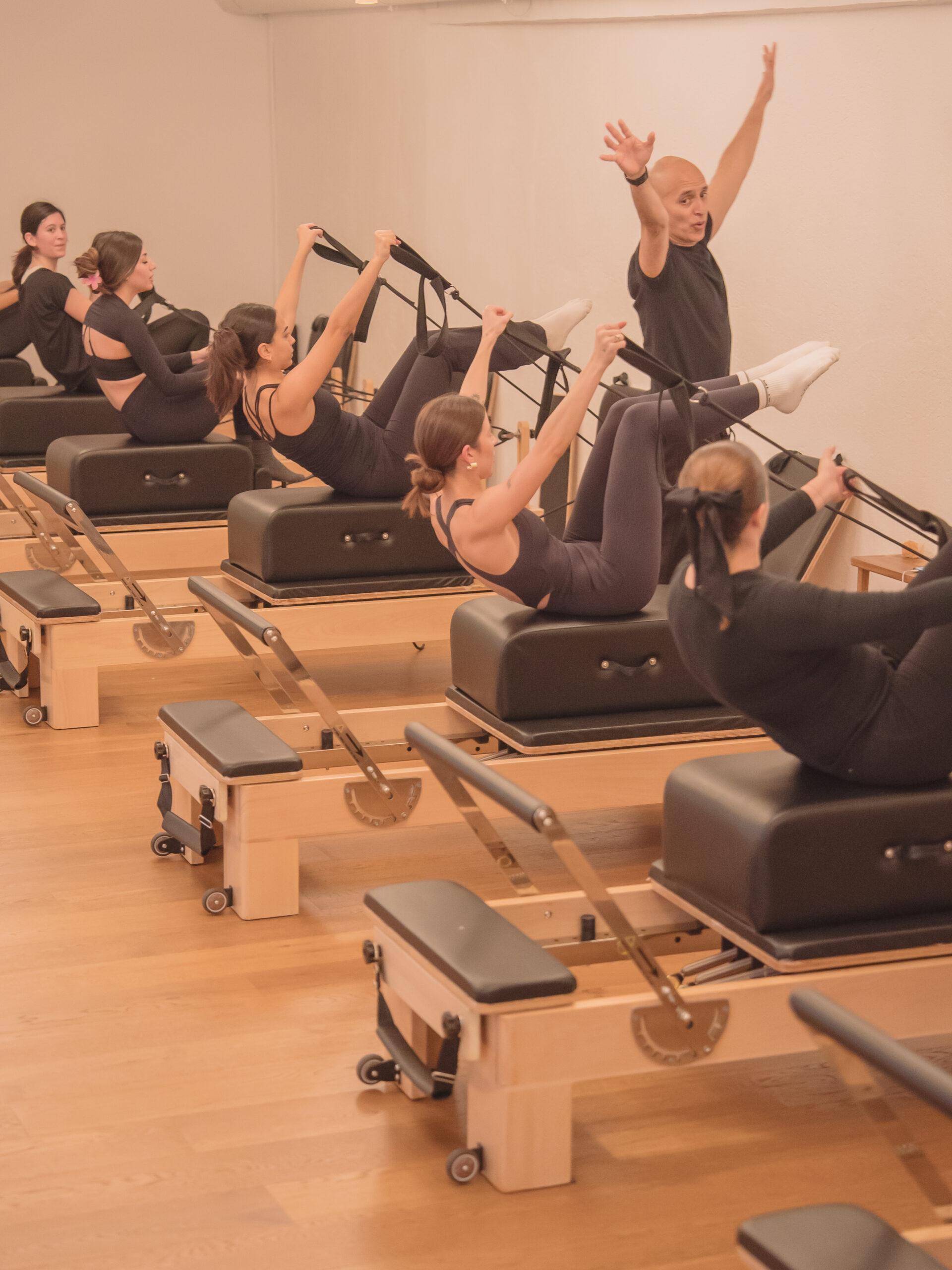
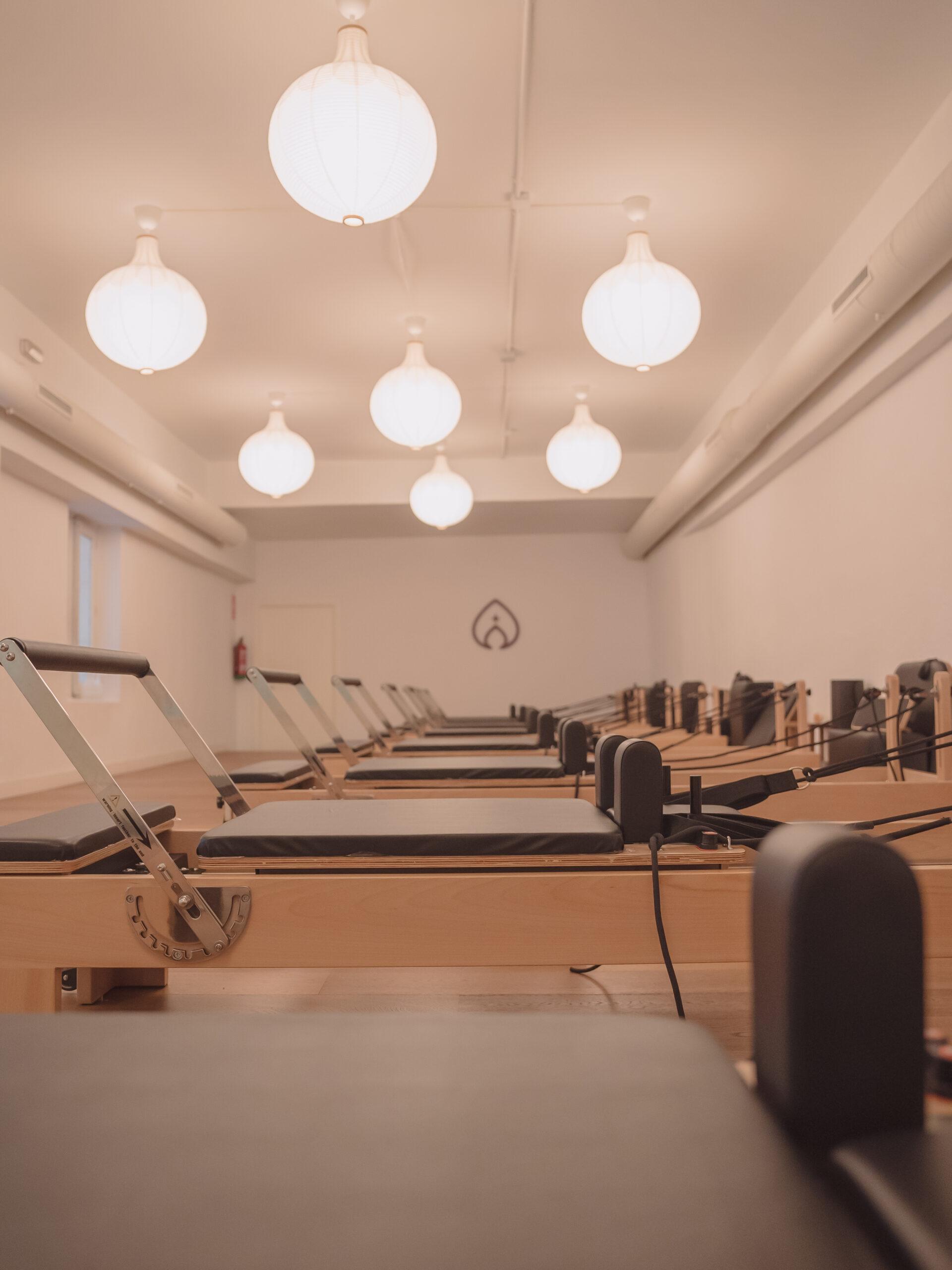
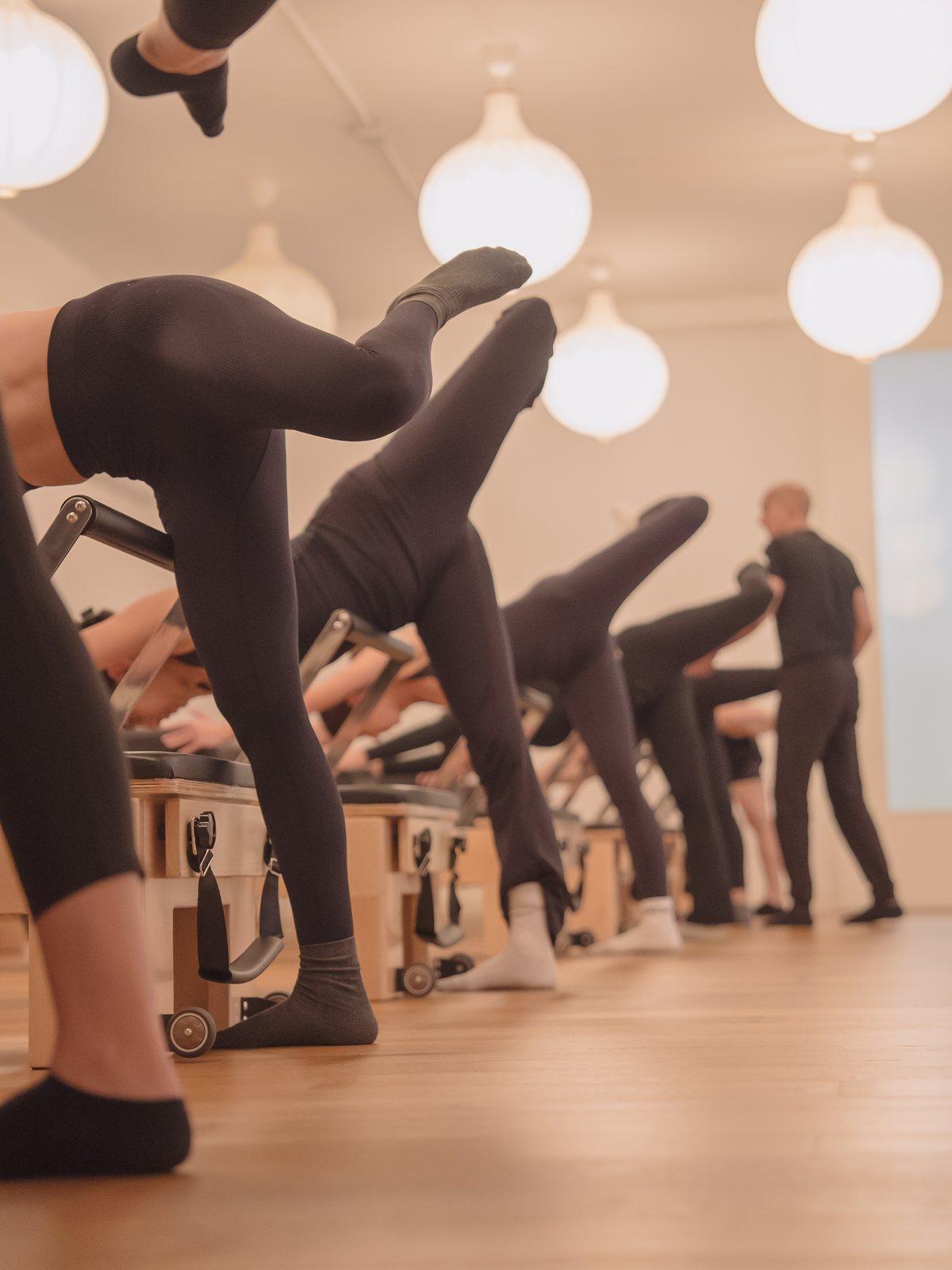
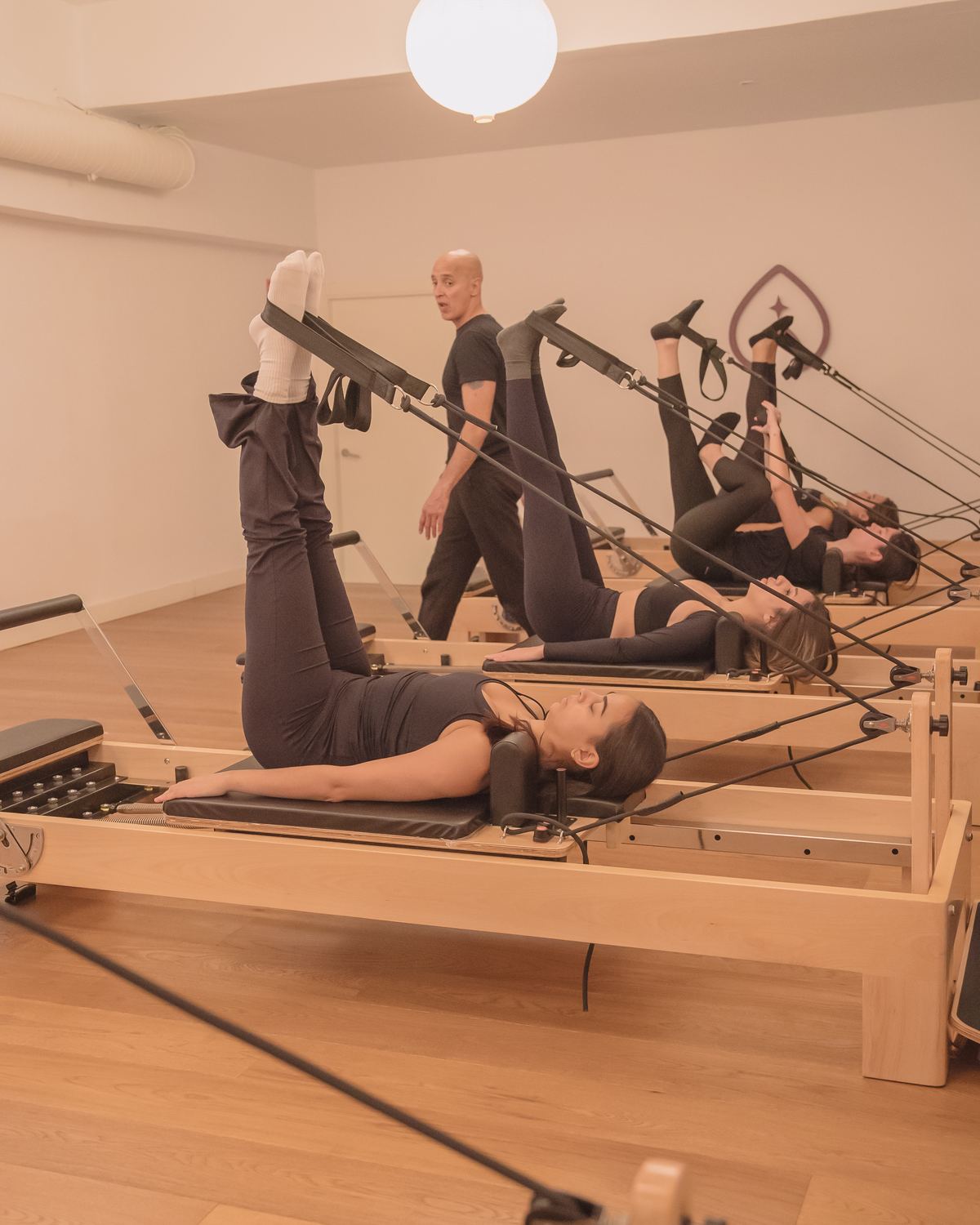
At Pinar Pilates, at Calle del Pinar 8, 28006 Madrid (Salamanca district), we offer more than 40 classes a week with a maximum of 8 people per session. This capacity limit is not just a matter of space: it is what allows the instructor to pay real attention to each student’s breathing, which is the central element of the parasympathetic activation that improves sleep.
More than 490 people have rated their experience at Pinar Pilates on Google, with an average of 4.9 out of 5.
Our timetable runs from 7:30 to 20:50 Monday to Thursday (until 18:50 on Fridays), and from 9:00 to 13:50 at weekends, so you can choose the time slot that best fits your sleep habits and your pace of life. If your insomnia has an anxiety or stress component, you can also read our guide on Reformer Pilates for anxiety and the one on work stress.
If it is your first time, we recommend starting with our first Reformer Pilates class in Madrid, where we explain what to expect and how to prepare.
Our prices are: single class 30 euros, 4-class pack 100 euros, 8-class pack 150 euros, 12-class pack 200 euros, and unlimited monthly plan 250 euros.
Frequently Asked Questions
How long will it take to notice an improvement in my sleep with Pilates?
The first changes are usually noticed between the second and fourth week of regular practice (at least 2 sessions per week). The earliest improvement tends to appear in how easily you fall asleep and in reduced body tension at bedtime. Improvements in deep sleep quality and in the reduction of night-time awakenings usually require between 6 and 8 weeks of consistent practice. Variability between people is large: those who start with worse sleep quality tend to notice changes more quickly.
Is Pilates better in the morning or in the evening for sleeping better?
For most people, both time slots work. An evening session (up to about 2 hours before bedtime) can have a more direct effect that same night, thanks to the drop in body temperature and parasympathetic activation. A morning session has a more cumulative effect across the day: it improves the daytime cortisol profile and increases the adenosine available at night. The practical recommendation is to choose the time that allows you to be consistent across the week, because regularity matters more than the specific slot.
Can Pilates help if I have long-term insomnia?
Chronic insomnia has multiple possible causes (medical, psychological, behavioural) and in many cases requires specialist assessment and treatment, including Cognitive Behavioural Therapy for Insomnia (CBT-I), which is the first-line treatment according to international guidelines. Pilates does not replace that treatment, but it can be an effective complement, especially if the insomnia has a component of physical tension, chronic pain or anxiety. If you have been sleeping badly persistently for more than three months, see your doctor.
Are there Pilates exercises I should avoid at night if I want to sleep well?
High-intensity Reformer exercises, such as jumping on the jumpboard or high-resistance series that raise the heart rate a lot, are the ones most likely to interfere with falling asleep if done very close to bedtime. In general, a standard moderate-intensity Reformer Pilates session does not cause that problem. If you practise in the evening and notice that you find it hard to sleep afterwards, tell the instructor: they can adjust the session to finish with more mobility and breathing work, which encourages relaxation.
Does Pilates help with night-time awakenings, not just with falling asleep?
Yes. Frequent night-time awakenings often have a component of nervous system hyperactivation (difficulty returning to a calm state after waking) or of physical pain that interrupts sleep. Pilates acts on both causes: it reduces the reactivity of the sympathetic nervous system over time, and it improves the musculoskeletal pain that can cause awakenings. The breathing techniques described in this article can also be used if you wake up at night and find it hard to get back to sleep.
Sleep is not just rest: it is the time when the body repairs tissues, consolidates learning, regulates emotions and resets the nervous system. When you sleep badly on a chronic basis, everything else is harder. Reformer Pilates is not a sleeping pill, but it is one of the tools with the strongest scientific backing for improving sleep quality in a sustained way, with no side effects and with benefits that go far beyond a good night’s rest.
Book your first class with 50% off at Pinar Pilates: 15 euros instead of 30. It is the most direct way to find out whether Pilates can make a difference to your sleep.
Call us on +34 611 994 729 if you have questions before booking. We are at Calle del Pinar 8, 28006 Madrid (Salamanca district).
Pinar Pilates · Salamanca district, Madrid
Your first reformer class, €15
Groups of 8 people maximum, specialist instructors and more than 40 classes a week. Your first class is half price.
Book my first classCalle del Pinar 8, Madrid · Questions? Message us on WhatsApp