Anxiety does not live only in the head. It settles in the tight chest, in the breath that catches, in the muscles that will not let go even though there is no real danger. It is an experience that occupies the body as much as the mind. And that, precisely, is what makes Reformer Pilates such a relevant tool for those who suffer from it.
This article is not a promise of a cure. Anxiety is a mental health condition that, in many cases, requires professional attention, whether psychological, psychiatric or of another kind. What you will find here is an honest, evidence-based explanation of why mindful movement, and Reformer Pilates in particular, can be a valuable complement within a comprehensive approach to mental health care.
Important notice: Reformer Pilates is a complement to professional mental health treatment, not a substitute. If you suffer from anxiety or any other mental disorder, always consult a health professional.
The Connection between the Body and Anxiety
To understand why physical exercise can influence anxiety, you first need to understand how the autonomic nervous system works. This system regulates involuntary bodily functions: heart rate, breathing, digestion, muscle tension. It is divided into two main branches.
The sympathetic branch is the “fight or flight” mode. When it activates, heart rate rises, muscles tense, breathing speeds up and functions not essential for immediate survival are reduced. In situations of real danger, this response is adaptive. The problem is that, in chronic anxiety, the sympathetic system stays activated in a sustained way without any real threat.
The parasympathetic branch is the one for rest and recovery. When it predominates, heart rate drops, breathing becomes deeper and slower, muscles relax and the body returns to a state of balance. This branch is activated, among other mechanisms, through the vagus nerve, the longest cranial nerve in the body, which connects the brain with the heart, the lungs and the digestive system.
Vagal tone, that is, the capacity of the vagus nerve to respond and activate the parasympathetic branch, is one of the most studied physiological markers in relation to anxiety and emotional resilience. People with higher vagal tone have a greater capacity to recover from stress and regulate their emotions. And this tone can be trained. Controlled breathing and rhythmic movement are two of the most effective stimuli for doing so.
Why Reformer Pilates Helps with Anxiety
Not all exercise works the same way for the nervous system. There is an important difference between running on a gym treadmill with music blaring and performing a footwork series on the Reformer with full attention on the breath. Both activities move the body, but they have very different effects on the mental state.
Enforced Concentration: the Anchoring-to-the-Present Effect
One of the most powerful mechanisms of Reformer Pilates against anxiety is what we might call “involuntary anchoring to the present”. The Reformer requires continuous attention to the position of the body, the resistance of the springs, the alignment of the spine, the direction of movement and coordination with the breath. You cannot get distracted. If you do, you notice it immediately in the execution of the exercise.
For someone with anxiety, whose mind tends to project into the future or ruminate on the past, this demand for attention to the present moment works as an anchor. It is not meditation in the classic sense, but it produces a similar effect: it forces the mind to abandon anxious thought patterns and focus on the here and now.
Breathing and the Autonomic Nervous System
In Pilates, breathing is not a secondary detail. It is a central tool. The method emphasises coordinating movement with specific phases of inhalation and exhalation. This diaphragmatic breathing directly activates the vagus nerve and favours the parasympathetic response.
When you inhale, heart rate rises slightly. When you exhale, it drops. This phenomenon is known as respiratory sinus arrhythmia and is an indicator of vagal tone. A prolonged, controlled exhalation, characteristic of Pilates, activates the vagal brake on the heart and produces a measurable calming effect on the nervous system. During a 50-minute class, this process repeats hundreds of times.
If you want to go deeper into how breathing in Reformer Pilates works and its impact on the body, we have a specific article on it.
Rhythmic Movement and Emotional Regulation
Reformer movements are, for the most part, rhythmic and continuous. The springs absorb impact and create a sense of fluidity not found in conventional strength training. This kind of rhythmic movement has a regulating effect on the nervous system that is also seen in other activities such as walking, swimming or rocking.
Neuroscience suggests that bilaterally coordinated rhythmic movement, that is, movement involving both sides of the body alternately, can facilitate integration between the brain hemispheres and reduce activation of the amygdala, the region of the brain involved in the fear and anxiety response.
The Sense of Control and Competence
Anxiety is frequently accompanied by a feeling of lack of control. The body does not respond as we want, thoughts fire off on their own, situations overwhelm us. Reformer Pilates offers something concrete and tangible: the possibility of acquiring progressive mastery over your own body.
Every week you practise, you notice that something that used to be difficult now flows. That a position you struggled to hold you now hold with ease. This sense of progress and competence, even though it happens on the physical plane, has a real impact on self-efficacy and personal confidence. For someone with anxiety, recovering a sense of control over something, even over the body in a 50-minute class, can have a significant effect.
Pilates versus Other Types of Exercise for Mental Health
Physical exercise in general has proven benefits for mental health. But not all types of exercise produce the same effects. Reformer Pilates stands out for its character as mindful movement.
High-intensity aerobic exercise activates the sympathetic system during the activity. The beneficial effects on mood come mainly from the neurotransmitters released afterwards (endorphins, serotonin, dopamine). But during the activity, the level of physiological arousal is high, which can be aversive or counterproductive for people with high anxiety or with sensitivity to interoceptive sensations, that is, to the changes that happen inside the body.
Pilates, on the other hand, works at a moderate intensity that does not trigger the sympathetic response. Attention is directed inwards to the body in a controlled, safe way, which trains tolerance of physical sensations without them being associated with danger. This is relevant because one of the characteristics of anxiety is hypervigilance towards bodily sensations, which are interpreted as threatening (a racing heart is perceived as an imminent heart attack, a knot in the stomach as an omen of a bad outcome).
This combination of attention to the body, controlled breathing and movement without high cardiovascular demand makes Reformer Pilates a type of exercise especially suited to people with anxiety. The benefits of Reformer Pilates for general health cover many dimensions, but the mental one is among the most relevant and least recognised.
What the Science Says
The scientific evidence on Pilates and mental health has grown considerably over the last decade. These are some of the most relevant studies.
A meta-analysis published in the Journal of Bodywork and Movement Therapies (2018) by Alves et al. reviewed fourteen studies on Pilates and mental health, with a combined sample of more than a thousand participants. The conclusions indicated that regular Pilates practice produces statistically significant improvements in anxiety, depression and perceived quality of life. The effects were greater in programmes of between 8 and 12 weeks.
A study published in Stress and Health (2016) measured salivary cortisol levels in women with chronic stress before and after an eight-week Pilates programme. The results showed a 25% reduction in morning cortisol levels in the Pilates group, compared with an 8% reduction in the control group doing another type of exercise.
On breathing, a review published in Frontiers in Human Neuroscience (2018) by Zaccaro et al. showed that slow, controlled breathing (between 4 and 6 breaths per minute, similar to that used in Pilates) significantly increases vagal tone and reduces stress reactivity.
This research does not establish that Pilates cures anxiety. What it does show is that it produces measurable changes in stress biomarkers and in validated scales of anxiety and wellbeing, which makes it a complement with empirical backing.
The Setting: Why the Small Group Matters
When talking about Pilates and anxiety, the setting where it is practised is no minor detail. For many people with anxiety, large, crowded spaces or those with high performance demands are an additional source of stress, not relief.
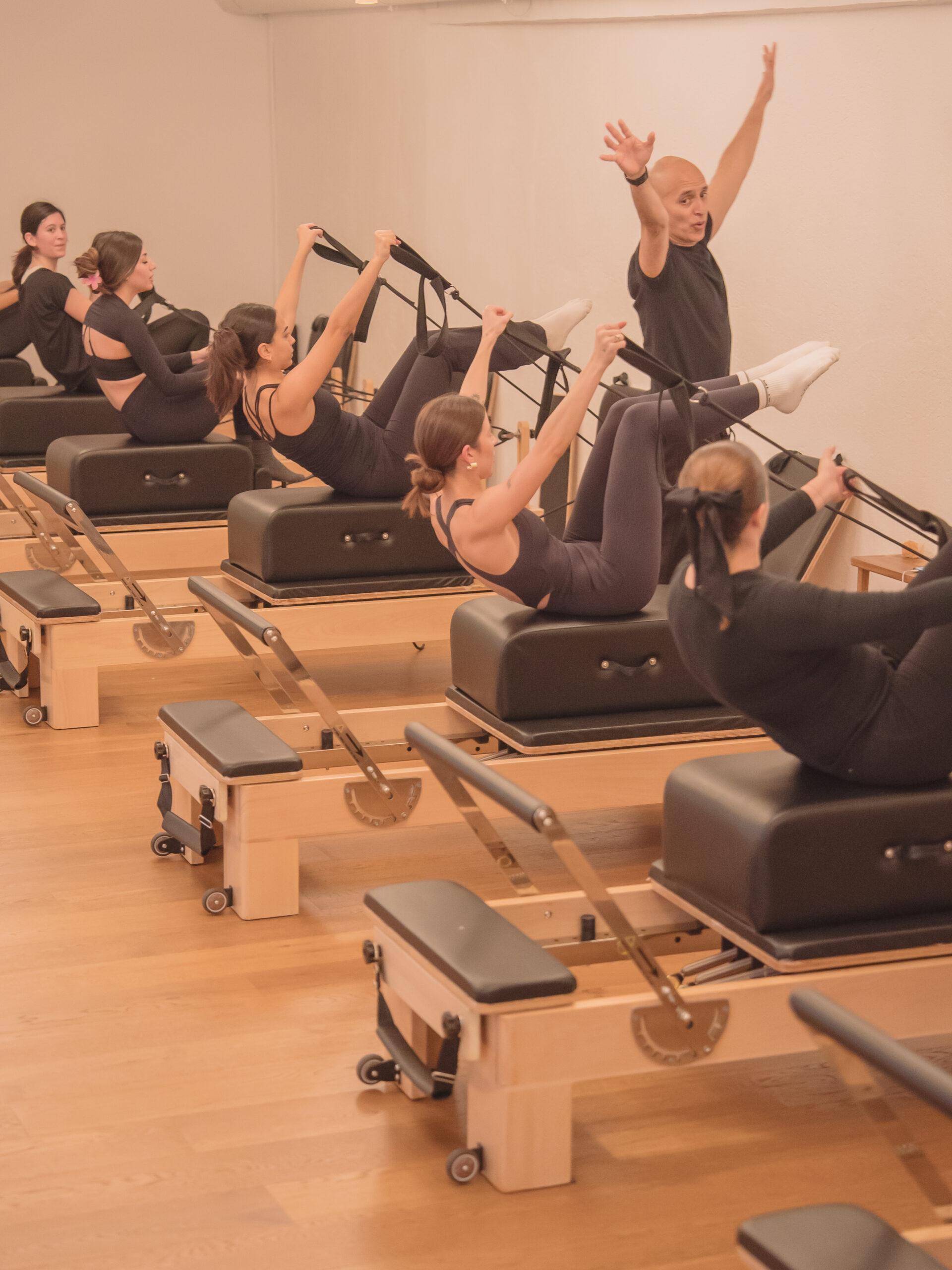
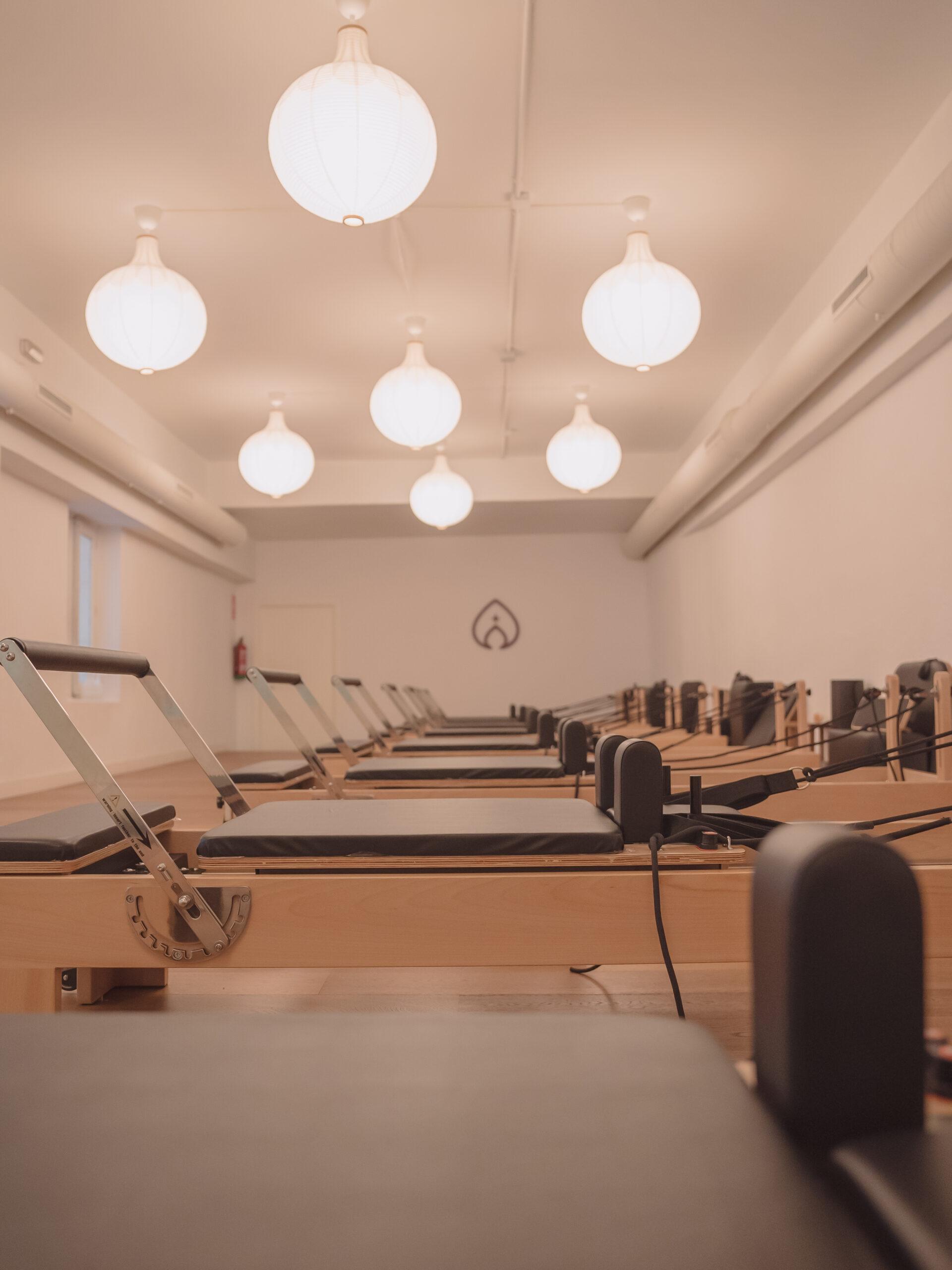
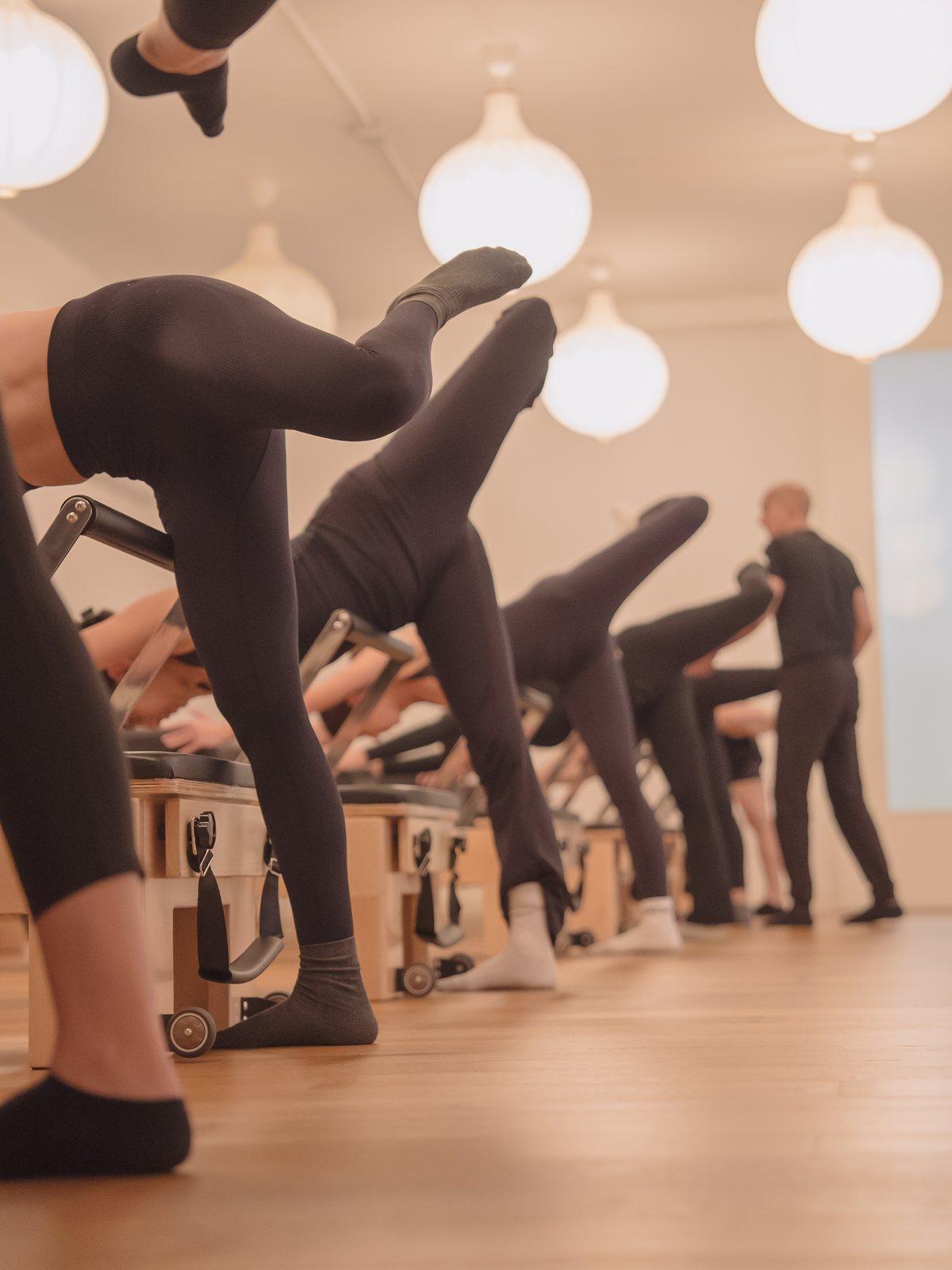
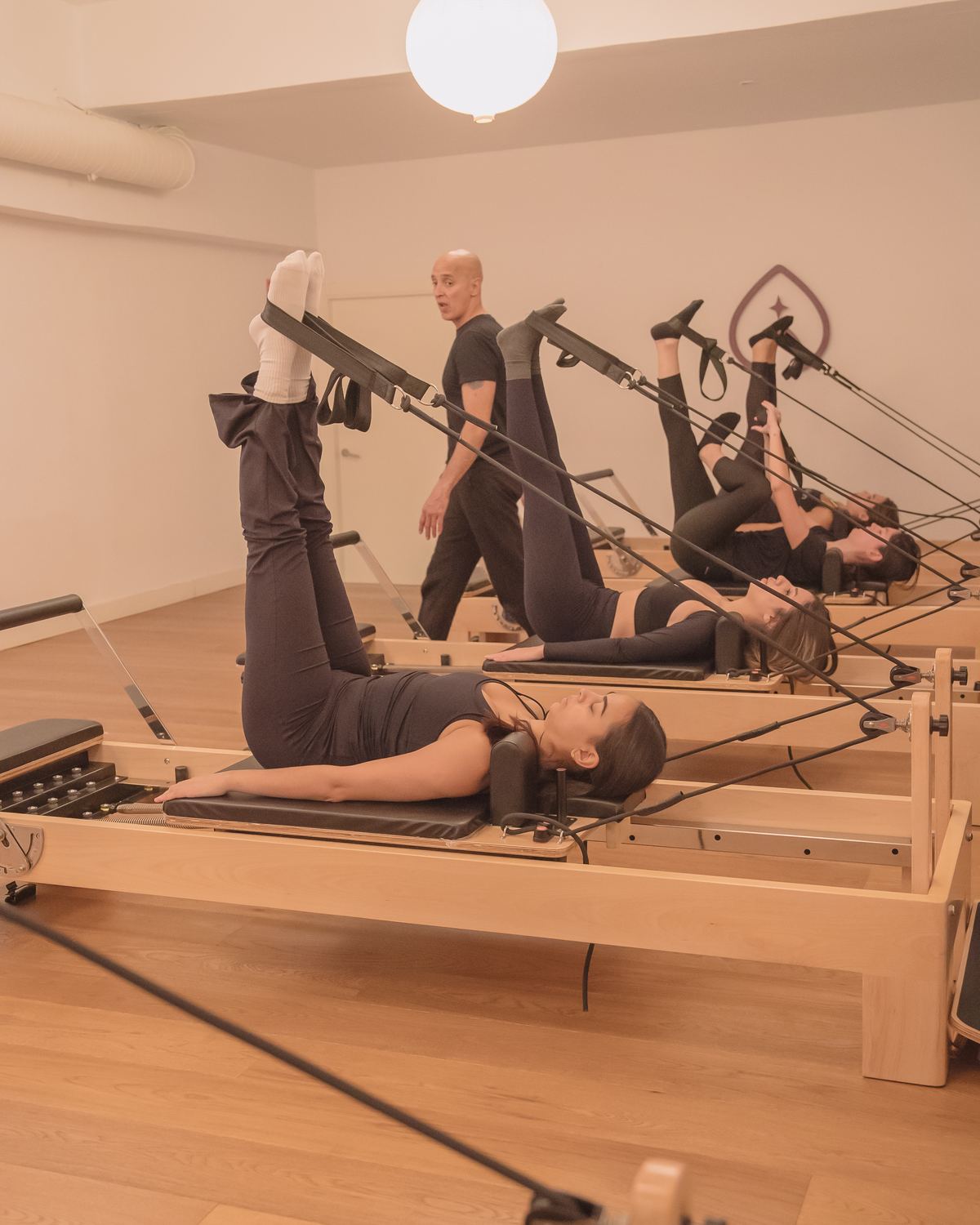
At Pinar Pilates, at Calle del Pinar 8 (Salamanca district, Madrid), classes have a maximum of 8 people. This limit is not only a matter of the technical quality of the instruction, although it is that too. It is a decision that directly affects the emotional experience of the class.
With eight people, there is no forced anonymity or sense of a crowd. The instructors, who include Giuliana Di Giovanni, Gabriela Seminara, Camila T, Montserrat Sierra and Abel Gomez, can genuinely attend to each person, remember their conditions, adjust the resistance of their springs, correct calmly. The atmosphere created is intimate and safe, without competition and without the pressure of keeping up with a large group.
For someone who approaches exercise from a state of high anxious arousal, this setting makes a concrete difference. You do not have to prove anything. You can go at your own pace. You can ask questions. You can make mistakes without anyone noticing.
If you are wondering what the first Reformer Pilates class is like, we explain everything you can expect so you arrive feeling at ease.
Anxiety, Stress and Pilates: a Continuum
It helps to distinguish between anxiety as a diagnosed clinical disorder and the elevated everyday stress that many people experience without reaching the clinical threshold. Reformer Pilates is relevant in both cases.
Work stress, mental overload, difficulty switching off at the end of the day, insomnia, irritability, chronic muscle tension… these are experiences that do not always warrant a clinical diagnosis but that significantly erode quality of life. And they are precisely the ones that can benefit most from a regular Reformer Pilates practice.
When the body learns to respond to mindful movement with calm, that learning generalises. The nervous system becomes a little more flexible, a little more able to switch from alert mode to rest mode. Not all at once. Not in a day. But with consistency, yes.
Realistic Expectations
Reformer Pilates is not therapy. It does not replace psychotherapy, psychiatric assessment or medication when it is indicated. If you suffer from an anxiety disorder that significantly affects your daily life, the first decision is to seek specialist professional help.
What Pilates can offer, with regular practice and in the right setting, is the following:
- A nervous system regulation tool you can use several times a week.
- A space of full attention to the body that interrupts cycles of anxious thinking.
- An improvement in sleep quality and in energy levels, which indirectly reduces vulnerability to stress.
- A progressive sense of competence and control over your own body.
- A safe, non-competitive social environment that can counteract the isolation that sometimes accompanies anxiety.
None of this happens in a single class. Most of the studies cited observe significant changes from six to eight weeks of consistent practice. Consistency matters more than intensity.
More than 490 people have rated their experience at Pinar Pilates on Google, with an average of 4.9 out of 5.
Frequently Asked Questions
I have anxiety and have never done Pilates. Where do I start?
The first class at Pinar Pilates has a special price of 15 euros (50% off the usual price of 30 euros). It is a normal class, not a separate course. The instructors know in advance the conditions and goals of each new student and adapt the session accordingly. You do not need previous experience or a specific level of fitness.
How many times a week should I practise to notice effects on anxiety?
Most of the studies that show improvements in anxiety use protocols of two to three sessions a week for at least six weeks. At Pinar Pilates we offer more than 40 classes a week, which makes it easy to find slots that fit any schedule.
Can I do Pilates if I am taking anxiety medication?
Yes. Pilates does not interact with the usual medications for anxiety. If you have any specific doubt, always consult your doctor or psychiatrist. In general, moderate exercise is compatible with and recommended alongside pharmacological treatment.
Won’t the group setting make me more anxious?
It is a frequent and completely valid concern. That is why the small-group format (a maximum of 8 people) makes a real difference. It is not a big gym or a class of 20 people. It is a small group in an intimate space, with instructors who know your name and your situation. Most people with social anxiety find this setting far more manageable than they expected.
Which price option is best to start with?
If you want to try before committing, the first class costs 15 euros. If you decide to continue, the 4-class pack (100 euros) is a good option for assessing whether Pilates fits your routine before moving to a monthly format. The unlimited classes option (250 euros a month) offers the best value for those who want to practise at the frequency needed to notice changes in mental health.
Start with a Concrete Step
If anxiety is part of your life and you are looking for tools to help you manage it better, Reformer Pilates can be a valid starting point. We are not asking you to believe in any miracle. Only to see for yourself how your body responds to a class of mindful movement, breathing and attention to the present.
At Pinar Pilates, at Calle del Pinar 8, Madrid, we are waiting for you with groups of a maximum of 8 people, more than 40 classes a week and a team that knows how to support you from day one.
For any questions before booking, you can call us on +34 611 994 729. We are here to help.
Book your first class with 50% off
Pinar Pilates · Salamanca district, Madrid
Your first reformer class, €15
Groups of 8 people maximum, specialist instructors and more than 40 classes a week. Your first class is half price.
Book my first classCalle del Pinar 8, Madrid · Questions? Message us on WhatsApp