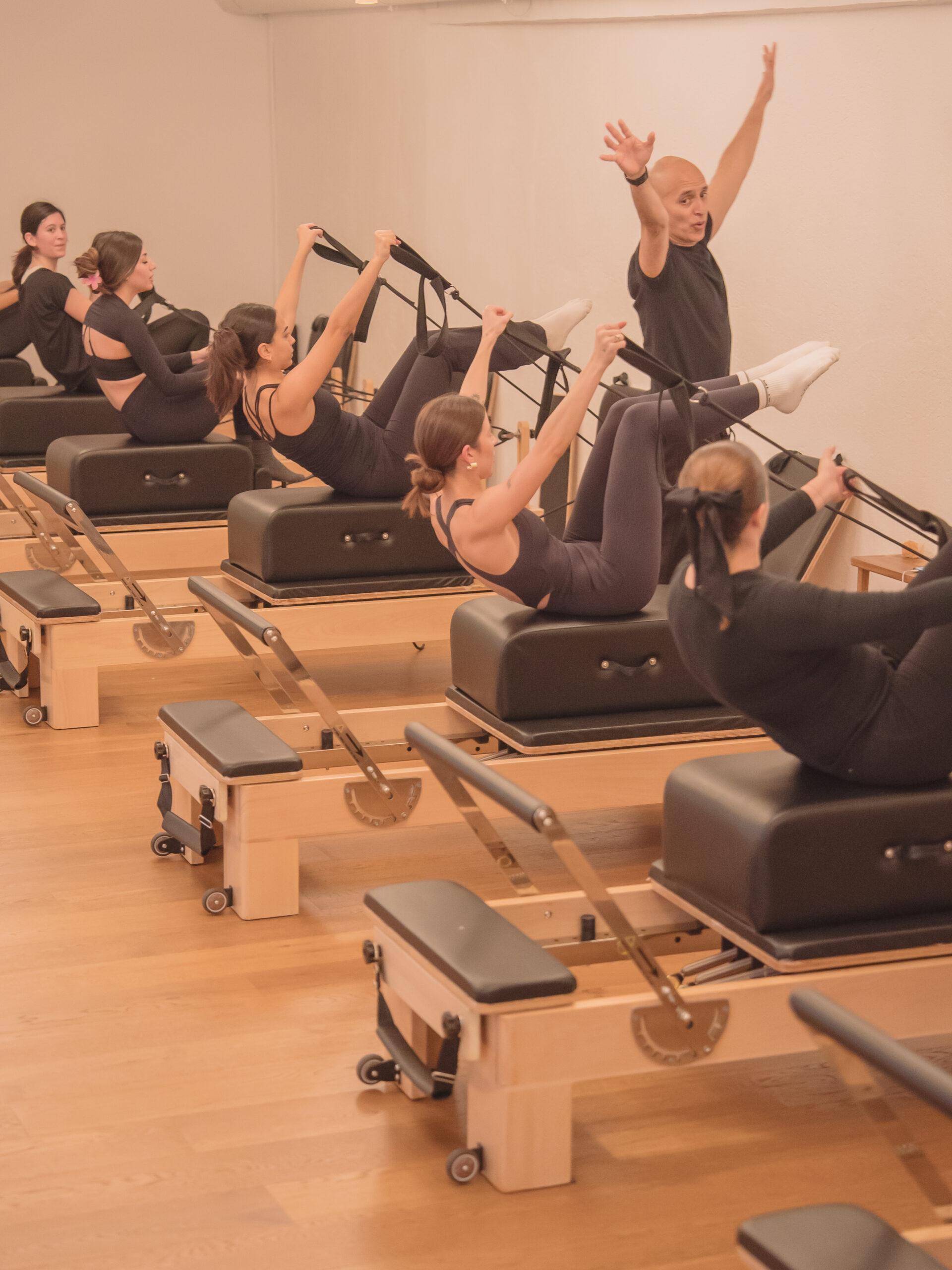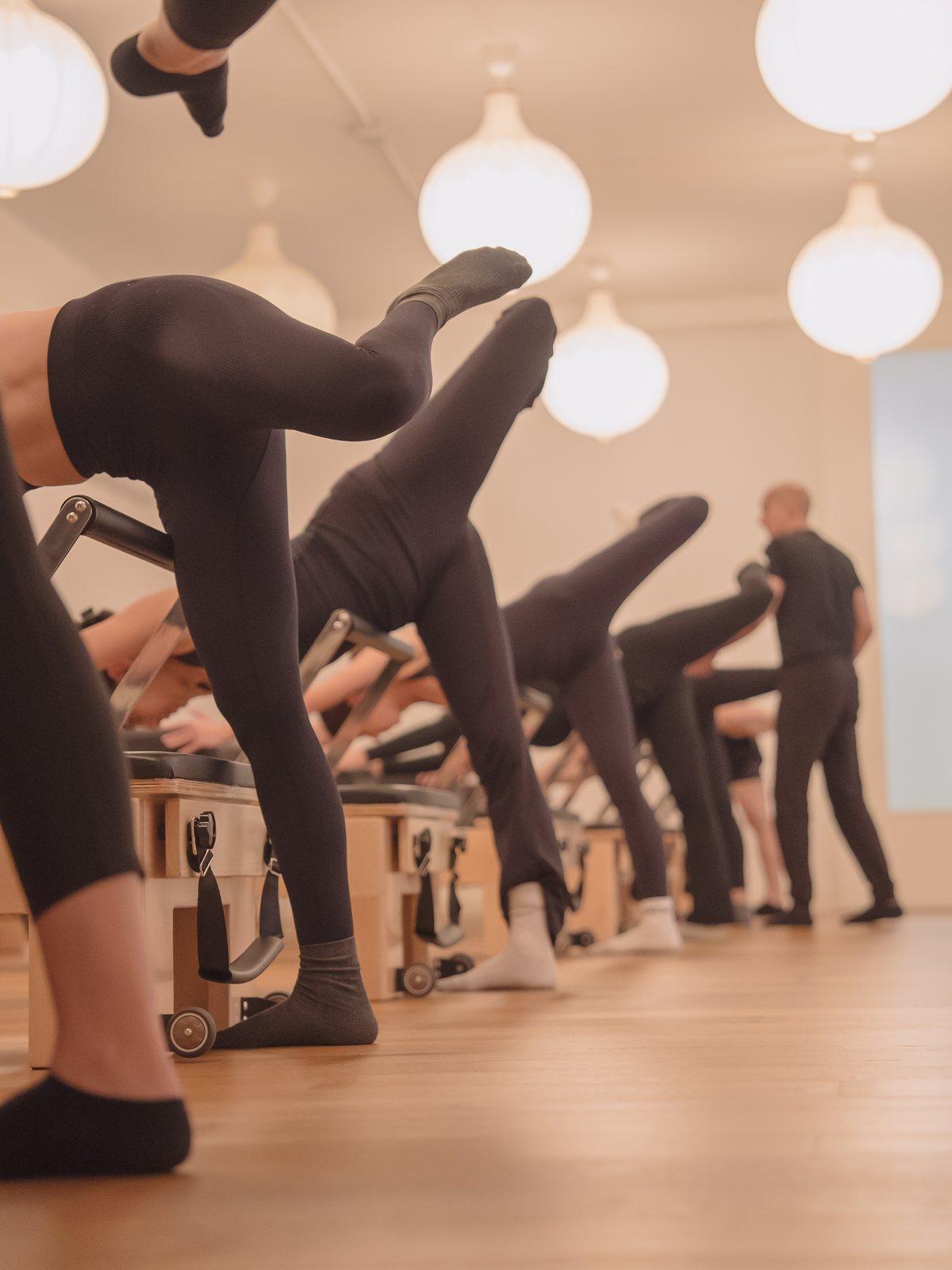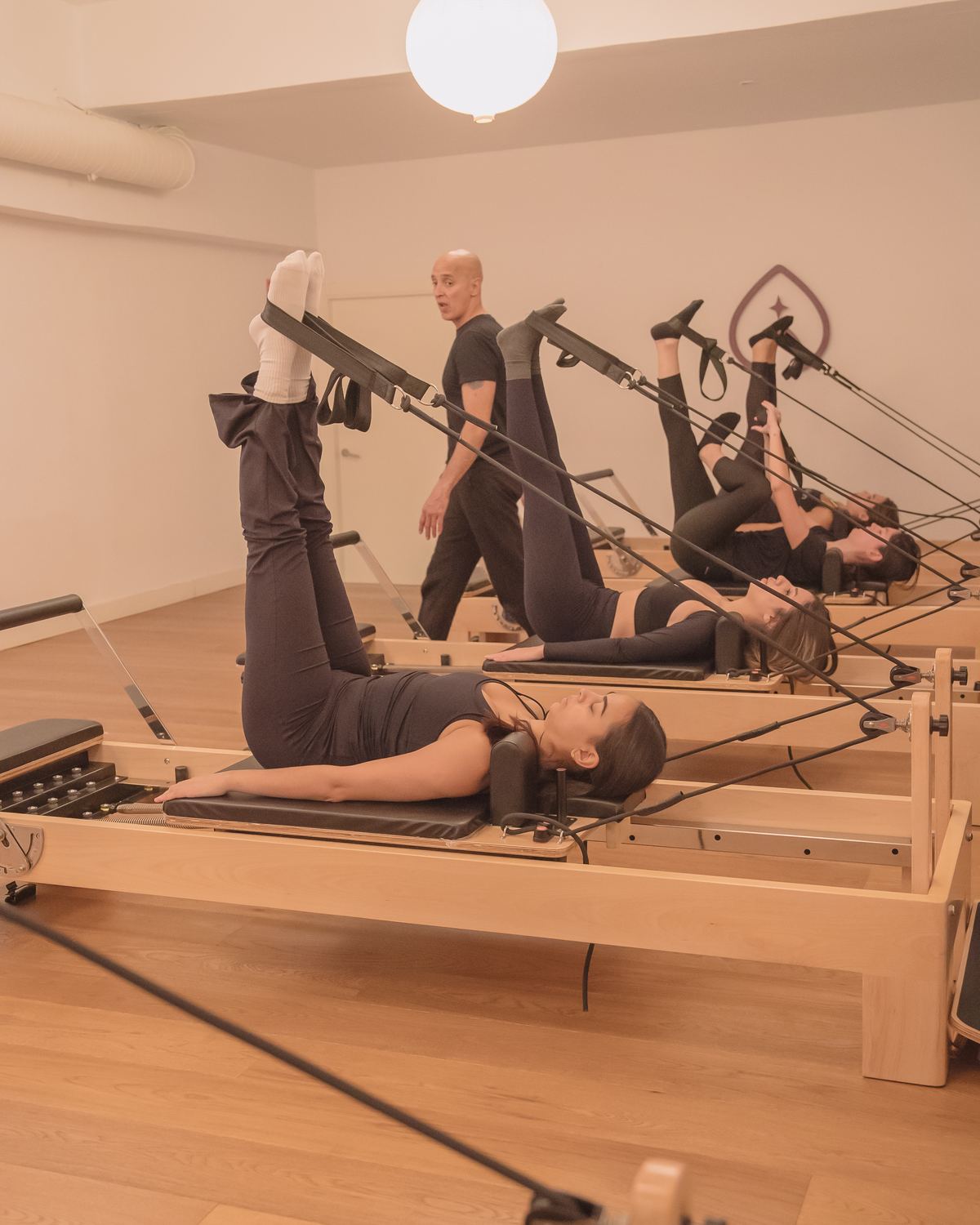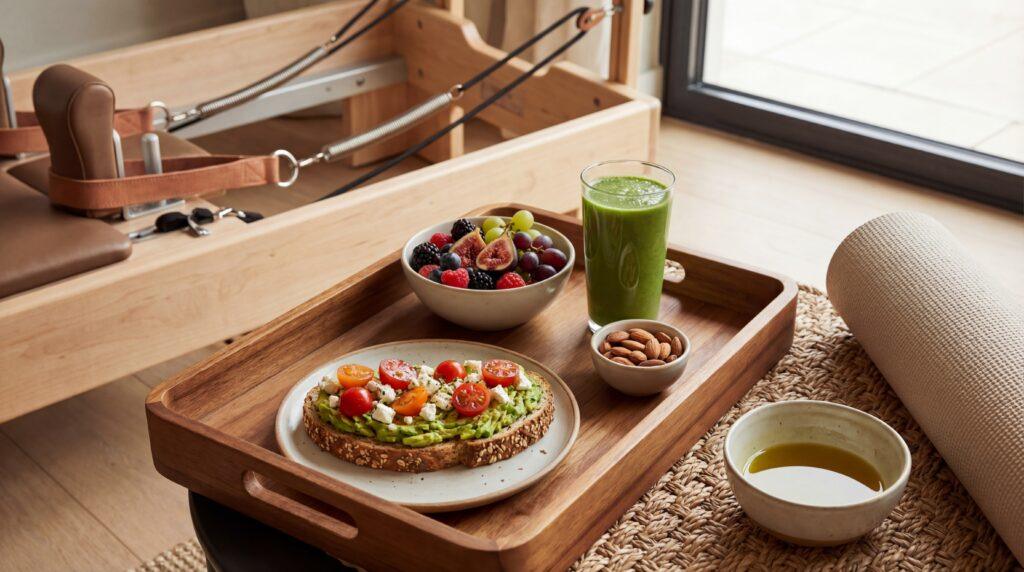
You arrive on time for your Reformer Pilates class. You have your kit ready, your mat and your water. But there is one element many people overlook week after week and that directly influences how you feel during the session and how your body recovers afterwards: what you have eaten.
The relationship between Reformer Pilates and nutrition is not complicated, but it does need some attention. It is not about following a strict diet or counting calories to the last gram. It is about understanding what your body needs at each moment to perform well, recover and progress.
This guide offers general guidance on eating and hydration to support your Reformer Pilates practice. It is not an individualised nutrition plan. If you have specific goals or particular health conditions, consult a registered dietitian who can design a personalised plan for you.
What to Eat before a Reformer Pilates Class
Timing Matters as Much as the Food
The time you leave between your last meal and the class is one of the most decisive factors. Arriving with a full stomach makes the exercises that work the core harder, causes discomfort during flexion and can bring on nausea. Arriving after an extreme fast can leave you without energy halfway through the session.
The recommended window for a main meal is 1.5 to 2 hours before class. If you can only eat something light, 30 to 45 minutes before is enough for a small snack.
What to Prioritise in the Pre-Class Meal
A useful pre-workout meal for Reformer Pilates combines two elements:
- Moderately digested carbohydrates: they are the main fuel during exercise. You do not need an excessive amount, but enough to have energy available.
- Moderate protein: it helps protect muscle tissue during effort and improves the feeling of fullness without weighing on the stomach.
What to avoid before class: very fatty or fried foods, or foods high in insoluble fibre (large amounts of pulses, too many raw vegetables). These slow digestion and can cause discomfort when your body is moving.
Concrete Ideas for before Class
If you have 1.5 to 2 hours: – White rice with grilled chicken and cooked vegetables. – Pasta with tuna and tomato. – A 2-egg omelette with wholegrain bread and a piece of fruit. – Greek yoghurt with oats and banana.
If you have 30 to 45 minutes: – A piece of fruit (banana, apple, pear) with a small handful of nuts. – A slice of toast with hummus or avocado. – A natural yoghurt or a light protein drink. – A cereal bar without too much added sugar.
If you have classes first thing in the morning, like the 7:30 sessions we offer at Pinar Pilates, the usual recommendation is to eat something light 30 minutes before or to train in a moderate fasted state if your body tolerates it well. Not everyone responds the same way, and over time each person learns to identify what suits them best.
What to Eat after a Reformer Pilates Class
The Recovery Window
After a Reformer Pilates session, your muscles have worked actively. Micro-tears have been created in the muscle tissue that need repairing, and glycogen stores have been reduced. The post-workout meal aims to cover both needs: providing protein for muscle repair and carbohydrates to replenish energy.
The most useful time for this meal is within the first one to two hours after finishing the session. There is no absolute urgency if you have already eaten well during the day, but the closer you get to that window, the better the body makes use of the nutrients.
What to Prioritise in the Post-Class Meal
- Enough protein: between 20 and 30 grams of quality protein is a valid guideline for most active adults. Eggs, chicken, fish, pulses, tofu, fresh cheese, Greek yoghurt or a protein drink are practical options.
- Quality carbohydrates: rice, potato, sweet potato, pasta, bread, fruit. This is not the time to restrict them; they are needed for recovery.
- Healthy fats in moderate amounts: avocado, extra virgin olive oil, nuts. They provide anti-inflammatory fatty acids that support joint and muscle recovery.
Concrete Ideas for after Class
- Grilled chicken with boiled potato and a green salad.
- Egg-white omelette with vegetables and wholegrain toast.
- Baked salmon with rice and broccoli.
- Pulses with rice or quinoa (a complete vegetarian protein option).
- Protein shake with milk or a plant-based drink, banana and oats (for when there is no time to cook).
- Greek yoghurt with granola and berries.
Hydration: Before, During and After
Mild dehydration, even before you feel intense thirst, already affects muscle performance, concentration and coordination. And Reformer Pilates, although it does not produce the visible sweat of an intense cardio session, does involve real effort that requires adequate hydration.
Before Class
Arrive hydrated. Drink water normally in the hours beforehand. It is not about drinking litres just before walking in, but about maintaining regular hydration throughout the day. Pale yellow urine is a simple sign of good hydration.
During Class
Always have a bottle of water within reach. Even if the instructor does not take long breaks, you can take small sips between sets. In high-demand classes or on hot days, fluid loss is greater.
After Class
Replace the fluid lost. Water is enough for most people in standard-length sessions. If you sweat a lot or do several sessions back to back, electrolyte drinks can be useful, but they are not necessary for a simple 50-minute class.
Nutritional Principles That Complement Pilates
Protein to Build and Maintain Muscle
Reformer Pilates generates real muscle stimulus. For that stimulus to translate into tone, strength and improved body composition, the body needs enough protein across the day. The general guideline for active people is between 1.4 and 2 grams of protein per kilogram of body weight per day, although this figure varies according to age, goals and other factors.
Spreading protein over several meals throughout the day is more effective than concentrating it in a single sitting.
Anti-Inflammatory Foods for Joint Health
Reformer Pilates works with joint control and mobility. There are foods that systematically help reduce chronic low-grade inflammation and protect the joints:
- Oily fish (salmon, mackerel, sardines, fresh tuna) for their omega-3 content.
- Extra virgin olive oil.
- Fruits and vegetables of varied colours, rich in antioxidants.
- Nuts such as walnuts and almonds.
- Spices such as turmeric and ginger.
Enough Calories for Performance
One of the most frequent mistakes, especially among women looking to lose weight with Reformer Pilates, is restricting calories too much. Eating below your real needs has direct consequences: fatigue during classes, worse recovery, loss of muscle mass and, paradoxically, slower progress towards body composition goals.
Reformer Pilates is a moderate-to-high-intensity activity that requires energy. Restricting too much does not speed up results; it slows them down.
Common Nutritional Mistakes among Pilates Practitioners
Eating Too Little in the Belief That They Will Slim Faster
This is the most common mistake. The logic seems simple: fewer calories, bigger deficit, more weight loss. But the body does not work like a calculator. Severe calorie restriction in people who exercise reduces performance, increases the risk of injury and can lead to a rebound effect. If you are looking for changes in your body composition, a moderate, sustainable deficit is far more effective than extreme fasting.
Ignoring Protein
Many people adjust their meals with the aim of cutting fat or carbohydrates, but pay no attention to protein. Without adequate protein intake, the muscle worked in Pilates sessions does not recover or strengthen properly.
Eating Nothing before Class “So It Doesn’t Bother Me”
Going to an intense class with no food beforehand can cause energy dips, dizziness or simply poor performance. A small snack 30 minutes before is enough to arrive in optimal condition.
Drinking Too Little Water during the Day
Many people do not realise they arrive at class already slightly dehydrated because they drink little during the day. Establishing the habit of drinking water regularly throughout the day is one of the simplest and most effective improvements.
Compensating with Ultra-Processed Food after Class
The effort of the class does not justify eating anything and everything afterwards. Choosing real, nutritious food for the recovery meal makes a real difference to how you feel the next day and to how your body evolves week by week.
How Many Times a Week, and Nutrition
If you practise Reformer Pilates frequently, as recommended in our guide on how many times a week to do Pilates, eating takes on even more importance. The greater the training volume, the greater the need for protein and total calories to sustain performance and recovery.
FAQ: Frequently Asked Questions about Pilates and Nutrition
Can I do Reformer Pilates fasted?
Yes, many people do so without any problem, especially in the early hours of the morning. If your body tolerates it and you do not feel dizzy or lacking in energy, moderate fasted training is a valid option. If you notice you perform worse or feel dizzy, try having a small snack 20 to 30 minutes before.
Do I need to take protein powder if I do Reformer Pilates?
It is not necessary. Protein supplements are a convenient tool, not a requirement. If your usual diet covers your protein needs, you do not need to supplement. If you struggle to reach those amounts through food, a protein shake can be useful as a complement.
What do I eat if I have class at midday and I am coming from work?
Have a good breakfast and, if possible, something light mid-morning (fruit, yoghurt, nuts). That way you arrive at the midday class with energy but without feeling heavy. Afterwards, have your main meal with protein, carbohydrates and vegetables.
Do I need to follow a special diet to see results with Reformer Pilates?
There is no “Pilates diet”. The basic principles are the same as for any healthy lifestyle: real food, enough protein, quality carbohydrates, healthy fats and adequate hydration. However, if you have specific goals, a registered dietitian can design a plan adapted to your particular case.
Is it normal to feel hungry after a Reformer Pilates class?
Completely normal. Reformer Pilates generates real energy expenditure, especially in intermediate or advanced classes. Feeling hungry afterwards is a logical physiological signal. What matters is that the post-workout meal is nutritious and satisfying, not that you skip it.
Important Note
The information in this article is general guidance on basic sports nutrition. It does not replace the advice of a registered dietitian. If you have weight-loss goals, specific muscle-gain goals, health conditions or food intolerances, consult a nutrition professional who can design a plan adapted to your personal situation.
Start on the Right Foot: Your First Class at Pinar Pilates
Nutrition is an important pillar, but the first step is still booking your first class. At Pinar Pilates, located at Calle del Pinar 8 (Salamanca district, Madrid), we work in groups of a maximum of 8 people so the instructor can give you individual attention from the very first session.
More than 490 people have rated their experience at Pinar Pilates on Google, with an average of 4.9 out of 5.
With more than 40 classes a week spread across morning, midday and evening times from Monday to Sunday, it is easy to find the slot that fits your routine. And if you are wondering what to eat before your first session, the simple answer is: something light, 1 or 2 hours before, and plenty of water during the day.
You can find out more about what to expect in our guide to your first Reformer Pilates class in Madrid.
For any questions, call us on +34 611 994 729.
Book your first class with 50% off
Pinar Pilates · Salamanca district, Madrid
Your first reformer class, €15
Groups of 8 people maximum, specialist instructors and more than 40 classes a week. Your first class is half price.
Book my first classCalle del Pinar 8, Madrid · Questions? Message us on WhatsApp