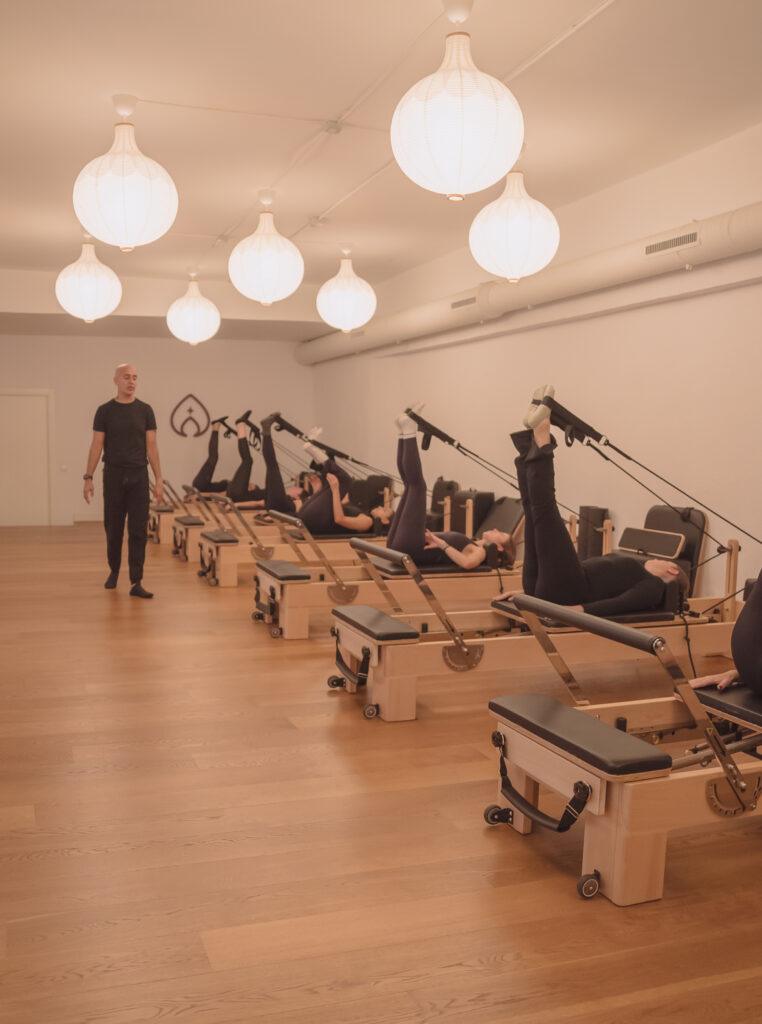
Talking about posture usually brings to mind the image of someone with a straight back and their shoulders pulled back. But posture goes far beyond aesthetics. Poor body alignment affects your breathing capacity (because it compresses the diaphragm), creates chronic pain in the neck, back and shoulders, lowers your energy levels and accelerates joint wear. Correcting your posture is not a whim; it is an investment in your long-term health.
Reformer Pilates is probably the most effective exercise tool for transforming your posture. Not because it promises miracles, but because it works systematically on the muscles, chains and movement patterns that determine how you hold yourself against gravity. And it does so with a level of precision other methods do not reach.
In this guide we explain why your posture has got worse, how the Reformer corrects it, which exercises are the most effective and how long you need to see real changes.
Scientific evidence: Pilates and posture
- An 8-week Reformer Pilates programme (2 sessions/week) markedly improved postural alignment (p < 0.001, large effect) and body appreciation (p < 0.01) and reduced social appearance anxiety (p < 0.001) in office workers.
Source: Taştan Z et al. (2025). BMC Sports Science, Medicine and Rehabilitation, 17(1):280. PMID 41024232. - A systematic review of 9 studies and 643 participants (2024) concluded that there is substantial evidence that Pilates improves spinal deformities and posture, as well as quality of life, pain and function.
Source: Li F et al. (2024). BMC Sports Science, Medicine and Rehabilitation, 16(1):55. PMID 38388449. - Pilates markedly improves cervical alignment and neck function in people with forward head posture, a common problem among office workers.
Source: Kim HL et al. (2025). Isokinetics and Exercise Science, 33(4):302-312. DOI 10.1177/09593020251333254.
What Causes Poor Posture
Key answer: The main causes of poor posture are: prolonged sedentary behaviour (sitting for 8+ hours shortens the hip flexors and weakens the glutes), excessive screen use (causing forward head posture), weakness of the stabilising core muscles, and muscle imbalances between the anterior and posterior muscles of the trunk.
A Sedentary Lifestyle and Hours of Sitting
The human body is not designed to stay seated 8 hours a day. When we sit, the hip flexors shorten, the glutes switch off, the lumbar spine loses its natural curve and the head moves forward. Over time, these patterns set in: the muscles that should hold you up weaken, and those that should be relaxed shorten and tighten.
According to data from the Spanish National Health Survey (2020), more than 36% of the adult population reports an insufficient level of physical activity. In a city like Madrid, where many professionals combine office days with commutes by car or metro, the hours accumulated in a seated position easily exceed 10 a day.
Office Work
The typical posture in front of a computer is a catalogue of misalignments: forward head, rounded shoulders, increased thoracic kyphosis, posterior pelvic tilt. The keyboard and mouse encourage internal rotation of the shoulders and scapular protraction. The screen, if it is not at the right height, forces sustained flexion or extension of the neck.
The problem is not solved with an ergonomic chair (although it helps). It is solved by strengthening the muscles that counteract those positions and by building the body awareness to notice when you are slipping into them.
Excessive Phone Use
“Text neck” is a term coined to describe the cervical flexion position we adopt when looking at a phone. With the head tilted 45 degrees forward, the load on the cervical spine goes from around 5 kg (neutral position) to more than 20 kg. Repeated for hours a day, over months and years, the result is increased thoracic kyphosis and loss of the natural cervical lordosis.
Specific Muscle Weakness
Poor posture is not just a habit. It is the reflection of a pattern of muscle weakness and shortening. The muscles that tend to be weak include the deep cervical flexors, the middle and lower trapezius, the rhomboids, the thoracic extensors, the transversus abdominis, the glutes and the external hip rotators. Those that tend to be shortened or overactive include the upper trapezius, the pectorals, the hip flexors, the hamstrings and the sternocleidomastoid.
Correcting posture means strengthening the former and stretching the latter. And doing it in a coordinated way, not in isolation.
Why Reformer Pilates Is the Best Exercise for Posture
Key answer: Reformer Pilates is especially effective for improving posture because it activates the deep core in every exercise, works strength and flexibility at the same time, and allows muscle imbalances to be corrected with variable resistance. A 2024 systematic review (BMC Sports Science) confirmed substantial evidence that Pilates corrects spinal deformities and improves postural alignment.
Deep Core Activation
The spine needs an internal stabilisation system to stay upright. That system is made up of the transversus abdominis, the multifidus, the pelvic floor and the diaphragm. Reformer Pilates activates these muscles constantly because every exercise demands control of the centre of the body while the limbs move against the resistance of the springs.
Endleman and Critchley (2008), in a study published in Archives of Physical Medicine and Rehabilitation, showed by ultrasound that classic Pilates exercises such as the Hundred and the Leg Circle produce a significant increase in the thickness of the transversus abdominis. The Reformer, with its unstable surface and variable resistance, amplifies this activation.
Working through Muscle Chains
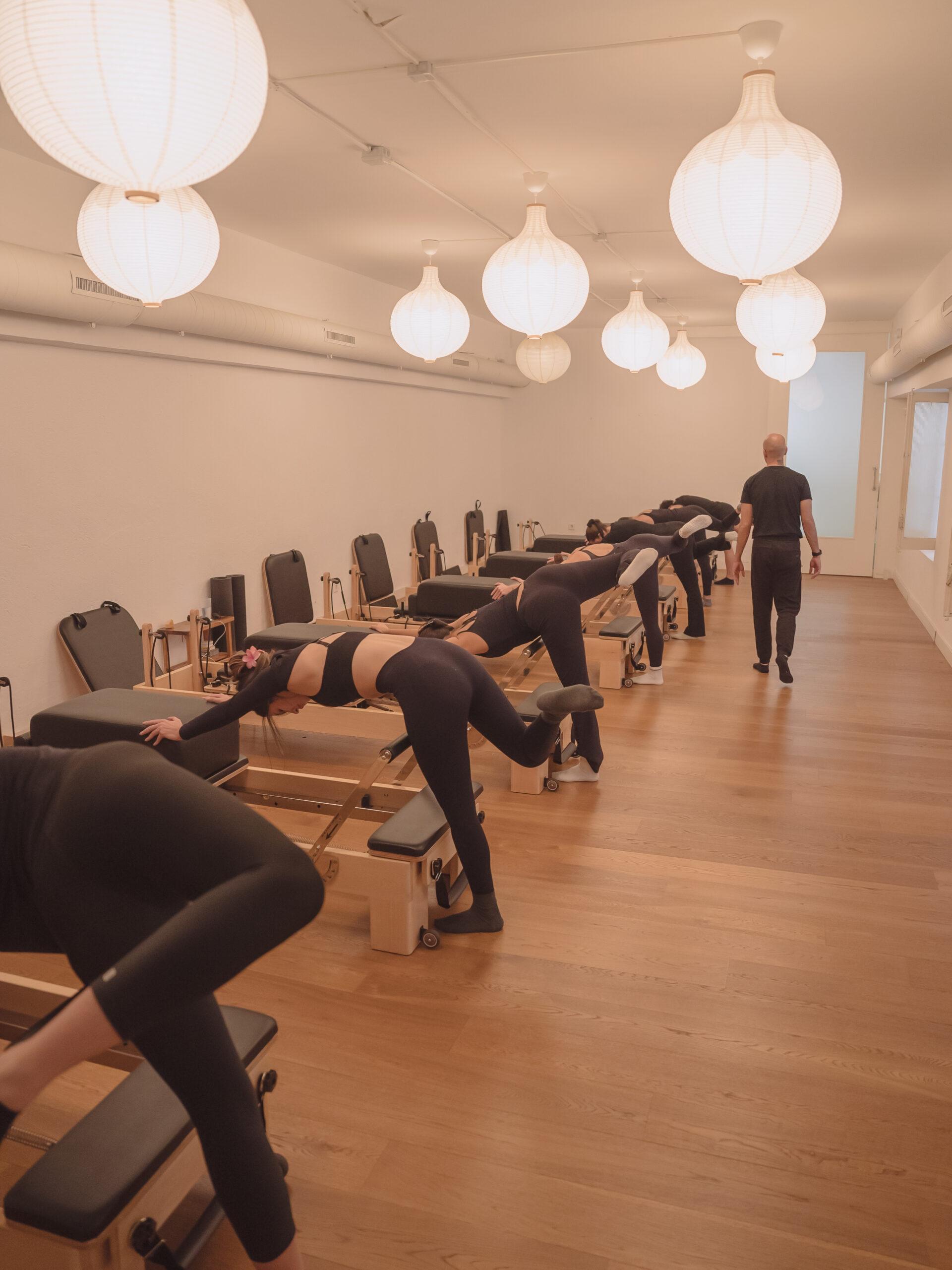
The Reformer does not work isolated muscles; it works chains. An exercise like the Long Stretch simultaneously involves the core stabilisers, the spinal extensors, the scapular stabilisers and the hip flexors. This integration is what produces real postural change, because posture does not depend on one muscle, but on how they all cooperate.
Immediate Feedback from the Machine
The Reformer gives you constant information about your alignment. If the pelvis is uneven, the carriage moves asymmetrically. If the shoulders are tense, the straps pull unevenly. If the core is not engaged, you lose control of the movement. This mechanical feedback is a silent teacher that forces you to correct yourself in real time.
Active Correction by the Instructor
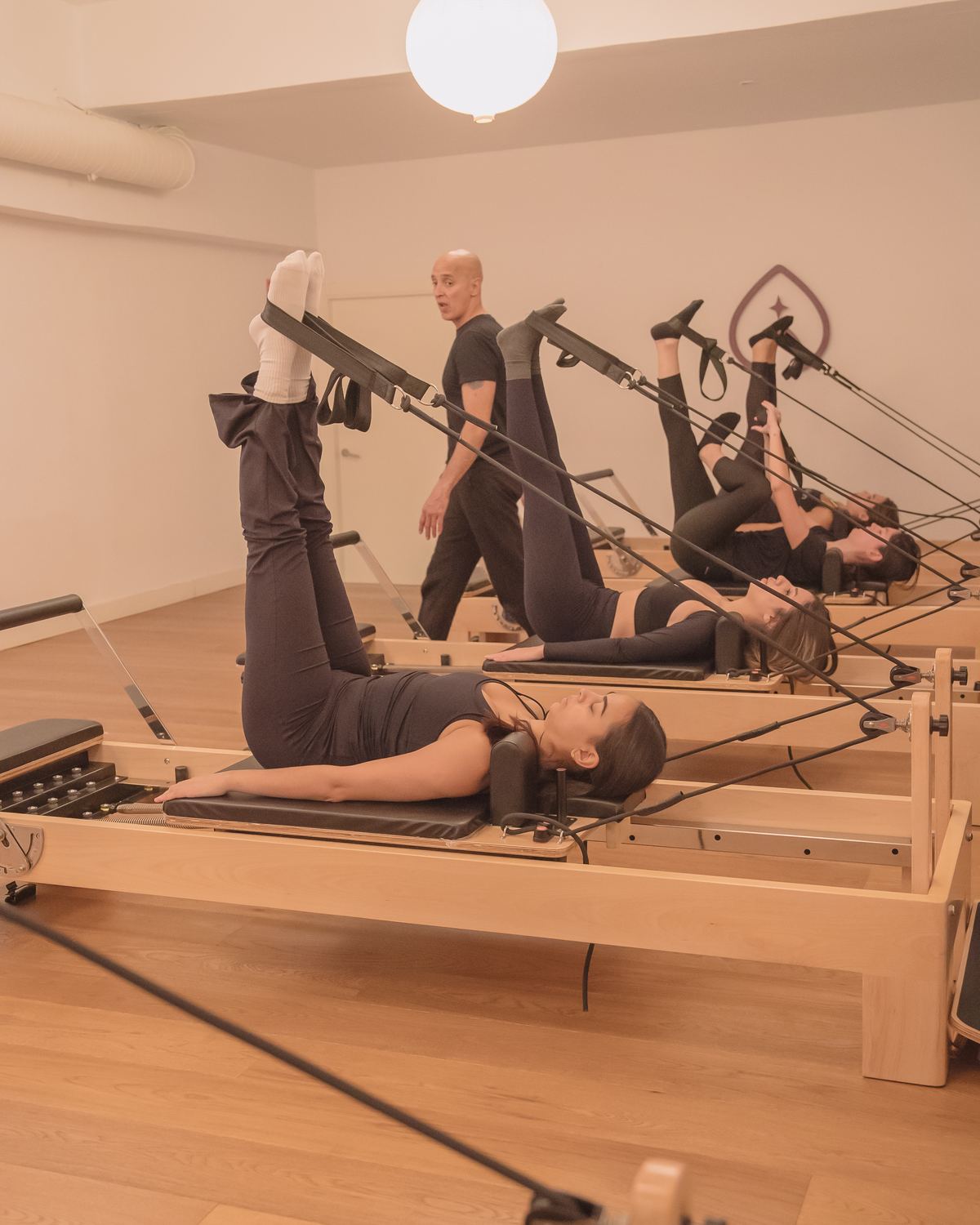
In small-group classes, the instructor can observe your alignment and correct it in every exercise. It is not about adjusting you once and leaving it there, but about repeating the correction until your body integrates the correct position as something natural. This is what sets supervised Reformer Pilates apart from a generic exercise programme.
Li, Omar Dev and Soh (2024) published in BMC Sports Science, Medicine and Rehabilitation a systematic review of 9 studies with 643 participants which confirmed that Pilates is effective for correcting postural and spinal deformities, as well as improving quality of life and reducing pain associated with postural problems.
6 Reformer Exercises That Transform Your Posture
These are the exercises we work on most often at Pinar Pilates to improve our students’ body alignment.
1. Chest Expansion
Position: kneeling on the carriage, hands in the straps, arms extended in front.
Execution: pull the straps back, opening the chest and activating the scapular retractors. Hold the position for 3 seconds with the chest open and the shoulders down. Return with control.
Postural effect: strengthens the rhomboids and middle trapezius, stretches the pectorals and anterior deltoid. Directly counteracts rounded-shoulder posture.
2. Swan on the Reformer
Position: lying face down on the carriage, hands on the bar, arms extended.
Execution: push the bar to slide the carriage forward while lifting the chest off the carriage, extending the thoracic spine. The gaze follows the line of the extension, without forcing the neck back. Lower, articulating the spine.
Postural effect: strengthens the spinal extensors, scapular stabilisers and deep cervical extensors. Reduces thoracic kyphosis and restores extension mobility to the middle back.
3. Pulling Straps
Position: lying face down, chest off the carriage, hands in the straps with the arms extended.
Execution: pull the straps towards the hips, slightly lifting the chest. The shoulder blades draw together and down. Chin tucked. Lower with control.
Postural effect: works the whole posterior chain: rhomboids, lower trapezius, latissimus dorsi, spinal extensors. It is the most direct exercise for correcting scapular protraction and kyphosis.
4. Pelvic Curl
Position: lying on your back, feet on the bar, knees bent.
Execution: peel the pelvis off the carriage vertebra by vertebra until you form a straight line from shoulders to knees. Hold for 2 seconds at the top and lower with articulation.
Postural effect: activates the glutes (frequently inhibited in people with poor posture), strengthens the multifidus and improves segmental spinal mobility. Corrects the posterior pelvic tilt that sets in with hours of sitting.
5. Long Box Arms
Position: lying face down on the long box placed on the carriage. Hands in the straps.
Execution: perform series of pulling (drawing the straps towards the hips), extension (taking the arms back above the back) and abduction (opening the arms out to the sides). The chest stays slightly lifted.
Postural effect: strengthens the scapular stabilisers from multiple angles. Each variation works different fibres of the trapezius, rhomboids and infraspinatus, creating complete scapular stabilisation, which is the foundation of good upper-body posture.
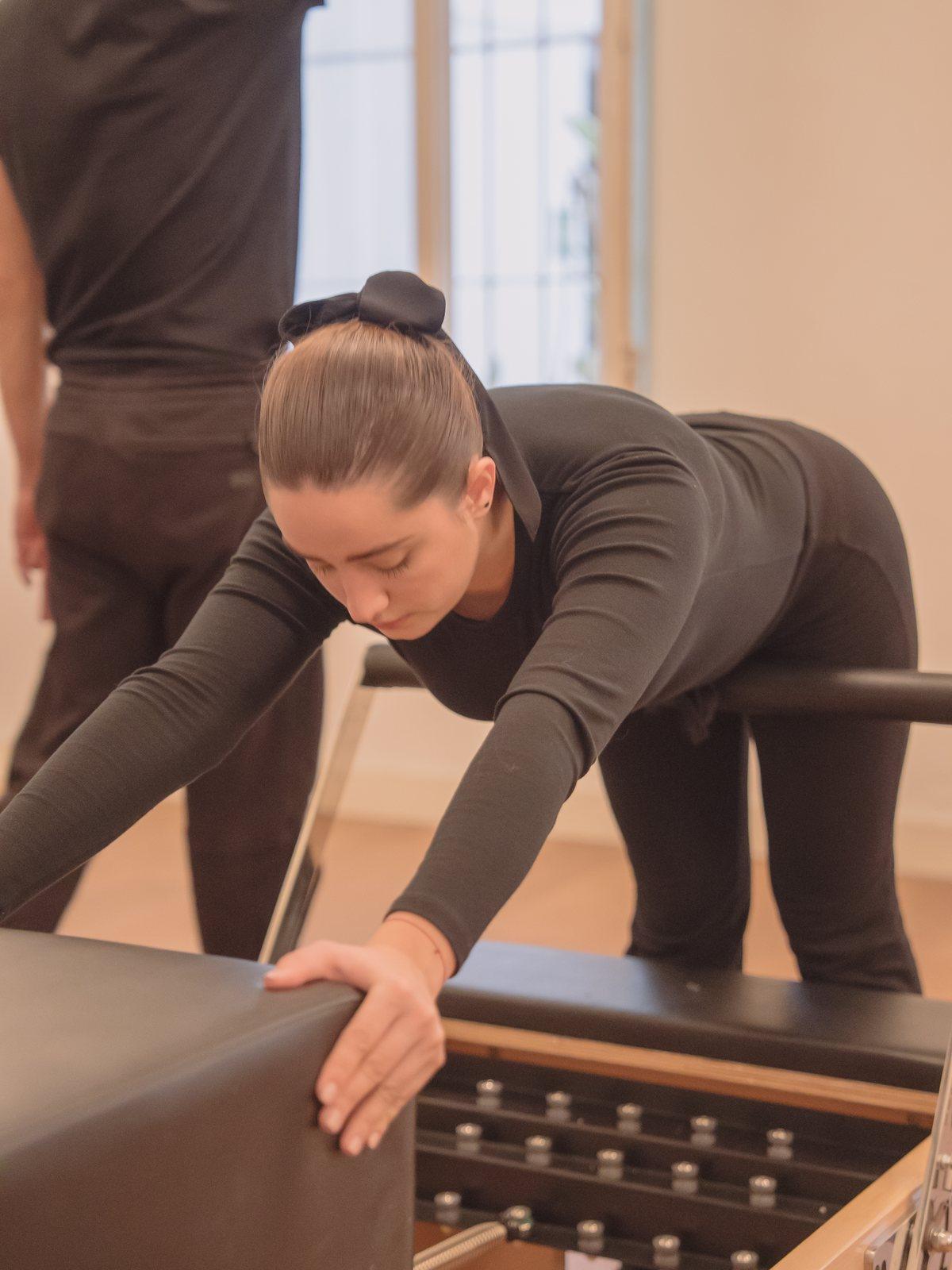
6. Scooter
Position: standing with one foot on the carriage and the other on the platform. Hands on the bar, trunk slightly inclined forward.
Execution: push the carriage back with the foot, extending the hip. Return with control without losing the alignment of the trunk. The core works to keep the pelvis stable throughout the movement.
Postural effect: strengthens the glutes and hip extensors while demanding trunk stabilisation. Corrects the sustained hip-flexion pattern that causes excessive anterior tilt of the pelvis.
How Long You Need to See Changes in Your Posture
Key answer: With 2 Reformer Pilates sessions a week, the first postural changes are felt between weeks 4 and 6. A 2025 study (BMC Sports Science) showed significant improvements in the postural alignment of office workers after 8 weeks. The changes last as long as regular practice is maintained.
Joseph Pilates said: “In ten sessions you will feel the difference, in twenty you will see the difference and in thirty you will have a whole new body”. The scientific evidence qualifies this promise, but confirms that the timeframes are not as distant as you might think.
Weeks 1 to 4: Awareness and Mobility
The first changes are not visible, but they are perceptible. You start to notice your posture during the day. You notice when you lift your shoulders, when you push your head forward, when you round your back. Thoracic spine mobility improves and muscle tension is reduced.
Weeks 4 to 8: Visible Changes
The stabilising muscles have gained enough strength to maintain better alignment for longer. Family or colleagues begin to notice that “you look more upright”. The shoulders draw back, the head sits more over the axis of the spine and the thoracic kyphosis is reduced.
González-Gálvez et al. (2020), in a randomised controlled trial published in Scientific Reports (Nature), showed that a 9-month Pilates programme, with 2 weekly 15-minute sessions, significantly reduced thoracic kyphosis, lumbar lordosis and pelvic tilt in 236 adolescents. The first postural changes were measurable from 6 to 8 weeks.
Weeks 8 to 12: Structural Changes
At 12 weeks, the changes are deeper. It is no longer just that you “remember” to stand up straight, but that your body maintains better alignment automatically because the muscles that support it are stronger and the soft tissues have adapted. The frequency of pain associated with poor posture (neck pain, low back pain, tension headaches) decreases.
To maintain these results, continued practice of 2 sessions a week is enough.
Improve Your Posture at Pinar Pilates
Salamanca District, Madrid
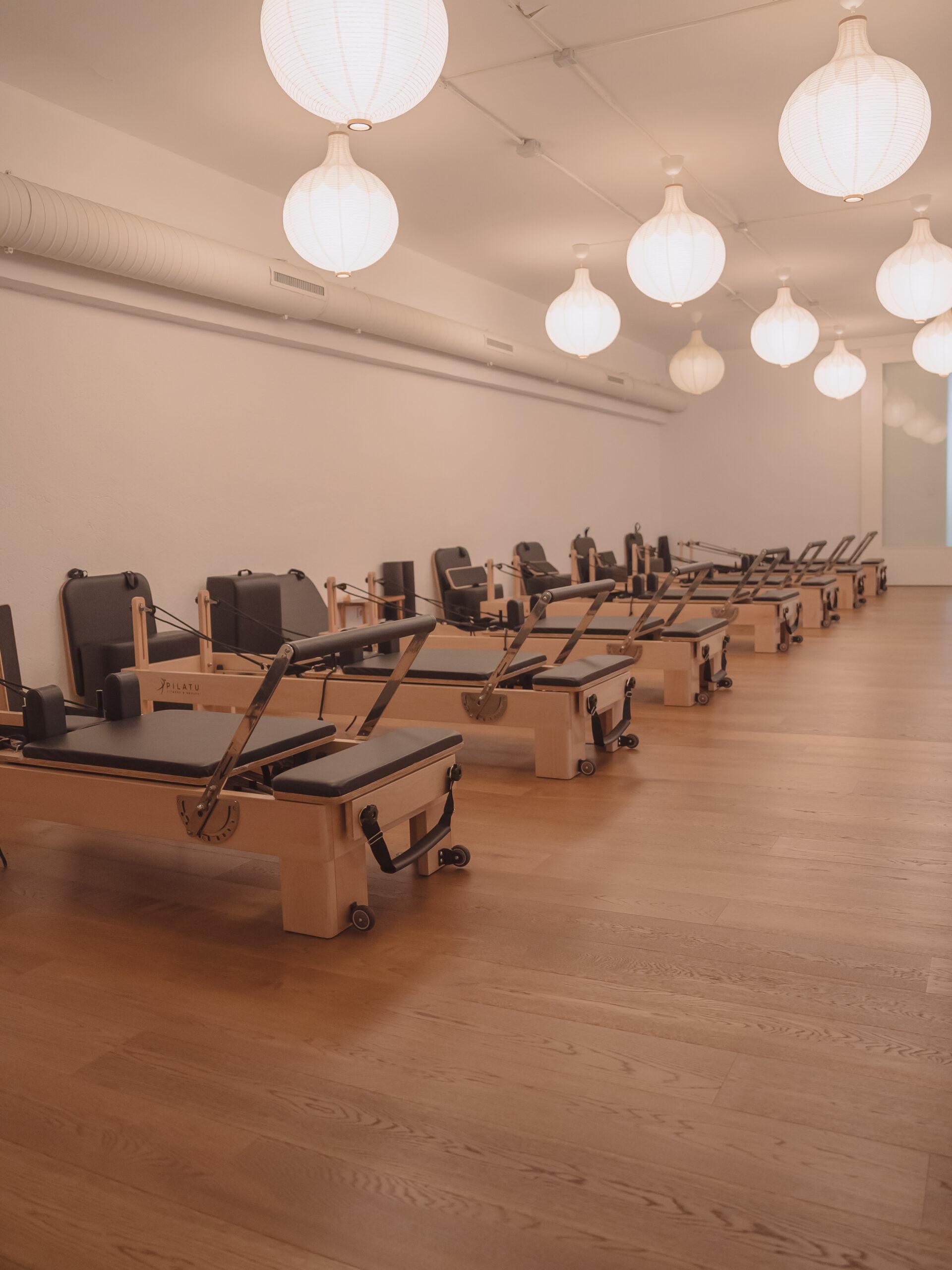
Pinar Pilates is at Calle del Pinar 8, 28006 Madrid, in the heart of the Salamanca district. Five minutes’ walk from Gregorio Marañón metro station (lines 7 and 10) and less than a hundred metres from the Serrano-María de Molina bus stop. If you work in central Madrid, you can fit your sessions in before or after the working day.
Maximum 8 People per Class
Postural correction requires individual observation. In a class of 20 people, the instructor cannot see whether your shoulder blades are correctly positioned or whether your pelvis is uneven. With a maximum of 8 students per class, our instructors correct your alignment in every exercise, and that repeated correction is what transforms your posture.
More than 40 Classes a Week
With more than 40 classes a week, finding two or three times that fit your schedule is not a problem. Consistency is the decisive factor in improving posture, and timetable availability removes excuses.
What Our Students Say
Pinar Pilates has a rating of 4.9 out of 5 on Google with more than 490 reviews. You can check our prices (from 100 euros a month for 4 classes to the unlimited plan at 250 euros a month) or contact us on +34 611 994 729
Frequently Asked Questions
Does Reformer Pilates correct posture permanently?
Postural changes last as long as you keep up regular practice. If you stop practising completely and return to sedentary habits without counteracting them, your posture will tend to deteriorate again. With 2 maintenance sessions a week, the results are preserved in the long term.
Can I improve my posture if I have had poor alignment for years?
Yes. The studies by González-Gálvez et al. (2020) and Li et al. (2024) included participants with chronic postural patterns and showed significant improvements. The body retains the ability to adapt to new stimuli regardless of how long you have had poor posture, although the speed of improvement may vary.
How many classes a week do I need to improve my posture?
The evidence suggests a minimum of 2 sessions a week to get results. Three sessions speed up the process. One session a week can maintain the benefits once achieved, but it is not enough to generate significant changes at the start.
Is the Reformer better than mat Pilates for posture?
The Reformer offers concrete advantages: the variable resistance allows the stabilising muscles to be worked with greater precision, the surface of the carriage provides feedback on alignment, and thoracic extension exercises are performed with more range and safety. For people starting from very poor posture, the Reformer is the most suitable option.
Want to transform your posture with Reformer Pilates? Book your first class with 50% off and start to notice the difference.
Check our prices or call us on +34 611 994 729 with any questions.
You may also be interested in: Pilates for Neck Pain in Madrid, Pilates for Back Pain and Benefits of Reformer Pilates
Pinar Pilates · Salamanca district, Madrid
Your first reformer class, €15
Groups of 8 people maximum, specialist instructors and more than 40 classes a week. Your first class is half price.
Book my first classCalle del Pinar 8, Madrid · Questions? Message us on WhatsApp