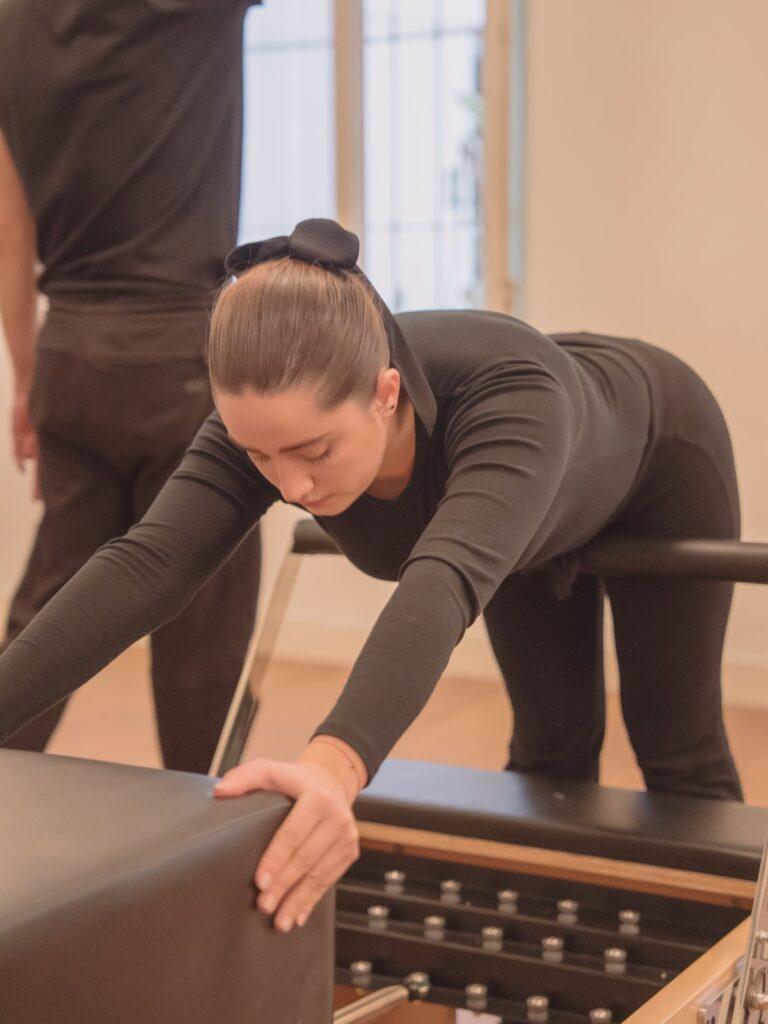
Back pain is the most frequent cause of chronic pain in Spain. According to the Pain Barometer study, published in BMC Public Health (2024), low back pain accounts for 58.1% of all cases of chronic pain in the Spanish population, and one in four adults suffers from it persistently. If you live in Madrid and have spent months (or years) living with back discomfort, you have probably already tried anti-inflammatories, conventional physiotherapy or simply “waiting for it to pass”.
Reformer Pilates offers an alternative with scientific backing. It is not a magic cure and it does not replace a medical diagnosis, but it is a tool that, practised regularly and under supervision, can reduce pain and improve the function of your back.
Important note: before starting any exercise programme to treat back pain, consult your doctor or orthopaedic specialist. The exercises described here are indicative and must be adapted to each case under the supervision of a qualified instructor.
Scientific evidence: Pilates and back pain
- A meta-analysis found that Pilates reduces low back pain by an average of −29.38 points on the VAS scale (95% CI: −33.24 to −25.52) and disability by −4.73 RMDQ points (95% CI: −5.45 to −4.01) compared with minimal intervention.
Source: Huang J, Park HY (2023). Physical Activity and Nutrition, 27(1):16-29. PMID 37132207. - Pilates was identified as the most effective exercise for chronic low back pain, with a standardised effect of −0.83 (95% CI: −1.08 to −0.58) in an analysis of 118 trials with 9,710 participants.
Source: Fernández-Rodríguez R et al. (2022). JOSPT, 52(8):505-521. - The most beneficial programmes for back pain included 1-2 weekly Pilates sessions, sessions of under 60 minutes and programmes lasting 3 to 9 weeks.
Source: Fernández-Rodríguez R et al. (2022). JOSPT, 52(8):505-521.
Why Reformer Pilates Is So Effective for Back Pain
Key answer: Reformer Pilates is effective for back pain because it allows you to work unloaded (lying down), strengthens the deep stabilising muscles of the spine and improves mobility without vertebral compression. A meta-analysis identified it as the most effective exercise for chronic low back pain (Fernández-Rodríguez et al., JOSPT, 2022).
Controlled, Impact-Free Movements
The Reformer lets you work lying down, seated or kneeling, removing direct gravitational load from the spine. Every movement is performed against the resistance of calibrated springs, which forces the body to move slowly and with control. There are no jumps, bounces or sudden movements. For a painful back, this makes an enormous difference compared with other types of exercise.
Strengthening the Deep Core
Chronic low back pain is associated with inhibition of the deep stabilising muscles: the transversus abdominis, the lumbar multifidus, the pelvic floor and the diaphragm. When these muscles do not activate correctly, the vertebrae lose stability and the pain perpetuates itself.
A systematic review by Mendonça et al. (2023), published in Healthcare, analysed eight randomised controlled trials and confirmed that Pilates improves activation of the transversus abdominis and the multifidus in patients with chronic low back pain. Patients who practised equipment Pilates (Reformer) maintained that improvement in the long term, while those who only did mat Pilates lost part of the gain after the programme ended.
Spinal Decompression
Several Reformer exercises involve gentle axial traction: the carriage slides, slightly separating the vertebrae while the springs control the movement. This decompression reduces pressure on the intervertebral discs and relieves compression of the nerve roots, which is especially relevant in cases of disc protrusions or herniations.
Scientific Evidence
Research on Pilates and back pain is extensive:
-
Meta-analysis by Tagliaferri et al. (2023), published in the Journal of Bodywork and Movement Therapies: it analysed 36 articles and 19 randomised controlled trials. It concluded that Pilates significantly reduces low back pain compared with no exercise and with non-specific exercise.
-
Systematic review by Fernández-Rodríguez et al. (2022), published in the Journal of Orthopaedic & Sports Physical Therapy: it compared Pilates, strength exercise, core work and mind-body therapies. Pilates ranked among the most effective options for reducing pain and disability, with optimal programmes of 1 to 2 sessions a week for at least 3 to 9 weeks.
-
Meta-analysis by Park and Yu (2023), published in Pain and Neuroscience: the Pilates group achieved an average reduction of 29.38 points on the Visual Analogue Scale for pain (out of 100), and that improvement was maintained six months after the programme ended.
-
Cochrane review by Yamato et al. (2015): the most cited reference in this field. It analysed 10 trials with 510 participants and concluded that Pilates is superior to minimal intervention for reducing pain and disability, with an excellent safety profile (zero adverse events reported).
7 Reformer Pilates Exercises to Relieve Back Pain
These are the exercises we work on most often at Pinar Pilates, adapting them to each student according to their level and condition. All are performed on the Reformer with adjustable resistance.
1. Footwork
Position: lying on your back on the carriage, with your feet resting on the bar. Head and shoulders relaxed on the headrest.
Execution: push the bar with your feet to slide the carriage out, extending the legs. Return, controlling the movement. It is practised in different foot positions: heels, toes, Pilates V position (heels together, toes apart).
Muscles involved: quadriceps, hamstrings, calves, glutes and core stabilisers.
Why it helps: working lying down, the spine is fully supported and free of load. The exercise strengthens the legs and activates the core reflexively, without creating pressure on the lumbar discs. It is the first exercise of every session because it warms the body up safely.
2. Pelvic Curl (Pelvic Bridge)
Position: lying on your back, feet resting on the bar, knees bent.
Execution: peel the pelvis off the carriage vertebra by vertebra, forming a straight line from the shoulders to the knees. Hold at the top for two seconds and lower, articulating the spine from the thoracic vertebrae down to the sacrum. The carriage can be fixed or slide depending on the level.
Muscles involved: glutes, hamstrings, lumbar multifidus, transversus abdominis.
Why it helps: segmental articulation of the spine (lifting and lowering vertebra by vertebra) improves the mobility of each vertebral segment. It strengthens the glutes, which are inhibited in many people with low back pain, and activates the multifidus directly.
3. Chest Lift
Position: lying on your back, hands in the strap handles, elbows slightly bent.
Execution: flex the trunk, lifting the head and shoulders off the carriage while pulling the straps towards the hips. The movement comes from the abdomen, not the neck. Lower with control.
Muscles involved: rectus abdominis, obliques, transversus abdominis.
Why it helps: it strengthens the anterior abdominal wall, which acts as the spine’s “natural corset”. The Reformer straps assist the movement, allowing you to flex without straining the neck or the lower back. Much safer than traditional crunches.
4. Spine Stretch
Position: sitting on the carriage with the legs extended and hip-width apart, feet resting against the shoulder blocks. Hands on the bar or on the carriage.
Execution: flex the spine forward, starting with the head and articulating vertebra by vertebra, as if you wanted to curl the spine over itself. The carriage can slide slightly. Return to the starting position, rebuilding the spine from the bottom up.
Muscles involved: spinal erectors (stretching), deep abdominals (contracting), hamstrings.
Why it helps: it improves segmental articulation of the spine and stretches the whole posterior chain. Many people with low back pain have stiffness in the thoracic area, which forces the lumbar spine to compensate. This exercise restores mobility where it is missing.
5. Mermaid
Position: sitting sideways on the carriage, one hand on the bar, the other on the carriage. Legs crossed or in mermaid position (both bent to the same side).
Execution: push the bar sideways, sliding the carriage and stretching the whole side of the trunk. The opposite arm rises overhead, following the line of the stretch. Return with control.
Muscles involved: obliques, quadratus lumborum, latissimus dorsi, intercostals.
Why it helps: it stretches the lateral trunk muscles, which are frequently shortened and asymmetrical in people with back pain. It improves lateral spinal mobility and rib expansion. It is one of the exercises that produces the most immediate relief.
6. Modified Long Stretch
Position: kneeling on the carriage, hands on the bar, arms extended. The body forms a straight line from the knees to the head (modified plank position).
Execution: push the carriage back, sliding it with the knees while keeping the arms fixed on the bar. The core works to keep the spine neutral throughout the range. Return by pulling the carriage towards the bar.
Muscles involved: transversus abdominis, rectus abdominis, serratus anterior, deltoids, scapular stabilisers.
Why it helps: it is an integral stabilisation exercise. The Reformer adds controlled instability (the carriage moves), which forces the core to work reactively. The kneeling version reduces the load on the lumbar area compared with the full plank.
7. Pulling Straps
Position: lying face down on the carriage, chest off the edge. Hands holding the straps with the arms extended forward.
Execution: pull the straps back, bringing the arms alongside the body while slightly lifting the chest. The chin stays tucked to protect the neck. Lower with control.
Muscles involved: rhomboids, middle and lower trapezius, latissimus dorsi, spinal erectors, deep cervical extensors.
Why it helps: it strengthens the entire posterior musculature of the back, which is usually weak in people with a kyphotic posture (rounded shoulders). It corrects the imbalance between the anterior and posterior chains, one of the most common causes of upper and mid-back pain.
Reformer Pilates for Specific Pain
Chronic Low Back Pain
This is the most studied indication. The priority exercises are Pelvic Curl, Footwork and Modified Long Stretch, focused on strengthening the deep core and the glutes without loading the lumbar area. In our Reformer Pilates classes we work with light springs at first and increase progressively according to each student’s tolerance.
Upper Back and Shoulder Pain
Generally associated with office postures (thoracic kyphosis, forward shoulders). Pulling Straps and Chest Lift are the key exercises, together with chest-opening variations on the Reformer. The goal is to strengthen the scapular retractors and stretch the pectorals.
Herniated Disc
This requires maximum caution and medical clearance. Loaded spinal flexion and rotations with resistance are avoided. Exercises in a neutral position (Footwork, Modified Long Stretch) and gentle extensions are prioritised. The Reformer is especially useful here because it allows you to work unloaded, reducing intradiscal pressure.
Sciatica
Sciatic pain responds well to exercises that decompress the nerve and strengthen the gluteal muscles. Pelvic Curl (specifically activating the gluteus maximus), piriformis stretches on the Reformer and Footwork in different positions are the most indicated. Deep hip flexions that could tense the nerve are avoided.
How Often to Practise
Key answer: To relieve back pain, a minimum of 2 Reformer Pilates sessions a week is recommended, for at least 6 weeks. The most effective programmes according to the scientific evidence include sessions of under 60 minutes, 1-2 times a week, for 3 to 9 weeks (Fernández-Rodríguez et al., JOSPT, 2022).
2 to 3 Sessions a Week
Most of the studies showing positive results used programmes of 2 to 3 sessions a week. The meta-analysis by Fernández-Rodríguez et al. (2022) found that programmes with at least 1 to 2 weekly sessions already produced significant improvements, but the ideal frequency is between 2 and 3.
If your goal is to reduce active pain, start with 2 sessions a week and consider increasing to 3 once you feel comfortable with the exercises.
When to Notice the First Improvements
Studies show measurable changes from 4 to 6 weeks. Many students report a feeling of relief after the first 2 or 3 sessions, although this is usually due to muscle relaxation and improved mobility rather than structural changes. Real adaptations (muscle strengthening, improved motor control) require a minimum of 6 to 8 weeks of consistent practice.
Long-Term Maintenance
Once the pain has subsided, keeping up 1 to 2 sessions a week is enough to preserve the benefits. The study by Park and Yu (2023) showed that improvements in pain and disability were maintained six months after completing the programme, but continued practice offers the best long-term results.
Pilates for Back Pain at Pinar Pilates
Specialised Instructors
At Pinar Pilates our instructors have specific training in functional anatomy and back conditions. Before your first class, we carry out an initial assessment to learn about your history, your limitations and your goals. If you have a medical diagnosis (herniated disc, stenosis, spondylolisthesis), we adapt every exercise to your case.
Groups of a Maximum of 8 People
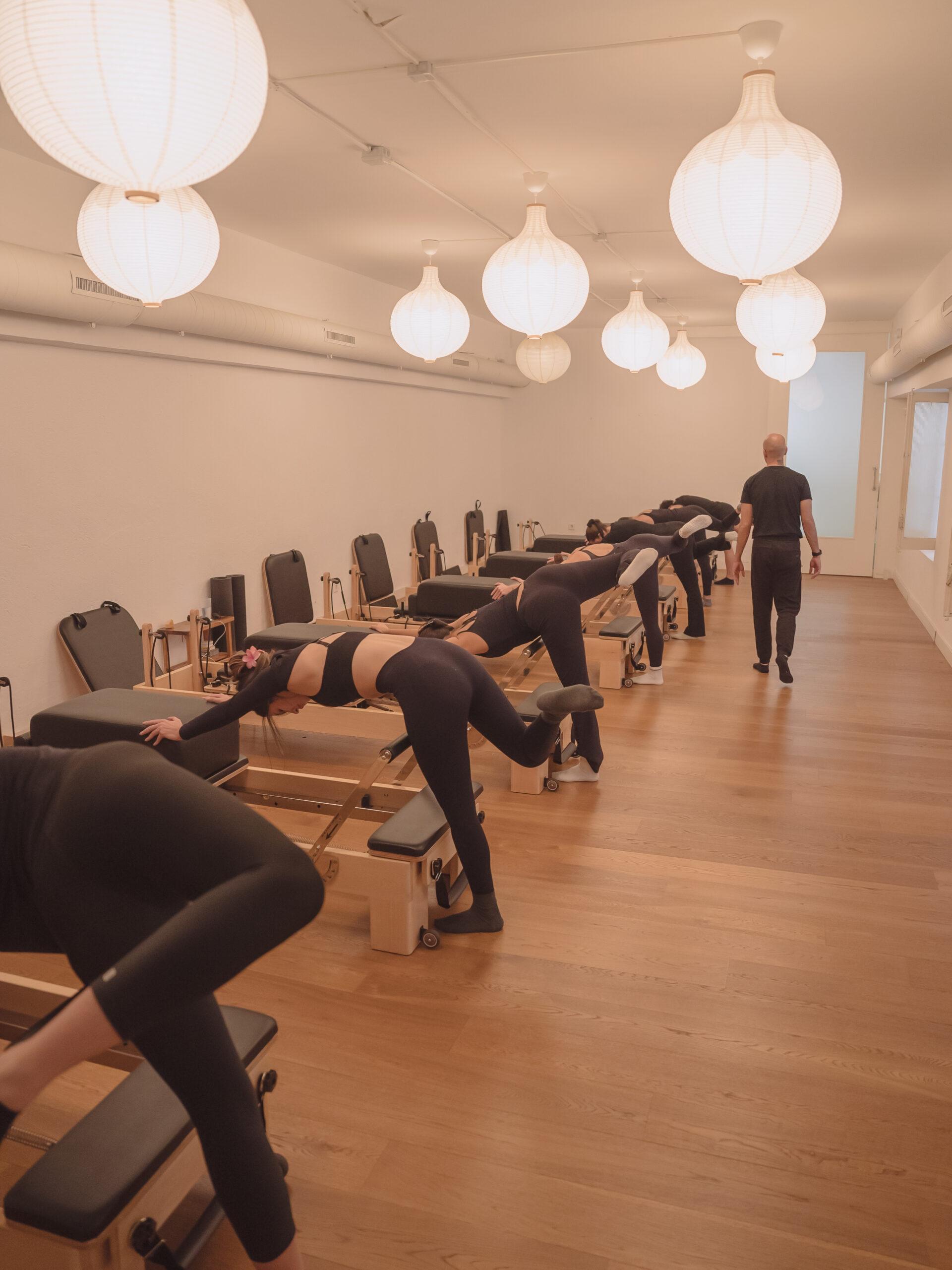
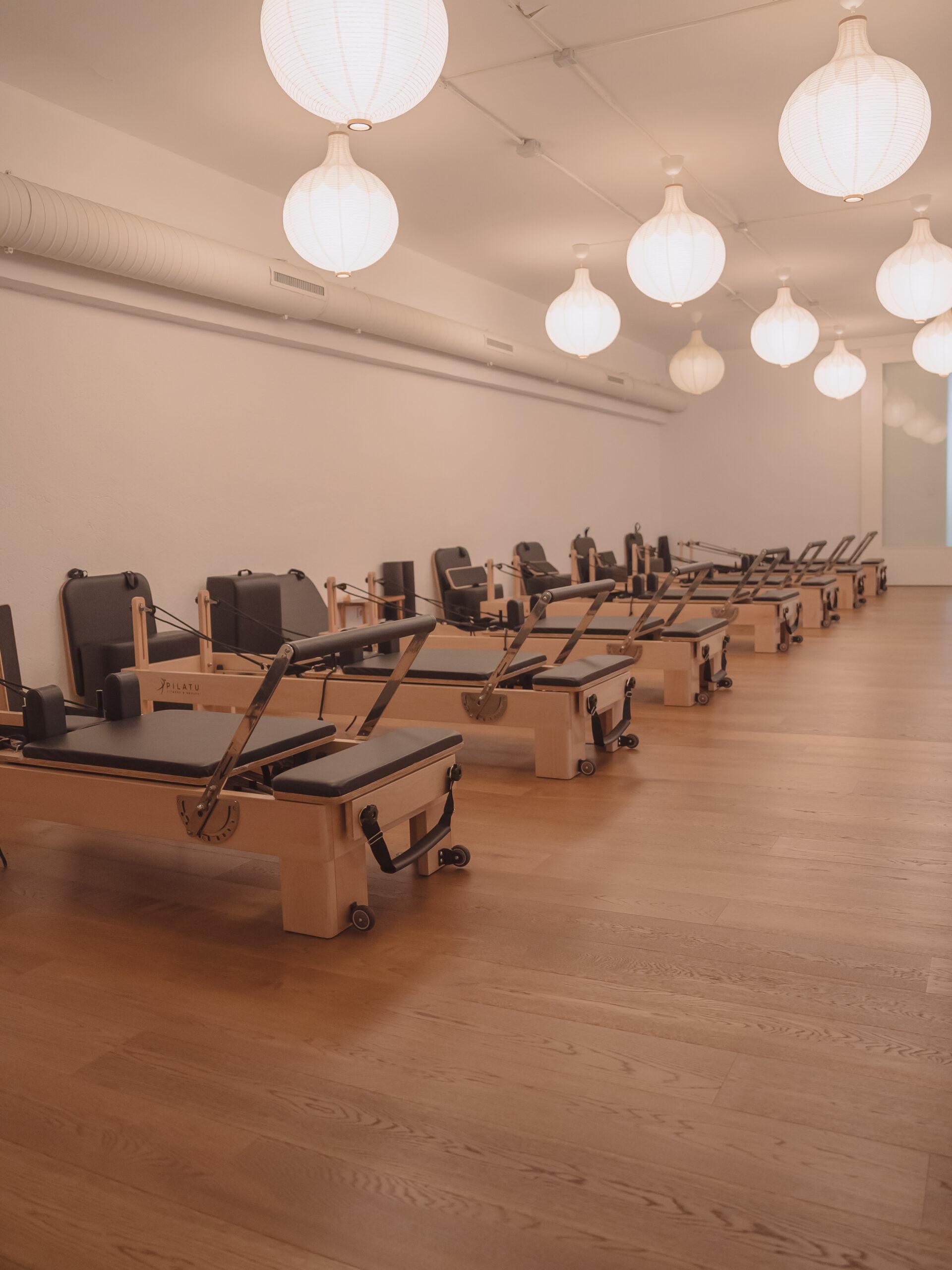
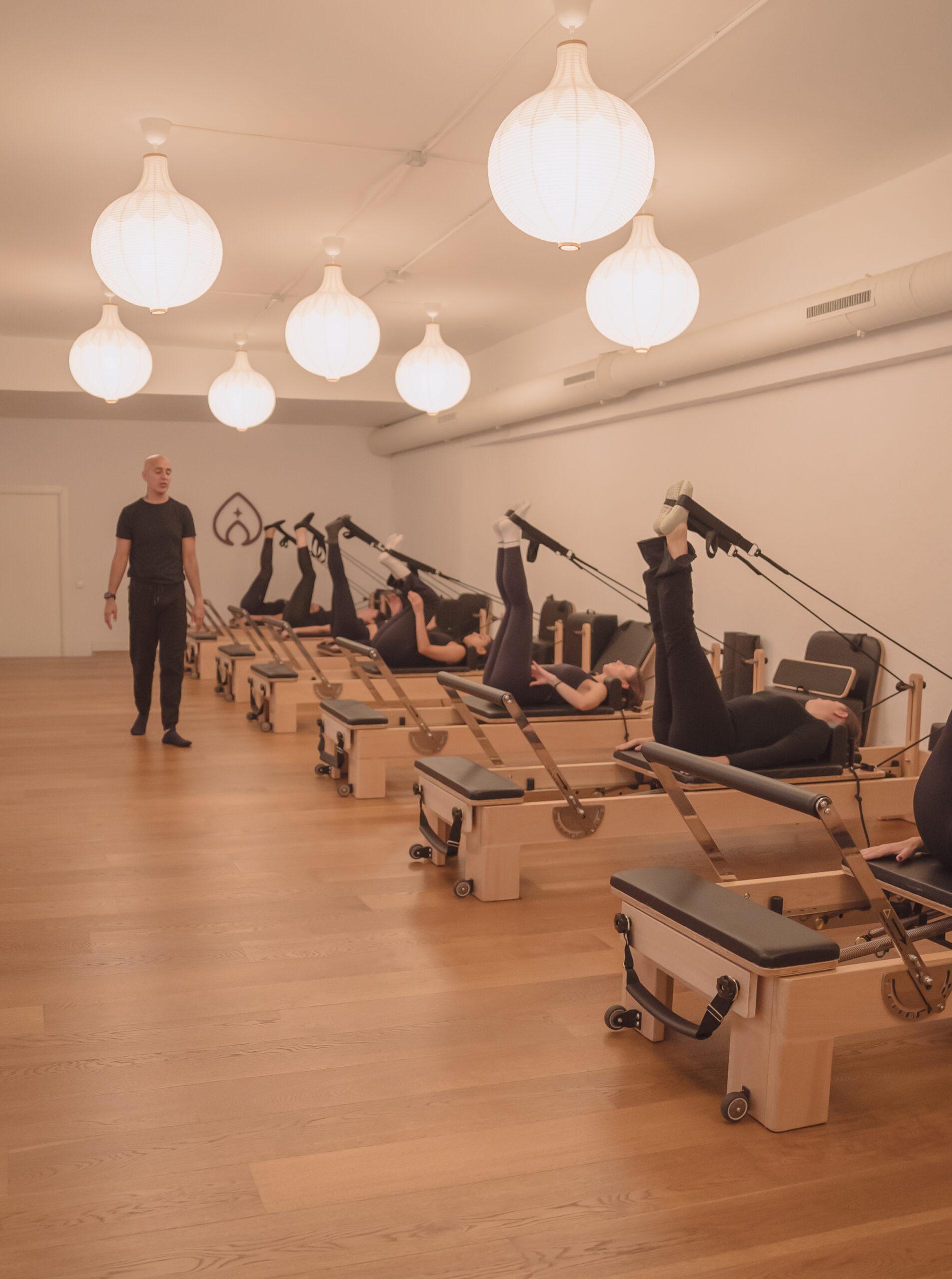
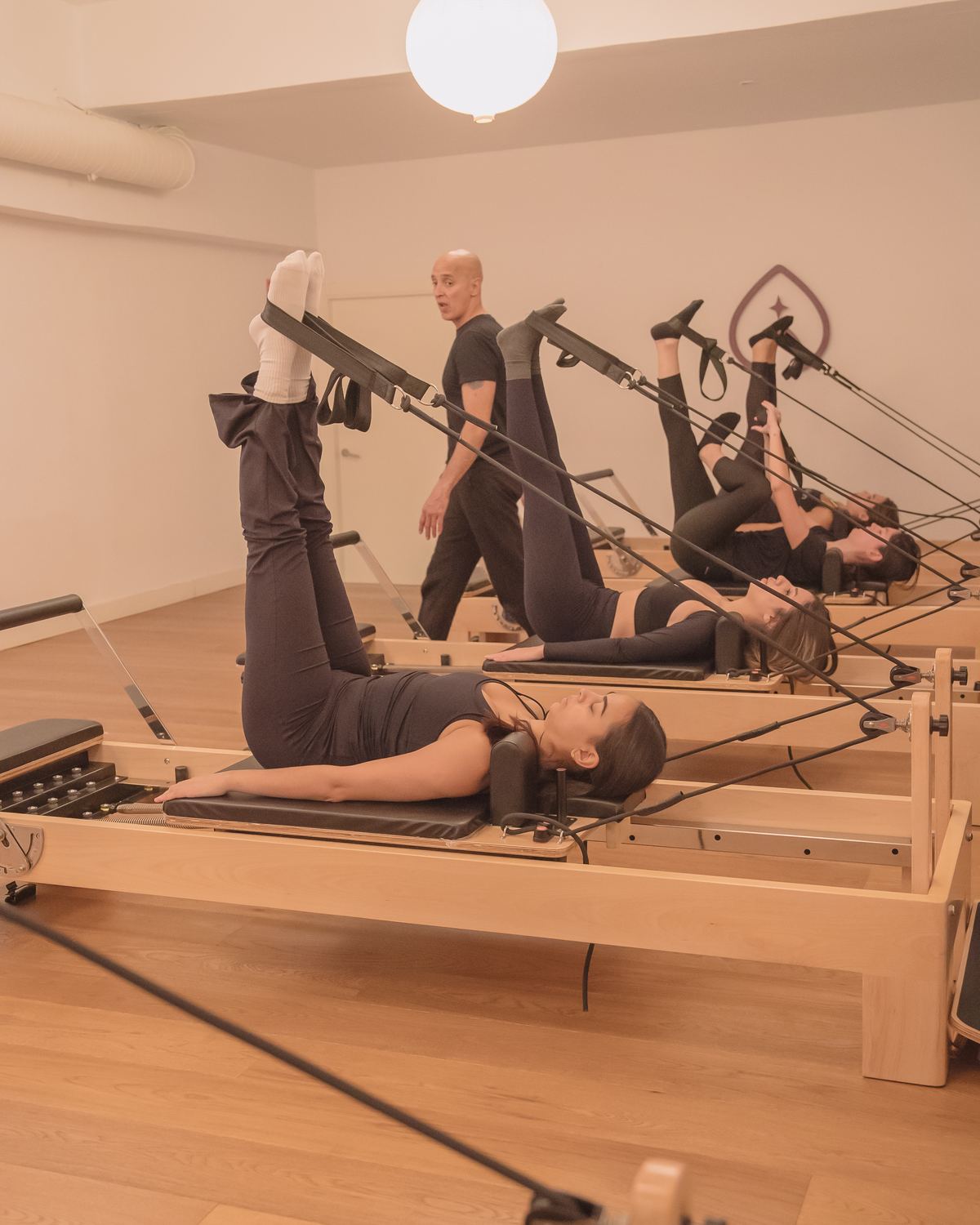
Reformer Pilates classes at Pinar Pilates have a maximum of 8 students. This allows the instructor to correct your posture in real time and adjust the resistance of your springs when necessary. For back pain, this personalised attention is not a luxury, it is a necessity.
Location in the Salamanca District
We are at Calle del Pinar 8, 28006 Madrid, in the heart of the Salamanca district. Five minutes’ walk from Gregorio Marañón metro station (lines 7 and 10) and less than a hundred metres from the Serrano-María de Molina bus stop. If you work or live in central Madrid, getting to your sessions will not involve long journeys, which makes it easier to keep up the consistency you need to notice results.
Pinar Pilates has an average rating of 4.9 out of 5 on Google with hundreds of reviews. You can check our prices (from €100/month for 4 classes to the unlimited plan at €250/month) or call us on +34 611 994 729
We help you choose a class
Have back pain and not sure which class to choose?
Start with a Basic level class if you have never done reformer Pilates, or Multilevel if you have tried it before. Groups are 8 people max and the teacher adapts every exercise to your body and your level, so let them know what is going on before you start. Your first class is 50% off.
Would you rather we advised you? Message us on WhatsApp at +34 611 994 729 or email hola@pinarpilates.com, tell us what is going on and we will recommend the class that suits you best.
If you have an injury or pain that has not been assessed yet, check with your doctor or physiotherapist first and always follow their advice: our recommendation is only about which class to choose and does not replace their judgement.
Frequently Asked Questions
Key answer: Yes, you can do Reformer Pilates with active back pain, as long as you have ruled out serious conditions with your doctor. The Reformer allows you to work in unloaded positions with adaptable resistance, which makes it one of the safest options for people with low back pain.
Is it safe to do Reformer Pilates with back pain?
Yes, as long as you have medical clearance and practise under qualified supervision. The Cochrane review by Yamato et al. (2015) recorded no adverse events in any of the 10 trials analysed. The Reformer allows you to work unloaded and with controlled resistance, which makes it one of the safest exercise options for people with back pain.
Do I need to bring a medical report to my first class?
It is not compulsory, but it is advisable. If you have a specific diagnosis (herniated disc, stenosis, scoliosis), having that information lets us adapt the exercises better. If you only have general discomfort with no diagnosis, you can start anyway, but we suggest you consult your doctor first if the pain is intense or persistent.
How long until I notice an improvement in my back pain?
Most of our students report improved mobility and reduced muscle tension after the first 2 to 3 weeks. For significant, lasting changes in pain, the scientific evidence points to a minimum of 6 weeks of regular practice (2 to 3 sessions a week).
Can I do Reformer Pilates if I have a herniated disc?
Yes, with certain precautions. The Reformer allows you to work in positions that minimise pressure on the intervertebral discs. Loaded spinal flexion and forced rotations are avoided. It is essential that your doctor or orthopaedic specialist authorises the practice and that you inform the instructor of your diagnosis before starting.
Want to try how Reformer Pilates can help your back? Book your first class with 50% off and see for yourself.
If you have any questions, call us on +34 611 994 729. We will be happy to guide you.
Pinar Pilates · Salamanca district, Madrid
Your first reformer class, €15
Groups of 8 people maximum, specialist instructors and more than 40 classes a week. Your first class is half price.
Book my first classCalle del Pinar 8, Madrid · Questions? Message us on WhatsApp