Behind every Reformer class there is a story few people know. A story of illness, of war, of exile and of an almost monastic obsession with human movement. The history of Pilates is, first and foremost, the story of a man who refused to accept the limitations of his own body and ended up transforming the way the world understands exercise.
Understanding where this method comes from is not only interesting from a historical point of view. It also changes the way you practise it. When you climb onto a Reformer, you do so on top of more than a century of observation, experimentation and deep conviction about what the human body needs to work well.
Joseph Pilates: a Difficult Start
Joseph Hubertus Pilates was born on 9 December 1883 in Mönchengladbach, an industrial city in north-west Germany. His childhood was not easy. He suffered from asthma, rickets and rheumatic fever, illnesses that at the time could mark a person for life. Nineteenth-century doctors had little to offer a sickly child beyond rest and resignation.
Joseph chose rebellion.
Instead of accepting his frailty as fate, he turned it into a question: what would it take to transform this body? He began to study obsessively everything to do with movement and physical condition. The German gymnastics of the time, boxing, martial arts, yoga, military drills and, perhaps most singular of all, the observation of how animals move. Cats in particular fascinated him for their ability to move with strength, control and elegance at the same time.
By the time he reached adulthood, Joseph Pilates had become a remarkable athlete. He was a boxer, a diver, a skier and a gymnast. He even posed as a model for anatomical charts in Germany, something that would have been unthinkable for the sickly child from Mönchengladbach.
The Great War and the Birth of a Method
In 1912, Joseph moved to England, where he worked as a self-defence instructor for Scotland Yard detectives and as a circus performer. When the First World War broke out in 1914, the British authorities interned German citizens as prisoners of war. Joseph Pilates spent several years confined on the Isle of Man.
It was in that context of confinement, far from any freedom, that the method we know today was born.
With limited access to materials and with fellow internees who needed to stay active and healthy, Joseph began to develop a series of exercises that could be practised in small spaces. First on the floor. Then, with an idea that would change the history of exercise: he attached springs to the frames of the hospital beds so that bedridden patients could work against resistance without getting up.
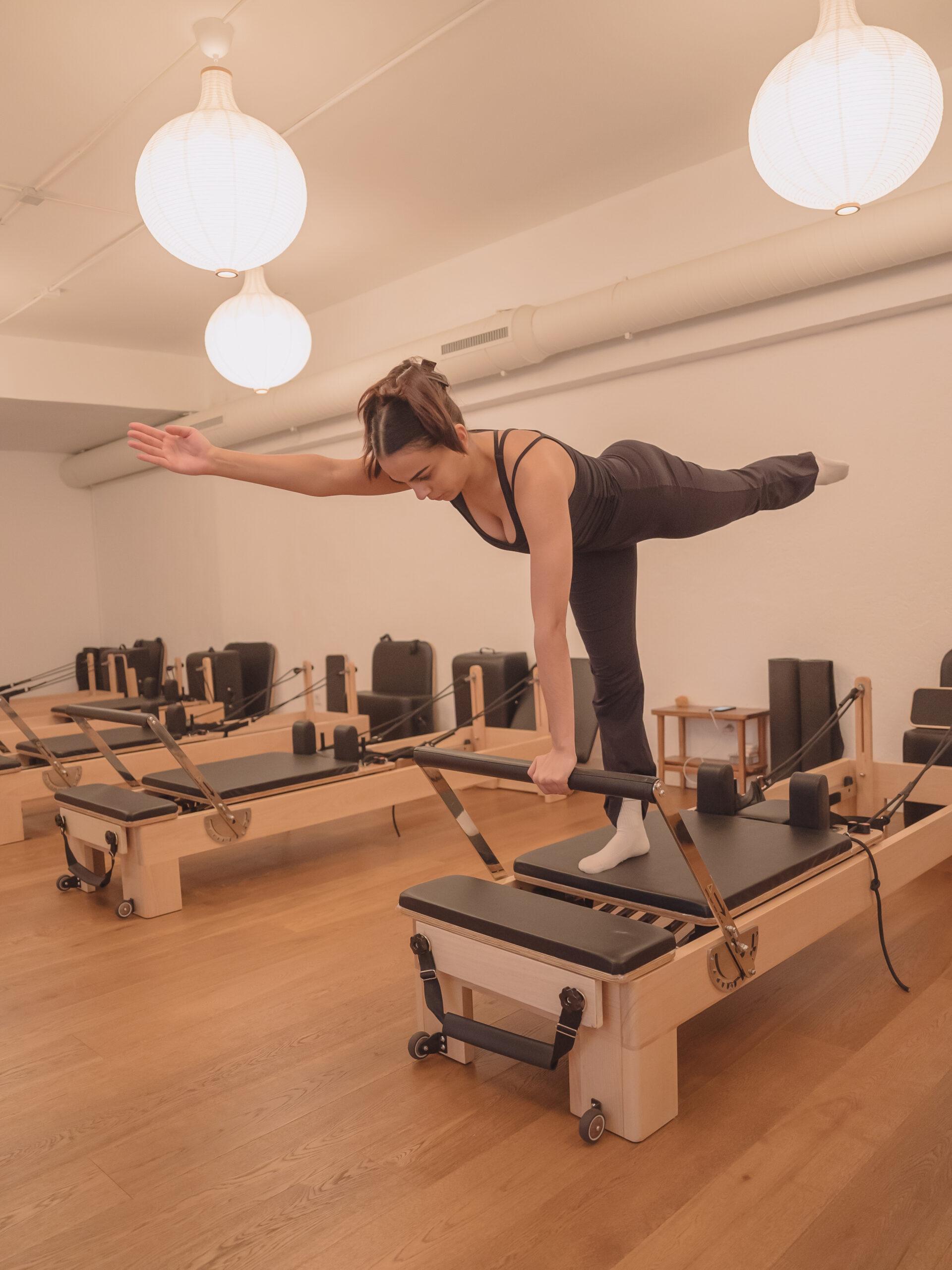
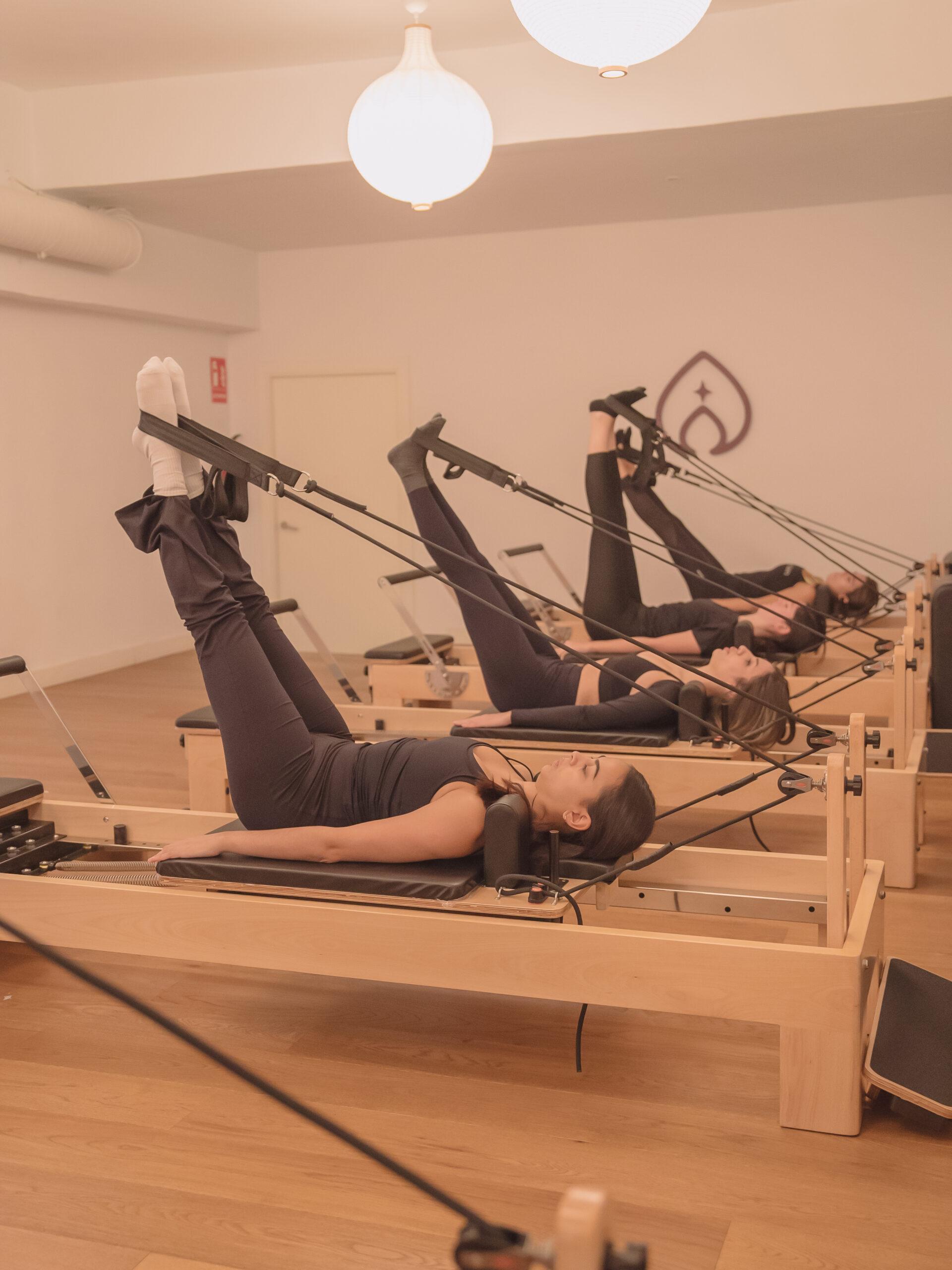
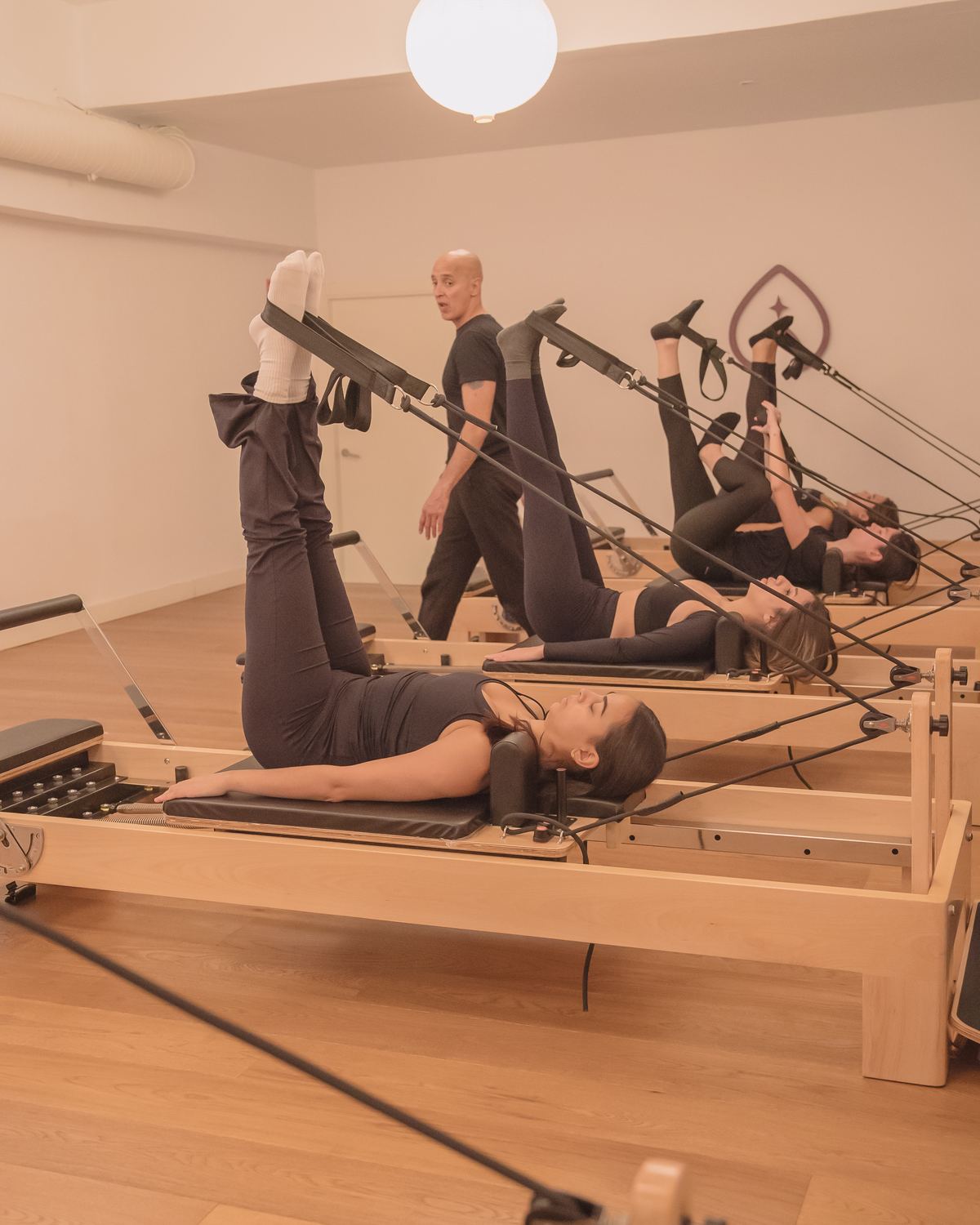
That improvised apparatus, those springs attached to a hospital bed, is the direct forerunner of the modern Reformer you will find at Pinar Pilates. The logic is exactly the same: variable resistance, work in different planes, total control over tension.
There is a story, impossible to verify entirely but often repeated, that during the 1918 flu pandemic none of the internees who practised Joseph’s exercises died of the disease. Whether literal or apocryphal, the anecdote captures something real about Joseph’s approach: movement as preventive medicine.
New York, 1926: the Eighth Avenue Studio
When the war ended, Joseph Pilates returned briefly to Germany, where he worked training the Hamburg police. But the political climate of the Weimar Republic made him uncomfortable. In 1926, at the age of forty-three, he boarded a ship to New York.
On that ship he met Clara, a nurse who would become his wife and his closest collaborator for decades. Clara had a deep understanding of the human body from a clinical perspective, and her influence on the method was decisive, although the official history took a long time to acknowledge it.
Together they opened a studio at 939 Eighth Avenue, in a building that shared its address with several Manhattan dance studios. That location was no coincidence, and its consequences were enormous.
Dancers quickly discovered that Joseph’s method, which he called Contrology, did something no other training system managed: it strengthened without stiffening, lengthened without weakening, and improved control of the body in a way that translated directly into better dancing. Martha Graham, one of the most influential figures in 20th-century modern dance, was one of his students. Dancers from George Balanchine’s New York City Ballet came to the studio when they were injured or when they wanted to improve their technique. Word of mouth in the dance world was the method’s first channel of dissemination.
Contrology: the Original Name
Joseph Pilates never called his method “Pilates”. He called it Contrology. The name says everything about his philosophy: the goal was not movement for its own sake, but total control of the body through the mind.
In 1934 he published “Your Health”, a short, impassioned text in which he set out his vision of health and disease. Eleven years later, in 1945, he published his most complete work: “Return to Life Through Contrology”. In that book he described in detail the thirty-four original mat exercises that make up the classical repertoire, accompanied by instructions and the philosophy behind them.
His six fundamental principles articulate the whole practice:
Concentration. Every movement requires full attention. You cannot do Pilates while thinking about something else.
Control. No movement should be casual. Contrology, Joseph said, is the complete control of your body through your mind.
Centre. All strength emanates from the powerhouse, the energy centre that comprises the abdomen, the lower back, the hips and the glutes.
Flow. Movements link together with grace. There is no jerkiness and no interruption.
Precision. Better one well-executed movement than ten done badly. Quality always beats quantity.
Breathing. Breathing is active, conscious and coordinated with movement. Joseph considered it fundamental for oxygenating the blood and cleansing the body.
These six principles remain the core of what you practise in a Reformer class today. If you want to understand better how they apply in practice, you can read more about what Reformer Pilates is and how it differs from other modalities.
The Evolution of the Reformer
The apparatus Joseph created from the bed springs on the Isle of Man continued to evolve throughout his life. In the Eighth Avenue studio there were several pieces of equipment he had designed and built himself: the Reformer, the Cadillac (or trapeze table), the Wunda Chair, the barrel and others.
The original Reformer was made of wood and metal, built by hand. The spring-resistance logic made it possible to grade the effort, work in different positions (lying, seated, kneeling, standing) and isolate muscle groups that are hard to reach in floor exercises.
For decades, Reformers were manufactured almost by hand. It was in the last decades of the 20th century that the industry began to produce aluminium machines with more ergonomic finishes, better spring systems and greater durability. Today the modern Reformers you will find in a good studio like Pinar Pilates are the result of eighty years of continuous refinement, but the mechanics Joseph conceived in that internment camp remain the same.
If you are interested in understanding the differences between working on the Reformer and on the floor, the article on Reformer Pilates vs mat Pilates gives you a detailed analysis.
Joseph Pilates’s Philosophy in One Sentence
Few sentences in the history of fitness have proved as accurate as this one, attributed to Joseph Pilates:
“In ten sessions you feel the difference. In twenty, you see it. In thirty, you have a whole new body.”
It is not marketing. It is a fairly faithful description of how the body responds to consistent practice. The first sessions mobilise and awaken movement patterns. The next ones begin to correct posture and strengthen the centre. From the thirtieth onwards, the change becomes structural.
The Legacy: the Children of the Method
Joseph Pilates died in 1967, at the age of eighty-three, as a result of a fire in his studio. Clara continued teaching until 1977. With no formal certification system and no central organisation to protect the method, Joseph and Clara’s direct students became the custodians of the legacy.
The so-called “Pilates elders” kept the method alive over the following decades:
Romana Kryzanowska was probably the most faithful to the original classical style. For years she ran Joseph’s studio in New York and trained generations of instructors.
Ron Fletcher took the method to Hollywood and added elements of percussive work and more dynamic breathing.
Eve Gentry developed a more therapeutic version, adapting the method for people with injuries or physical limitations.
Carola Trier, herself a former acrobat, opened her own studio with a very technical, precise approach.
Bob Seed, Mary Bowen and others continued the tradition in different ways, each contributing their own nuances and emphases.
This diversity explains why contemporary Pilates has so many styles. Classical Pilates tries to remain faithful to Joseph’s original repertoire and order. Contemporary Pilates incorporates the knowledge of biomechanics, physiotherapy and neuroscience accumulated since then. Both are valid and each has its strengths.
From Joseph’s Method to Today’s Pilates
The explosion of Pilates as a global phenomenon came in the 1990s, driven in part by its popularity among elite athletes, artists and celebrities. The opening of specialised boutique studios over the last twenty years has brought the method to a much wider public.
Today Pilates is one of the fastest-growing exercise disciplines in the world. And although group classes, anodised aluminium Reformers and studios with ambient music seem a long way from that New York studio of the 1930s, the essence of the method Joseph Pilates articulated is still there: concentration, control, centre, flow, precision and breathing.
The benefits of Reformer Pilates we document today, from improved posture to reduced back pain, are exactly the ones Joseph observed in his students almost a hundred years ago. The difference is that now we have the science to explain why they work.
If you want to experience this legacy first hand and understand in practical terms what all this history means for your body, the best starting point is a first class at a good studio.
Frequently Asked Questions about the History of Pilates
When was Pilates invented? Joseph Pilates began developing the principles of his method during the First World War, between 1914 and 1918, while interned on the Isle of Man. The method was formalised and spread from 1926, when he opened his studio in New York.
Why did Joseph Pilates call his method Contrology? Because the core of his philosophy was conscious control of the body through the mind. “Contrology” refers to that total mastery of movement. The name “Pilates” was adopted informally by his students and became popular after his death.
Who invented the Pilates Reformer? Joseph Pilates designed the first spring apparatus during his internment on the Isle of Man in the First World War, using the springs from hospital beds. He developed and refined that idea over decades in his New York studio until he created the Reformer as we know it.
How many original exercises did Joseph Pilates create? In his book “Return to Life Through Contrology” (1945) he described thirty-four mat exercises. He also designed specific repertoires for the Reformer, the Cadillac, the Wunda Chair, the barrel and other apparatus, giving a total of several hundred exercises in the complete classical repertoire.
What is the difference between classical and contemporary Pilates? Classical Pilates follows Joseph Pilates’s original repertoire and order as faithfully as possible. Contemporary Pilates adapts and expands that repertoire, incorporating modern knowledge of anatomy, biomechanics and rehabilitation. Both share the six fundamental principles and the use of the Reformer and other apparatus.
Practise the Method That Changed the World of Exercise
The history of Pilates is a story of personal transformation that became a universal legacy. From the hospital beds of the Isle of Man to the boutique studios of the 21st century, Joseph Pilates’s method has shown extraordinary vitality because it answers something real and permanent: the human body’s need to move intelligently.
At Pinar Pilates, at Calle del Pinar 8, in Madrid’s Salamanca district, we carry that legacy into Reformer classes in groups of a maximum of eight people. More than 490 Google reviews (average 4.9 out of 5) confirm what Joseph Pilates taught almost a century ago: conscious, precise, consistent movement transforms the body.
Your first class is 50% off. You do not need previous experience. You just have to take the first step.
Book your first class with 50% off
If you would rather talk first, call or message +34 611 994 729. We will tell you everything you need to know.
Pinar Pilates · Salamanca district, Madrid
Your first reformer class, €15
Groups of 8 people maximum, specialist instructors and more than 40 classes a week. Your first class is half price.
Book my first classCalle del Pinar 8, Madrid · Questions? Message us on WhatsApp