Work stress does not stay in your head. It settles in your neck, stiffens your shoulders, compresses your lower back and follows you to the pillow. If you work in Madrid and every evening you drag home accumulated tension, muscle stiffness or that fatigue that does not go away even after eight hours’ sleep, the problem is not only mental. Your body is absorbing the impact of long days, screens and deadlines.
Reformer Pilates is one of the most effective tools for breaking that cycle. Not by magic, but through a specific mechanism: it combines controlled breathing, impact-free movement and full concentration for 50 minutes. The result is a measurable reduction in cortisol (the stress hormone), a real release of muscle tension and better sleep at night.
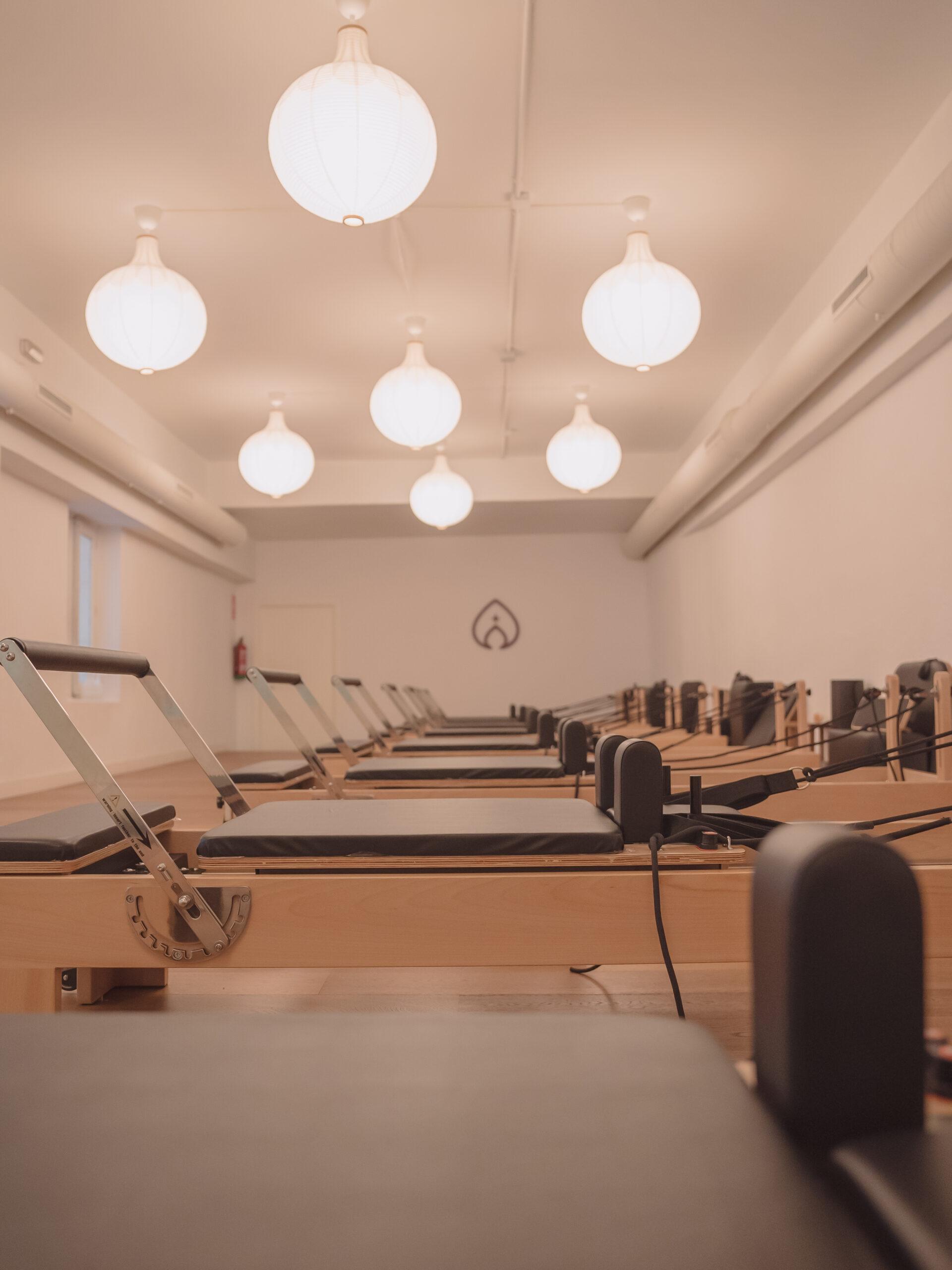
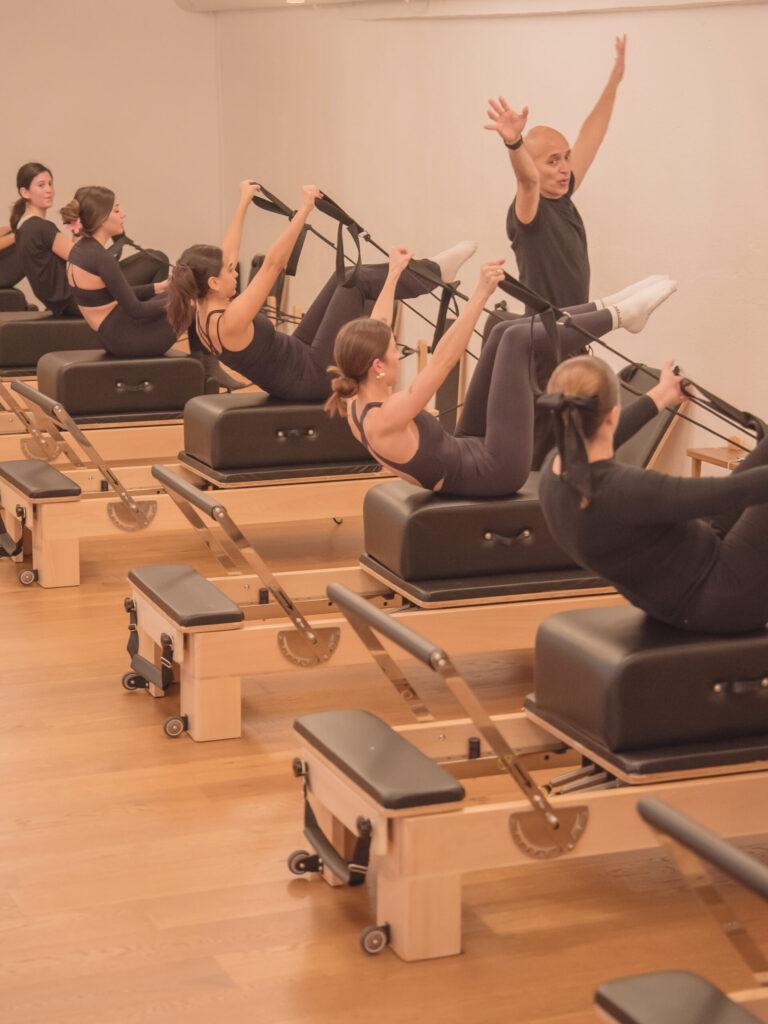
At Pinar Pilates, in the Salamanca district, we work with groups of a maximum of 8 people so that every class is an experience of total disconnection. More than 40 classes a week let you find the slot that fits your schedule. And with an average of 4.9 out of 5 on Google (more than 490 reviews), we are not the only ones saying so.
Here we explain exactly how work stress affects your body, why the Reformer beats other forms of exercise at fighting it and what the science says.
Scientific evidence: Pilates and stress
- Regular Pilates practitioners show a significant reduction in anxiety (p < 0.001), depression (p < 0.05) and somatisation (p < 0.01), with a better ability to mentally switch off from work.
Source: Fossati C et al. (2024). PMC11988874. - An 8-week Pilates programme in sedentary women markedly reduced cortisol (stress hormone) levels compared with the control group.
Source: Study published on ResearchGate. DOI: 10.13140/RG.2.2.28012. - Reformer Pilates improves sleep quality and reduces fatigue and fear of movement in patients with chronic pain — factors directly related to work stress.
Source: Şahan N, Uluğ N, Özeren A (2025). BMC Psychology, 13(1):836. DOI: 10.1186/s40359-025-03207-9.
How Work Stress Affects Your Body
Key answer: Chronic work stress causes muscle contractures (especially in the neck, shoulders and back), raises cortisol levels, disrupts sleep, weakens the immune system and increases cardiovascular risk. According to the European Agency for Safety and Health at Work, work-related stress is the second most common health problem in Europe.
Chronic work stress is not simply “being overwhelmed”. It is a sustained physiological response that alters your nervous system, your muscles, your digestion and your ability to rest. According to the VII National Survey of Working Conditions (INSHT, 2011), 77.5% of workers in Spain feel some physical discomfort they attribute to the postures and efforts of their job, and the lower back is the most frequent location, followed by the nape and neck.
Chronic Muscle Tension
When you are under pressure, the sympathetic nervous system activates and the muscles contract involuntarily. Raised shoulders, clenched jaw, rigid trapezius. If this repeats every day for months, the tension becomes chronic. The muscles of the neck, shoulders and lower back shorten and harden, generating pain that gets mistaken for “bad posture” when it is actually a direct response to stress.
Tension Headaches
Tension in the upper trapezius and the suboccipital muscles (the base of the skull) is the most frequent cause of tension headaches. If at the end of the working day you feel pressure in your temples or the back of your neck, the origin is very likely muscular, not neurological. According to the Spanish Society of Neurology, tension-type headache is the most common kind of headache, with a prevalence of over 60% of the population, and stress is among the modifiable factors that can increase the frequency of attacks.
Insomnia and Poor Sleep Quality
Elevated cortisol at the end of the day directly interferes with melatonin production. The result: you take longer to fall asleep, you wake up in the middle of the night or you wake up without feeling rested. A study published in Sleep (Yap et al., 2024) measured salivary cortisol before sleep for fifteen days and observed that the higher that level was, the fewer hours were slept and the worse the sleep efficiency.
Persistent Fatigue
It is not lack of sleep. It is that chronic stress depletes the body’s energy reserves. The sympathetic nervous system burns glucose at an accelerated rate, cortisol deregulates the metabolism and constant muscle tension burns energy without you moving. That is why you can feel exhausted at 15:00 without having made any physical effort.
Anxiety and Difficulty Switching Off
When stress becomes chronic, the brain stays in “alert mode” even outside work. You leave the office but keep ruminating on tomorrow’s meeting, you check email on the metro, you struggle to be present in a conversation. Sustained activation of the hypothalamic-pituitary-adrenal (HPA) axis makes the transition to the parasympathetic nervous system, which is responsible for calm and recovery, more difficult.
Why Reformer Pilates Reduces Stress Better than Other Exercise
Key answer: Reformer Pilates reduces stress better than other exercise because it combines controlled movement with conscious breathing, activates the parasympathetic nervous system (the calm response) and releases accumulated muscle tension without raising cortisol the way high-intensity exercise does. A study (Fossati et al., 2024) showed a significant reduction in anxiety, depression and somatisation in regular practitioners.
Not all exercise is equally effective against work stress. Running can help, but if your shoulders are knotted, it will not release that tension. Lifting weights can be satisfying, but it does not work on breathing or promote calm. The Reformer combines five elements that make it a complete anti-stress tool.
Controlled, Conscious Breathing
Every exercise on the Reformer is performed with a specific breathing pattern. It is neither optional nor decorative: lateral costal breathing activates the diaphragm, expands the rib cage and stimulates the vagus nerve, which is the main activator of the parasympathetic nervous system (the “rest and recovery” system). In a 50-minute class you perform between 200 and 300 controlled breathing cycles. This produces a progressive reduction in heart rate and a real drop in blood pressure.
Total Concentration on Movement
The Reformer demands attention. Controlling the resistance of the springs, maintaining alignment, coordinating breath with movement. You cannot think about tomorrow’s report while doing a set of Footwork or Long Stretch. This enforced concentration works like an active meditation: for 50 minutes, your mind stops ruminating and focuses on the present. It is what psychologists call a “flow state”.
Total Digital Disconnection
At Pinar Pilates, your phone stays outside the room. No screens, no notifications, no emails. For 50 minutes, your brain stops receiving digital stimuli. For a professional who spends 8 or 10 hours a day in front of screens, this sensory pause is deeply restorative. The nervous system lowers its level of activation simply by removing the bombardment of information.
Small Group, No Pressure or Competition
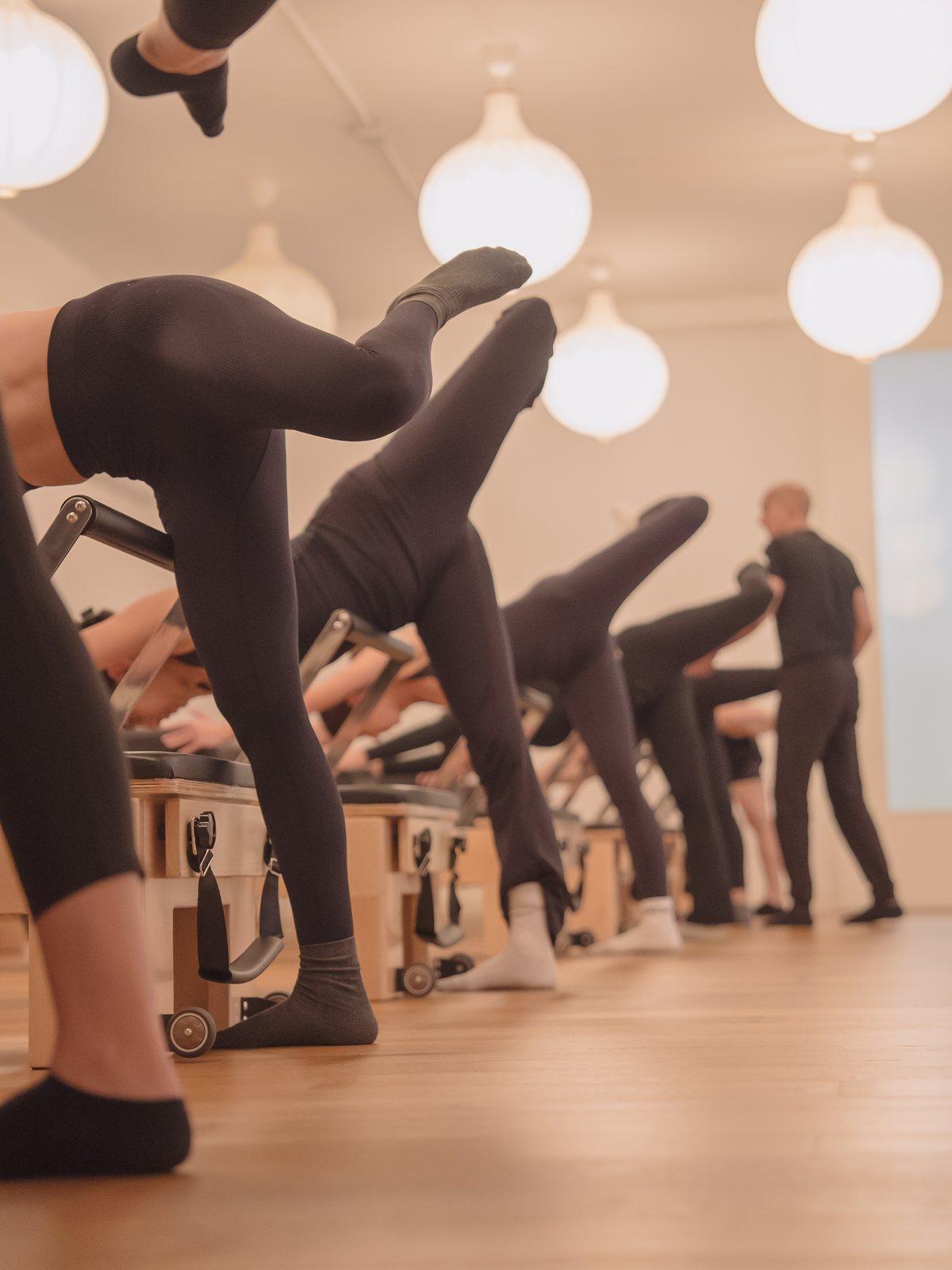
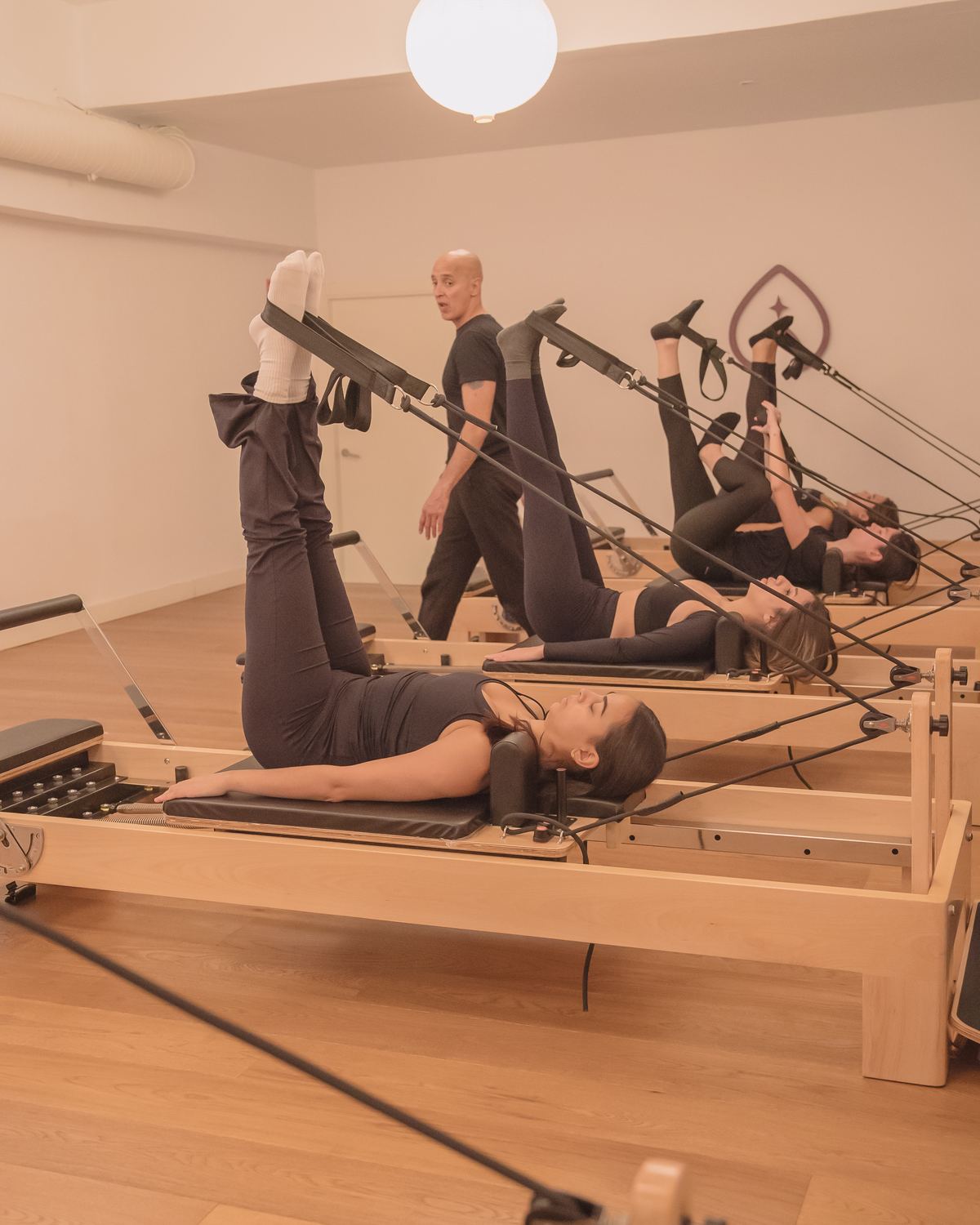
Classes of a maximum of 8 people remove the crowded feeling of a conventional gym. There are no giant mirrors, no blaring music, nobody judging your performance. The atmosphere in a boutique studio is calm and controlled. Each student works at their own pace, with personalised attention from the instructor. For someone coming from a day of work pressure, this environment makes an enormous difference.
Physical Release of Accumulated Tension
Movements on the Reformer stretch and strengthen at the same time. Series such as Elephant, Mermaid or hip openers work directly on the areas where stress accumulates: neck, shoulders, back and lower back. The resistance of the springs allows a controlled lengthening that releases knotted muscles with no risk of injury. Many students describe the feeling on leaving class as “having let go of a weight I didn’t even know I was carrying”.
If you want to know all the benefits of the method beyond stress, see our complete guide to Reformer Pilates
The Science behind Pilates and Stress Reduction
This is not just about personal impressions. Scientific research has measured the impact of Pilates on stress, mood and fatigue, and the results point in the same direction.
A meta-analysis published in Complementary Therapies in Medicine (Fleming & Herring, 2018) brought together eight controlled trials on the effects of Pilates on mental health. With 261 participants in the analysis of depressive symptoms, it found significant reductions in depression, anxiety and fatigue, together with an increase in feelings of energy compared with the control groups.
On cortisol specifically, the direct evidence is scarcer and based on small samples: some studies record decreases and others find no change. One of the most recent, published in Life (Onu et al., 2026), followed 30 previously sedentary women through four weeks of supervised Pilates and observed a significant drop in blood cortisol in the 50-60 age group.
Another study by Caldwell et al. (2010), published in the Journal of American College Health, followed 166 students enrolled in Pilates, taiji quan or gyrokinesis classes over a semester. Those whose mindfulness increased the most slept better at the end of the course, and that effect was largely explained by the decrease in tiredness, negative arousal and perceived stress.
A longitudinal study by Tolnai et al. (2016), published in Physiology & Behavior, followed sedentary young women practising Pilates once a week for ten weeks. Compared with the control group, they improved in flexibility, balance, core strength, body awareness and negative affect; moreover, in nine of the ten sessions, mood improved immediately after the class.
The mechanism is threefold:
- Cortisol regulation: diaphragmatic breathing and parasympathetic activation help modulate the stress hormone response.
- Endorphin release: moderate exercise stimulates the production of endorphins and serotonin, neurotransmitters associated with wellbeing.
- Parasympathetic activation: the combination of breathing, slow movement and concentration deactivates the sympathetic system (“fight or flight”) and activates the parasympathetic (“rest and repair”).
If stress is giving you back pain, you will also want to read our article on Pilates for back pain
A Reformer Class as a Mental Reset
Picture this: it is 19:00, you have just left the office. You have spent 9 hours in front of the computer, sat through three difficult meetings and have 47 unanswered emails. You walk five minutes to Calle del Pinar 8, in the heart of the Salamanca district
You enter the studio. The atmosphere is bright and calm. You put your phone away, get changed and take your Reformer. There are 7 other people in the room, at most. The instructor greets you by name and adjusts the springs to your level.
The first 10 minutes are a warm-up: Footwork, breathing, joint mobilisation. Your mind is still at the office. But as the exercises become more complex, you have no choice but to concentrate. Coordinating your breath with the movement of the carriage, keeping the pelvis neutral, controlling the resistance.
At 20 minutes, you are no longer thinking about work. At 35, you are in a state of relaxed concentration that few activities achieve. The last 10 minutes include stretches on the Reformer and a brief relaxation sequence.
When you finish, 50 minutes have passed. You feel physically light, mentally clear and with a sense of calm you did not have when you walked in. It is what our students call “the reset”: a dividing line between the stress of the day and the rest of the night.
If you have never tried the Reformer, we recommend booking your first class with 50% off, where we explain the technique from scratch.
The Best Time to Reduce Stress at Pinar Pilates
At Pinar Pilates we offer more than 40 classes a week, with morning, midday and evening slots. The best time depends on how stress affects your day.
Morning Classes (7:30 – 9:30): Start the Day Ahead
If you wake up already thinking about your to-do list, a first-thing class recalibrates your nervous system before stress sets in. You arrive at the office with your body activated, your mind clear and your cortisol levels regulated. Several studies indicate that morning exercise improves concentration and productivity for the following 4 to 6 hours.
Midday Classes (13:00 – 15:00): the Mid-Day Reset
Ideal if you notice that by mid-morning you are already accumulating tension. Instead of eating in front of the computer and going back to work just as drained, a 50-minute session at lunchtime works as a clean break: you release the morning’s tension and return to the afternoon with renewed energy. Many of our students who work in Salamanca, Recoletos or La Castellana make use of this slot.
Evening Classes (17:00 – 20:50): Total Decompression
The most popular slot among professionals. The after-work class works as a transition ritual: you walk in with the stress of the day and walk out ready to enjoy your evening. What is more, moderate exercise at this time improves sleep quality, as long as it is not right before bed.
See our full class schedule and choose the slot that best fits your routine.
Frequently Asked Questions
Is Reformer Pilates better than yoga for reducing stress?
Both are effective, but they work differently. Yoga focuses more on static postures and meditation, while Reformer Pilates adds the component of controlled resistance from the springs. For people who need active movement (not just stillness) to switch off, the Reformer is usually more effective. The Reformer also works on strength and posture more directly, which relieves the muscle pain that stress causes.
How many times a week should I do Pilates to notice an improvement in stress?
With 2 sessions a week, improvements in muscle tension levels and sleep quality are already seen. The studies cited above used frequencies of 2 to 3 sessions a week. Our price plans include options of 8 classes a month (150 euros) or 12 classes a month (200 euros), which cover those 2 or 3 weekly sessions.
Will I notice results from the first class?
Yes, but not in the way you imagine. After the first session you will not eliminate chronic stress, but you will notice an immediate feeling of muscle relaxation, less tension in your neck and shoulders, and a mental calm you probably had not felt for a while. The sustained reduction in cortisol levels and the improvement in sleep consolidate from the third or fourth week of regular practice.
Do I need previous Pilates experience?
No. Classes at Pinar Pilates are adapted to all levels. If you have not done Pilates before, we recommend booking your first class with 50% off, where you will learn the basic Reformer technique, the breathing and the fundamental principles. From there, you can join any class on the regular timetable.
Can I combine Pilates with psychological therapy or anxiety medication?
Of course. Reformer Pilates does not replace medical or psychological treatment, but it complements it. Several therapists recommend mindful exercise as part of the comprehensive treatment of stress and anxiety. If you are in treatment, tell your instructor so they can adapt the intensity of the class if necessary.
Ready to leave your stress on the Reformer? Book your first class with 50% off and see for yourself what 50 minutes of Pilates can do for your body and mind.
Pinar Pilates. Calle del Pinar 8, 28006 Madrid. Salamanca district. Phone: +34 611 994 729
Pinar Pilates · Salamanca district, Madrid
Your first reformer class, €15
Groups of 8 people maximum, specialist instructors and more than 40 classes a week. Your first class is half price.
Book my first classCalle del Pinar 8, Madrid · Questions? Message us on WhatsApp