Important medical notice: sciatica can have very different causes, some of them serious. This article is for information purposes only and does not replace your doctor’s diagnosis or treatment. Before starting Pilates or any exercise programme with sciatica, you need a medical assessment that determines the cause of your pain and explicit clearance to exercise. If you experience progressive loss of strength in the leg, altered bladder or bowel control, or numbness in the perianal area, go to A&E immediately. The exercises described here are indicative and must be adapted to each case under the supervision of a qualified instructor who is informed of your diagnosis.
Sciatic pain is one of the most frequent queries we receive at Pinar Pilates. “I’ve been diagnosed with sciatica, can I do Pilates?” The answer, in the vast majority of cases, is yes, provided two conditions are met: that your doctor authorises it and that the exercises are adapted to your specific situation. This article explains what sciatica is, why it happens, how Reformer Pilates can help you and which exercises are safe for you.
What Sciatica Is and Why It Hurts So Much
The Sciatic Nerve: the Longest Nerve in the Body
The sciatic nerve is the longest and thickest nerve in the body. It arises from the L4, L5, S1, S2 and S3 nerve roots in the lumbar and sacral region, runs down the back of the thigh and branches into the leg and foot. Its function is to transmit motor signals (which allow you to move the leg) and sensory signals (which allow you to perceive sensations such as touch, temperature and pain).
When this nerve is compressed or irritated at any point along its path, what we know as sciatica appears: pain radiating from the lumbar or gluteal area down the leg, sometimes as far as the foot. The pain can be sharp, burning or stabbing, and usually affects only one side of the body.
Main Causes of Sciatica
Sciatica is not a disease in itself, but a symptom. The most frequent causes are:
- Lumbar disc herniation. This is the most common cause. When the intervertebral disc herniates (usually at the L4-L5 or L5-S1 levels), the disc material can compress the nerve root that forms part of the sciatic nerve. If you have been diagnosed with a herniation as the cause of your sciatica, we recommend reading our article on herniated discs.
- Lumbar spinal stenosis. The narrowing of the canal through which the nerves pass, more frequent from the age of 50.
- Piriformis syndrome. The piriformis muscle, located deep in the buttock, can compress the sciatic nerve as it passes beneath or through it. This cause is estimated to account for between 6% and 8% of sciatica cases.
- Spondylolisthesis. The slipping of one vertebra over the one below can narrow the space through which the nerve root exits.
- Pregnancy. The weight of the uterus and postural changes can compress the sciatic nerve during the third trimester.
Prevalence: a Very Common Problem
Sciatica affects a considerable percentage of the population. According to a review published in the British Journal of Anaesthesia (Koes et al., 2007), the annual incidence is between 1% and 5%, and lifetime prevalence reaches between 10% and 40%. The peak incidence occurs around the fourth decade of life, with no significant differences between men and women.
What matters is that between 5% and 10% of people with low back pain have associated sciatica, which makes this problem one of the most frequent causes of back pain radiating to the leg.
Why Reformer Pilates Helps with Sciatica
Unloaded Work: Less Pressure on the Nerve
The Reformer allows most exercises to be performed lying down (supine or prone). In this position, the lumbar spine is unloaded: gravity does not compress the intervertebral discs or the nerve roots. For someone with sciatica, this means being able to exercise with less pressure on the structure that is irritating the nerve.
Strengthening the Stabilising Muscles
The transversus abdominis, the lumbar multifidus, the pelvic floor and the glutes form the stabilisation system of the lumbar spine and pelvis. In people with chronic sciatica, these muscles are often inhibited or weakened, which perpetuates the instability of the affected segment and maintains nerve compression.
Reformer Pilates activates these muscles constantly and progressively. The springs generate a resistance that forces the body to stabilise in order to perform each movement with control. Mendonça et al. (2023), in a systematic review published in Healthcare, confirmed that Pilates improves activation of the transversus abdominis and lumbar multifidus in patients with chronic low back pain, two key muscles for protecting the lumbar nerve roots.
Controlled Stretching of the Piriformis and Hamstrings
When the cause of sciatica is piriformis syndrome, the Reformer allows this muscle to be stretched progressively and with control, using the straps and springs for assistance. Shortened hamstrings, very common in sedentary people, also contribute to tightening the back of the leg and aggravating sciatic pain. The Reformer makes it easier to lengthen them without generating sudden traction on the nerve.
Spinal Decompression
Axial traction exercises on the Reformer, where the carriage slides and gently separates the vertebrae, reduce intradiscal pressure. In cases of sciatica caused by a herniated disc, this decompression can move the disc material away from the nerve root and provide temporary relief that, session after session, contributes to recovery.
Improved Mobility without Impact
Sciatica usually causes stiffness in the lumbar area and pelvis. The body adopts defensive postures (such as leaning to one side to “get away” from the pain) that create muscle imbalances. The Reformer allows you to recover mobility in these areas gently, with no impact or compression, re-educating compensatory movement patterns.
What the Scientific Evidence Says
Research on Pilates and sciatica is still a developing field, but the existing studies are encouraging:
Büyükturan et al. (2023), in a randomised controlled trial published in the Journal of Comparative Effectiveness Research, divided 54 patients with lumbar disc herniation (one of the main causes of sciatica) into a clinical Pilates group (3 sessions per week for 6 weeks) and a control group. The Pilates group achieved significant reductions in pain (VAS scale) and functional disability (Oswestry index), as well as improvements in flexibility, static and dynamic muscular endurance, and partly in quality of life. No adverse effects were reported.
Patti et al. (2024), in Disability and Rehabilitation, published a meta-analysis confirming that Pilates significantly reduces low back pain both compared with inactivity and compared with non-specific exercise. The authors concluded that Pilates is a safe and effective strategy for most of the population with low back pain, including those with radiating pain.
Yamato et al. (2015), in the Cochrane database, analysed 10 trials with 510 participants and concluded that Pilates is superior to minimal intervention for reducing low back pain and disability, with an excellent safety profile.
A clinical trial published in the Journal of Population Therapeutics and Clinical Pharmacology (2024) compared 6 weeks of Pilates exercises with dynamic neural mobilisation in 20 patients with diagnosed sciatica. Both groups improved in pain, flexibility and quality of life, which reinforces the idea that Pilates is a valid therapeutic option for this condition.
6 Safe Reformer Exercises for Sciatica
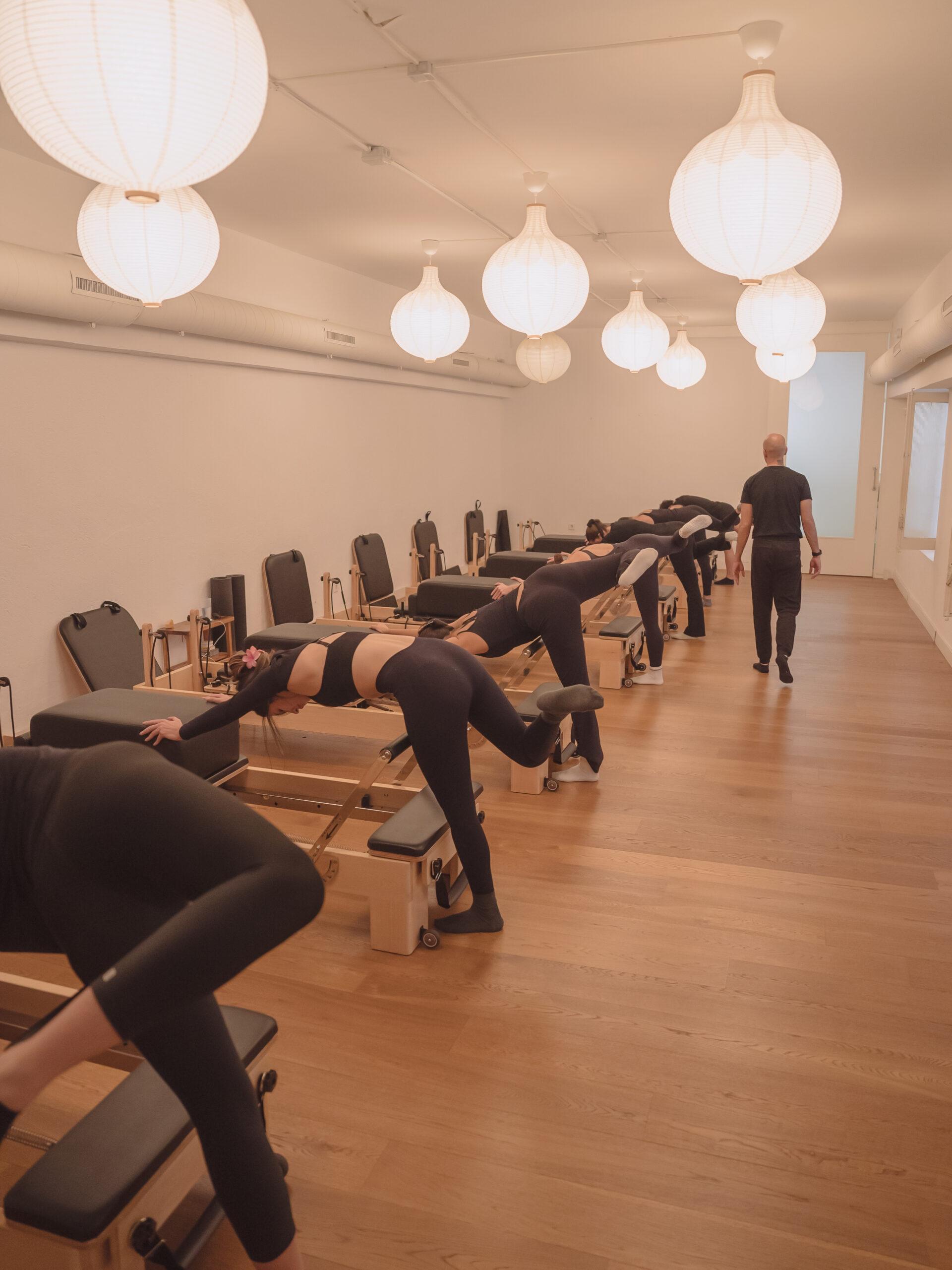
These exercises are part of the repertoire that our instructors (Giuliana, Gabriela, Camila, Montserrat and Abel) adapt for students with sciatica at Pinar Pilates. All of them are performed with spring-controlled resistance and in groups of a maximum of 8 people, which guarantees individual supervision.
1. Footwork
Position: lying on your back on the carriage, feet on the bar, head and shoulders supported. Spine in neutral.
Execution: push the bar with your feet, extending your legs and sliding the carriage. Return, controlling the movement with 2 to 3 medium springs. It is practised in different foot positions: heels, toes and Pilates V position.
Why it is safe for sciatica: the spine is fully supported and unloaded throughout the exercise. There is no lumbar flexion, extension or rotation. It strengthens the quadriceps, hamstrings and glutes without compromising the lumbar area or tensing the sciatic nerve. It is the warm-up exercise we start with for all students who have sciatica.
2. Gentle Pelvic Curl (Pelvic Bridge)
Position: lying on your back, feet on the bar or on the carriage (depending on the desired intensity), knees bent.
Execution: peel the pelvis off the carriage vertebra by vertebra up to a moderate height, without forcing maximum lumbar extension. Hold at the top for 2 seconds. Lower, articulating the spine from the thoracic vertebrae down to the sacrum.
Why it is safe for sciatica: it activates the glutes (especially the gluteus maximus), which are often inhibited in people with sciatica. A strong glute reduces the load on the piriformis and stabilises the pelvis. The vertebra-by-vertebra articulation gently mobilises the lumbar spine without compression. The range of motion is limited if there is radiating pain.
3. Supine Leg Series
Position: lying on your back, feet in the straps, legs raised. Spine supported on the carriage.
Execution: with light springs, perform controlled leg movements: small circles, hip flexion and extension (not exceeding 90 degrees), opening and closing. The goal is to keep the pelvis completely stable while the legs move.
Why it is safe for sciatica: the light springs assist the weight of the legs, removing tension from the lumbar area. By limiting the hip flexion angle to less than 90 degrees, excessive tension on the sciatic nerve is avoided. The pelvic stabilisation work activates the transversus abdominis and multifidus reflexively, protecting the spine.
4. Piriformis Stretch with Straps
Position: lying on your back, one foot in the strap, the other leg bent with the foot resting on the bar.
Execution: with the leg in the strap, bring the knee towards the opposite shoulder with a gentle, controlled external hip rotation. The spring assists the movement, allowing you to dose the intensity of the stretch. Hold for 20 to 30 seconds. Repeat 2 to 3 times per side.
Why it is safe for sciatica: this specific piriformis stretch is key when the sciatica has a muscular compression component. The spring assistance allows you to control the depth of the stretch, avoiding the sudden pull that could irritate the nerve further. Lying down removes the variable of gravity and compression.
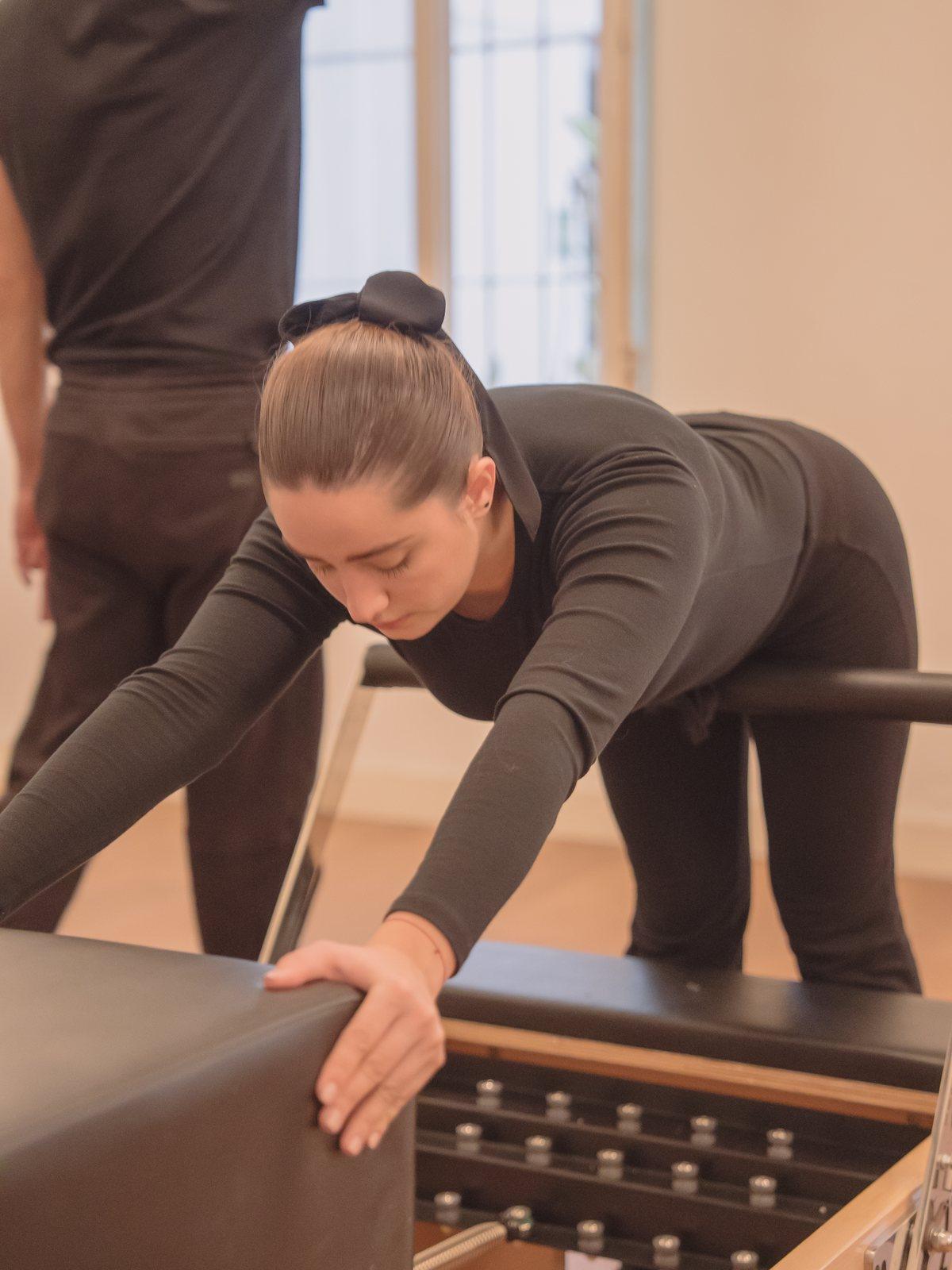
5. Knee Stretch in Round-Back Position
Position: kneeling on the carriage, hands on the bar, back rounded (gentle lumbar flexion).
Execution: push the carriage back by extending the hips while keeping the rounded back position. Return, controlling the movement with 2 medium springs. The range of motion is limited according to tolerance.
Why it is safe for sciatica: the gentle lumbar flexion position opens the intervertebral foramina (the openings through which the nerve roots exit), which can relieve compression in cases of stenosis or disc herniation. It strengthens the abdominals and hip flexors with control. It is introduced only once the student has progressed and tolerates the position well.
6. Modified Mermaid (Side Stretch)
Position: sitting on the carriage, legs crossed or in a comfortable position, one hand on the bar.
Execution: push the bar and let the carriage slide as you lean the trunk sideways. The stretch happens on the opposite side. Return with control. Moderate range of motion, no rotation.
Why it is safe for sciatica: the side stretch decompresses the side of the spine where there may be nerve compression. It improves the mobility of the rib cage and the thoracic spine without flexing or rotating the lumbar spine under load. Many students with sciatica report immediate relief with this exercise.
When NOT to Do Pilates with Sciatica
There are situations in which Pilates is not the priority and exercise may be contraindicated. Consult your doctor and do not come to class if you have any of these symptoms or circumstances:
Warning Signs (Red Flags)
- Cauda equina syndrome. Loss of bladder or bowel control, numbness in the perianal (“saddle”) area and bilateral weakness in the legs. This is a surgical emergency. Go to A&E immediately.
- Progressive neurological deficit. If the weakness in the leg or foot is increasing (for example, you start to find it hard to lift the front of your foot when walking), you need an urgent neurological assessment before any exercise.
- Pain that gets steadily worse. If the pain increases every day despite relative rest and medication, consult your doctor before starting Pilates.
Intense Acute Phase
In the first days of an acute episode of sciatica, when the pain is very intense and any movement makes it worse, Pilates is not advisable. The body needs a period of relative calm (not complete rest, but avoiding structured exercise) before starting a programme of controlled movement. Once the pain begins to subside and allows you to move with less restriction, that is the time to consider adding Pilates.
Without a Medical Diagnosis
If you have pain running down your leg and have not seen a doctor, your first step is to get a diagnosis. You need to know which structure is causing the compression so that the instructor can adapt the exercises safely. Pain radiating to the leg can have causes ranging from a herniated disc to a vascular problem, and the approach to each one is different.
After Recent Injections or Procedures
If you have had an epidural injection, a nerve block or another procedure in the lumbar area, respect the rest period indicated by your doctor before returning to exercise.
How We Start with a Student with Sciatica at Pinar Pilates
At Pinar Pilates, when a student arrives with a diagnosis of sciatica, we follow a clear protocol:
- We ask for the medical report. We need to know the cause of the sciatica (herniation, stenosis, piriformis, etc.) and the doctor’s clearance to exercise.
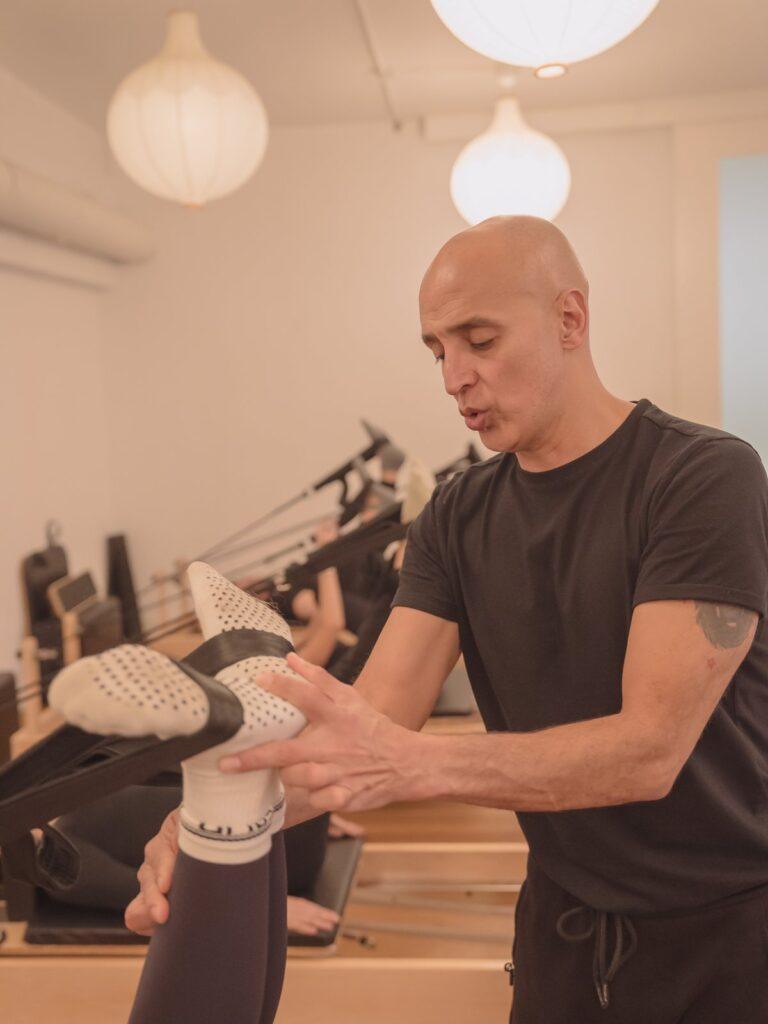
- Initial assessment by the instructor. Before the first class, the instructor assesses posture, mobility, the movements that provoke or relieve pain and the level of fitness. This information determines which exercises to include and which to avoid.
- Adapted first sessions. The first 2 to 4 classes focus on basic supine exercises: Footwork, gentle Pelvic Curl and leg work with straps. The resistance is light and the pace slow.
- Gradual progression. If the response is positive (less pain, more mobility, better tolerance of movement), the exercises are expanded. If an exercise causes radiating pain during or after class, it is removed or modified.
- Constant communication. Our groups of a maximum of 8 people allow the instructor to keep an eye on each student. The student should report any change in their symptoms.
To find out more about what our classes for people with back pain are like, you can read our article on low back pain.
Results We See in Our Students
We cannot guarantee specific results because every case is different. But we can share what we routinely see in students with sciatica who keep up regular practice for at least 8 to 12 weeks:
- Reduction in radiating pain. Most students report a gradual decrease in the pain running down the leg, especially in the first 4 to 6 weeks.
- Greater mobility. Movements that used to cause pain (bending down, turning, sitting for long periods) become more tolerable.
- Fewer acute episodes. Students who keep up regular practice experience fewer relapses than when they were inactive.
- Better sleep quality. Night-time sciatic pain is particularly disabling. Several students report improved rest.
- More confidence in movement. Sciatica creates a fear of movement (kinesiophobia). Classes help restore confidence that the body can move safely.
These results are consistent with the scientific evidence. The Cochrane review by Yamato et al. (2015) already noted that Pilates improves both pain and function in people with low back pain, and more recent studies (Patti et al., 2024) confirm these findings.
Frequently Asked Questions
Can Reformer Pilates cure sciatica?
No. Pilates does not cure the structural cause of sciatica (it does not reabsorb a herniation or widen a narrow canal). What it does is strengthen the muscles that protect the spine, improve mobility, reduce nerve compression through decompression and stretching, and teach the body movement patterns that do not aggravate the problem. Many patients with sciatica improve markedly with conservative treatment (without surgery), and controlled exercise such as Pilates is a fundamental part of that treatment.
How many classes a week do I need?
We recommend starting with 2 classes a week. This frequency allows the body to recover between sessions and the benefits to accumulate. After 4 to 6 weeks, if the response is good, you can increase to 3 classes. A single weekly class may be enough to maintain the benefits once improvement has been achieved.
Can I do Pilates if my sciatica is caused by a herniated disc?
Yes, with medical clearance and the appropriate adaptations. The study by Büyükturan et al. (2023) showed that clinical Pilates is safe and effective for patients with lumbar disc herniation. The key is to avoid loaded flexion and rotation of the lumbar spine, especially in the initial phases. You can find detailed information in our article on herniated discs.
Which exercises should I avoid?
With sciatica, the exercises that are usually contraindicated in the initial phases include: deep lumbar flexion under load (such as the full Roll Up), spinal rotations under resistance, exercises that stretch the sciatic nerve aggressively (such as taking the straight leg beyond 60-70 degrees of hip flexion) and exercises with impact or bouncing. Your instructor will adapt the repertoire to your specific tolerance.
Can I come to class during an acute episode?
It depends on the intensity. If the pain is so severe that it stops you walking normally or sitting, it is better to wait a few days. If the pain is present but tolerable and you can move, an adapted class may be beneficial. Check with us before attending if you are unsure.
Pinar Pilates: Specialised Reformer Pilates in the Salamanca District
We are at Calle del Pinar 8, 28006 Madrid, in the heart of the Salamanca district. Our groups of a maximum of 8 people per class guarantee the individual attention that someone with sciatica needs. We have an average of 4.9 out of 5 on Google and more than 490 reviews from students who have improved their pain, their mobility and their quality of life.
Our prices adapt to different needs: from a single class at 30 euros to the unlimited plan at 250 euros per month, with packs of 4 classes (100 euros), 8 classes (150 euros) and 12 classes (200 euros) in between.
If you have never tried the Reformer, we recommend reading what a first class is like so you know what to expect.
Do you have sciatica and want to start moving safely? Consult your doctor and, with their clearance, book your first class with 50% off at Pinar Pilates. We will adapt every exercise to your situation so you can exercise without fear.
Call us on +34 611 994 729 if you would rather ask before booking. We will be happy to guide you.
You may also be interested in: Pilates for Low Back Pain in Madrid, Pilates for Back Pain and Reformer Pilates for Herniated Discs.
Pinar Pilates · Salamanca district, Madrid
Your first reformer class, €15
Groups of 8 people maximum, specialist instructors and more than 40 classes a week. Your first class is half price.
Book my first classCalle del Pinar 8, Madrid · Questions? Message us on WhatsApp