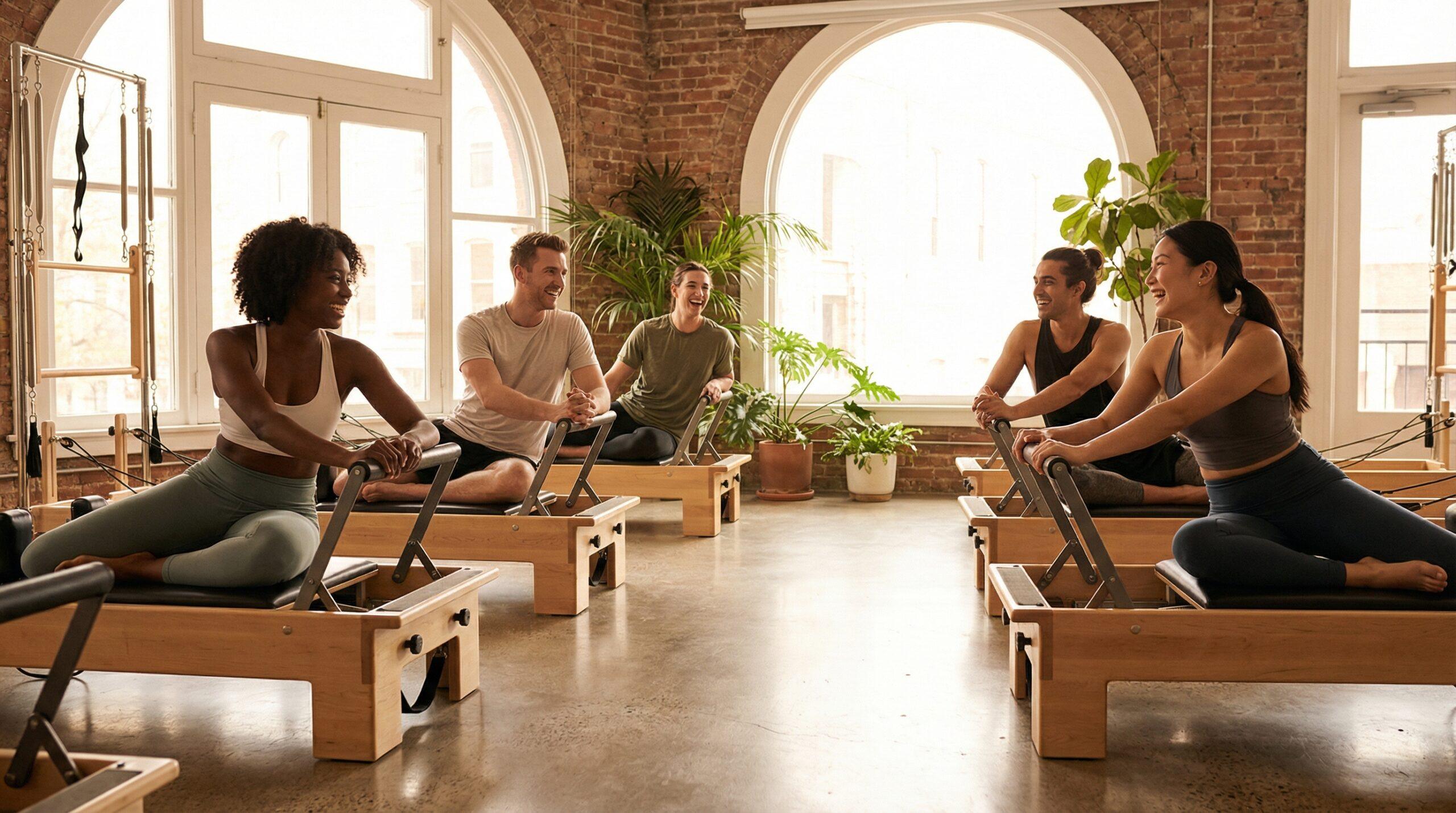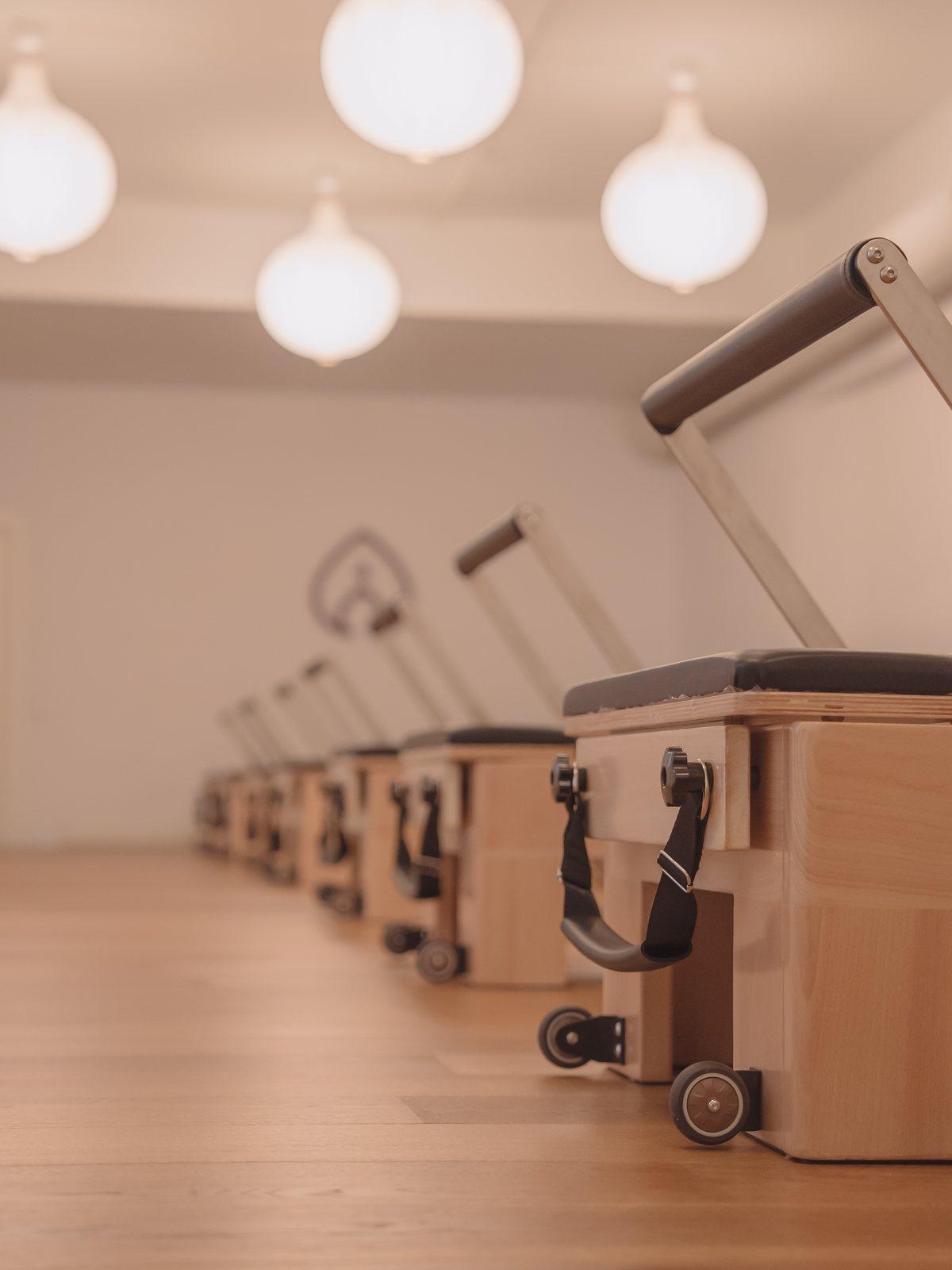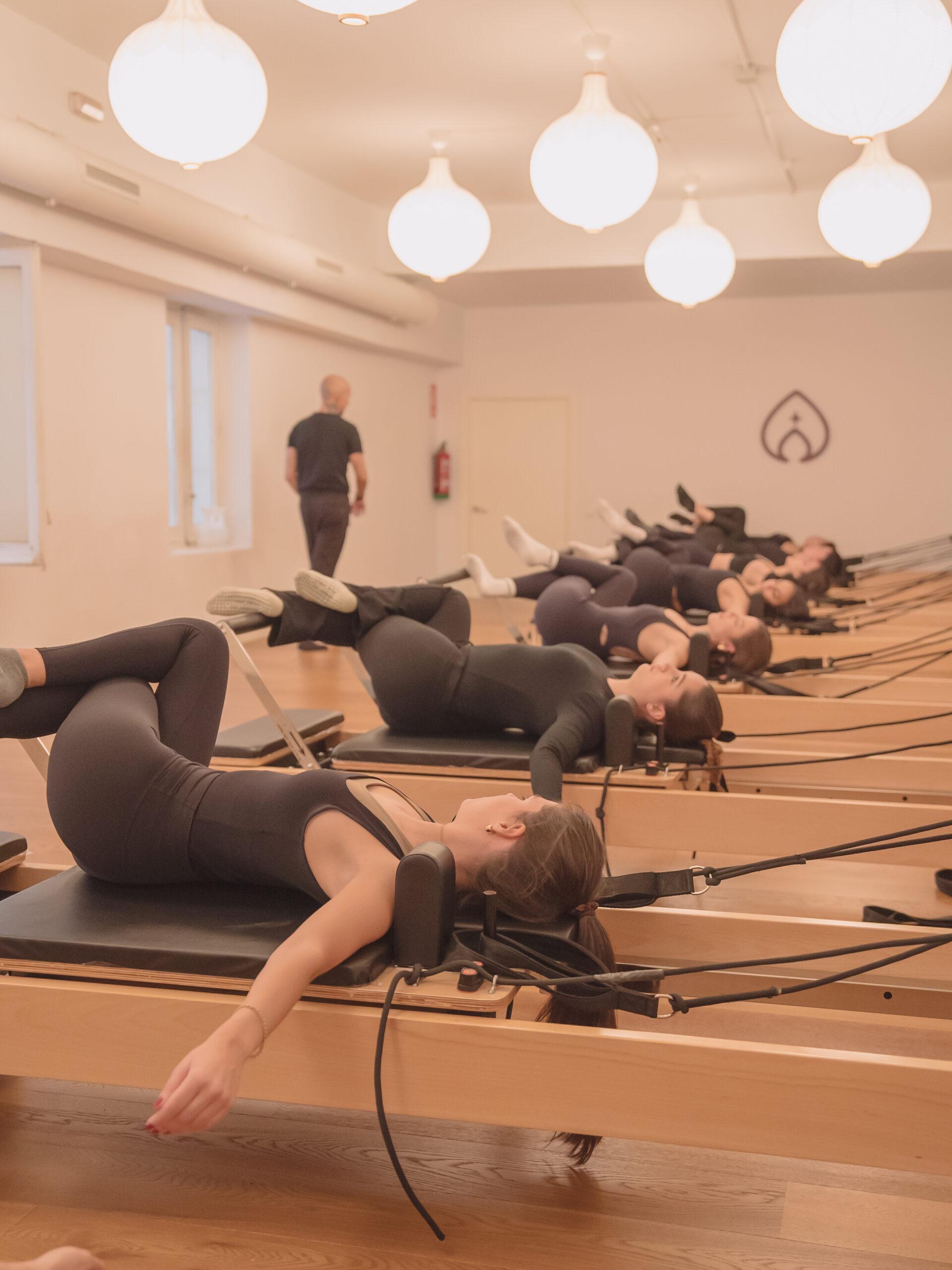
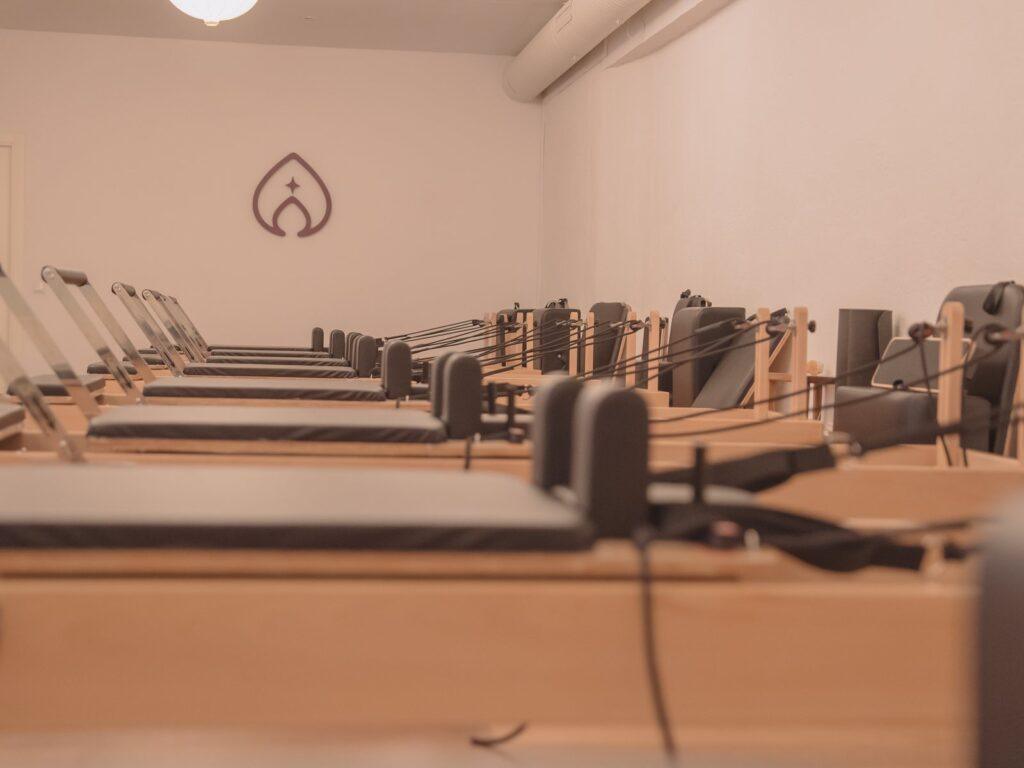
Madrid has more Reformer Pilates studios than ever. Between 2024 and 2026 alone, dozens of new centres have opened, from big chains with 20 machines per room to boutique studios with fewer than 10. For anyone looking for equipment Pilates in Madrid, the choice is wide. But precisely because of that, choosing well has become more complicated.
Not all studios offer the same thing, even if they may look alike from the outside. The type of machine, the size of the group, the training of the person teaching you and even the booking policy influence your experience, your safety and your results. This guide sets out the criteria that matter when choosing a Reformer Pilates studio in Madrid, with concrete data and no gratuitous favouritism.
8 Criteria for Choosing the Best Equipment Pilates Studio
1. Group Size: the Most Decisive Factor
This is the criterion that has the biggest impact on the quality of your experience and, yet, the one fewest people check before signing up. In Madrid, Reformer group sizes vary enormously:
- 3-4 people: micro-format studios. Almost private attention. High price.
- 6-8 people: small groups. A good balance between individual attention and an accessible price.
- 12-20 people: large groups. The instructor leads but barely corrects individually.
The difference is not just about “atmosphere”. In a 50-minute class with 8 students, the instructor has around 4-5 minutes of individual attention per person: enough for 3-4 significant postural corrections. With 20 students, that time drops to under 2 minutes. Many people complete whole classes without receiving a single correction.
If you come for your health, for back pain, to recover from an injury or simply to learn the technique properly, group size should be your first filter. Look for studios that publish their maximum per class on their website. If they do not, ask directly.
At Pinar Pilates we work with a maximum of 8 people per class. We have explained in detail why that number in our article on small groups.
2. Instructor Qualifications
There is no single regulation defining who can teach Reformer Pilates in Spain. This means that instructor training varies enormously from one studio to another.
Some indicators worth checking:
- Training hours: the most recognised certifications (BASI, Stott, Polestar, Peak) require between 400 and 600 hours of theoretical and practical training. Some accelerated courses are completed in a weekend. The difference in knowledge is vast.
- Exclusive dedication: an instructor who devotes 100% of their time to Reformer Pilates has a very different accumulated experience from a gym instructor who teaches Reformer as one more activity among spinning, yoga and body pump.
- Ability to adapt: a good instructor knows how to modify each exercise for people with herniated discs, shoulder problems, pregnancies or any other particularity. That ability comes from training and continued practice.
- Years of experience: especially relevant for students with conditions or physical limitations.
Before choosing a studio, look at its website. Does it present its instructors by name, training and background? If it does not, that is a sign that the team’s qualifications are not a differentiating value for that centre.
3. Quality of the Reformer Machines
Not all Reformers are the same. The differences between a high-end professional machine and a budget one are felt in every class, even if a beginner cannot always identify where the difference comes from.
Aluminium Reformers (high end):
– Lighter but more stable frame.
– Smoother, quieter carriage glide.
– Springs with more precise resistance.
– Better ergonomics in the headrest, bar and straps.
– Superior durability with proper maintenance.
– Price per unit: between 5,000 and 8,000 euros.
Wooden Reformers (mid-high end):
– Warmer look, popular in boutique studios.
– Good performance if from recognised manufacturers (Balanced Body, Merrithew).
– Require a little more maintenance on the rails.
– Price per unit: between 3,500 and 6,000 euros.
Budget Reformers (low end):
– Less stable frame, especially with intensive use.
– Springs with less graduated resistance.
– Less fluid glide, which can affect the execution of certain exercises.
– Upholstery and ropes with lower durability.
– Price per unit: between 1,500 and 3,000 euros.
The big chains that need to equip rooms with 15-20 machines tend to opt for low- or mid-range to make the investment viable. Boutique studios, with 6-10 machines, can invest more per unit. Ask the studio which brand and model of Reformer they use. If they do not know or do not want to answer, that is worth bearing in mind.
4. Variety of Classes and Timetable
A good equipment Pilates studio in Madrid does not offer “a Reformer class” repeated over and over. The body adapts, and variety of stimulus is key to continuing to progress.
Look for studios that offer different formats or approaches within the Reformer:
- General classes that work the whole body.
- Focused classes on legs, upper body or core.
- Cardio classes that combine the Reformer with cardiovascular work.
- Mobility/stretching classes for flexibility and recovery.
- Differentiated levels or adaptations for beginners and advanced students.
The weekly timetable also matters. Do they have classes first thing in the morning? At midday for people who work nearby? In the late afternoon? At weekends? A studio with a wide range of times makes consistency easier, and consistency is what produces results in Pilates.
5. Location and Accessibility
The best Pilates studio in the world is no use to you if getting there takes 45 minutes and three changes. Adherence to exercise depends, among other things, on how easy it is to fit into your routine.
Practical criteria for evaluating location:
- Proximity to your home or workplace. Ideally the studio is on the way between the two, not a major detour.
- Public transport access. Is there a metro or bus nearby? How many minutes’ walk from the stop?
- Parking. If you drive, is there parking nearby? Regulated (SER) or free?
- Neighbourhood. A studio in a pleasant area makes it easier to arrive keen and stress-free.
In Madrid, the neighbourhoods with the highest concentration of Reformer studios are Salamanca, Chamberí, Retiro, Chamartín and the centre (Justicia, Malasaña, Chueca). The offer has also expanded to neighbourhoods such as Tetuán, Prosperidad and Arganzuela.
6. Price Structure and Transparency
Reformer Pilates prices in Madrid vary a lot, and the most expensive is not always the best nor the cheapest the worst. What matters is understanding what each rate includes.
Some questions worth asking before signing up:
- What is the real price per class? A single class is always the most expensive option. Compare monthly packs and calculate the unit cost.
- Is there a minimum contract? Some studios require a commitment of 3, 6 or 12 months. Others work month to month with no tie-in.
- Do the classes expire? An 8-class pack that expires in 30 days is very different from one that expires in 60.
- What happens if I cancel a class? Cancellation policies vary: from 2 hours before to 24 hours. Penalties for late cancellation also differ.
- Is there a joining or registration fee? Some studios charge an initial fee.
- Does the price include all class formats? In some centres, “special” classes carry an additional cost.
We have published an up-to-date price comparison of the main studios in Madrid so you can check rates against real data.
7. Trial Class: Essential before Deciding
No criterion replaces direct experience. Most Reformer Pilates studios in Madrid offer some kind of trial class or introductory pack. Take advantage of it before committing to a monthly plan.
What to look out for during your trial class:
- Did the instructor ask you about injuries or health problems? They should, before starting.
- Did you receive individual corrections? If in 50 minutes nobody touched you or said anything to you, the group is too big or the instructor is not paying enough attention.
- Were the explanations clear? A good instructor does not assume you know what a “footwork” or a “hundred” is. They explain it.
- Did you feel comfortable? The atmosphere, cleanliness, temperature, music, the team’s attitude. It all adds up.
- Did the machine work well? Smooth glide, springs that do not squeak, straps in good condition, clean upholstery.
- Could you book the class without problems? A smooth booking system and a reasonable cancellation policy show that the studio values your time.
Do not settle for a single trial. If you are torn between two or three studios, try them all. It is a small investment that saves you months of dissatisfaction.
8. Reviews and Online Reputation
Google reviews are, today, the most reliable source of opinion about a Pilates studio. Unlike the testimonials on the studio’s own website (which are obviously always positive), Google reviews are verified and hard to manipulate.
What to look at in the reviews:
- Total number of reviews. A studio with 50 five-star reviews is less reliable than one with 400 reviews and an average of 4.8. Volume indicates consistency.
- Content of the reviews. Do they mention individual corrections? Do they talk about the instructors by name? Do they describe the experience in detail? Generic reviews (“very good, loved it”) tell you less than those that explain what specifically they liked.
- Negative reviews. Read them carefully. Does any pattern repeat? (full classes, cancellations, lack of attention). A studio with only five-star reviews may have filtered out the negative ones.
- Studio responses. Does the studio reply to reviews, both positive and negative? That indicates there is someone behind it who cares about the customer experience.
- Date of the reviews. Reviews from three years ago may not reflect the current situation. Prioritise the most recent.
Other Factors You Should Not Ignore
Cleanliness and Maintenance
It seems obvious, but it is not that obvious. A Pilates studio where students share machines all day needs rigorous cleaning protocols. Notice whether the machines are disinfected between classes, whether the upholstery is in good condition and whether the space as a whole conveys care and order.
Booking System and Flexibility
Can you book from an app or do you have to call? How far in advance do places open? Is there an automatic waiting list if the class is full? A good booking system avoids frustration and makes consistency easier.
Cancellation Policy
Life does not always let you stick to the plan. A studio with a reasonable cancellation policy (for example, cancelling up to 6-12 hours before without penalty) shows that it understands the reality of its students. Policies of 24 hours’ notice or penalties for late cancellation are common, but it is worth knowing them before signing up.
Community and Atmosphere
This criterion is subjective but relevant. A studio where you feel welcome, where the instructor calls you by your name and where you run into the same people creates a bond that helps you stay consistent. Do not underestimate the human factor.
We have written about the difference between the boutique experience and gym chains if you want to go deeper into this topic.
How to Apply These Criteria: a Practical Checklist
Before enrolling at an equipment Pilates studio in Madrid, answer these questions:
| Criterion | Key question | Ideal answer |
|---|---|---|
| Group | What is the maximum number of people per class? | 8 or fewer |
| Instructors | Do they have certified training of 400+ hours? | Yes, with exclusive dedication |
| Machines | Which brand and model of Reformer do they use? | Recognised manufacturer, mid-high or high end |
| Variety | Do they offer different class formats? | At least 3-4 different types |
| Location | Is it under 20 minutes from your home or work? | Yes, by public transport or on foot |
| Price | Does the cost per class fit my budget? | Compare unit cost, not headline price |
| Trial | Do they offer a trial class or introductory pack? | Yes, with a discount |
| Reviews | Do they have 100+ reviews with an average of 4.5+? | High volume and detailed content |
If a studio meets 6 of these 8 criteria, it is probably a good choice. If it meets all 8, you have found a place worth staying.
Our Experience at Pinar Pilates
It would not be honest to write a guide on how to choose a Pilates studio in Madrid without being transparent about ours. At Pinar Pilates we have built the studio by applying each of the criteria we have just described:
- Maximum 8 people per class. Always. No exceptions. With 8 Reformers in the room.
- 5 specialised instructors: Giuliana, Gabriela, Camila, Montserrat and Abel. Exclusive dedication to Reformer Pilates, with certified training and years of experience.
- High-end professional Reformers, with regular maintenance of springs, ropes and upholstery.
- 5 class formats: Pinar Reformer, Pinar Legs, Pinar Cardio, Upper Body and Stretch. More than 40 classes a week, Monday to Sunday.
- Salamanca district, Calle del Pinar 8, 28006 Madrid. Gregorio Marañón metro 5 minutes away.
- 4.9 out of 5 on Google with more than 490 verified reviews.
- Transparent prices, no tie-in: from €100/month (4 classes) to €250/month (unlimited). Single class €30. All the details on our prices page.
Are we the best Pilates studio in Madrid? That is for you to decide. What we do guarantee is that we meet the 8 criteria in this guide, and that each of our more than 490 reviews was written by a real person who has experienced our classes first hand.
Frequently Asked Questions
Do all equipment Pilates studios in Madrid use the Reformer?
The vast majority, yes. The Reformer is the most popular Pilates machine and the one you will find in practically every studio in Madrid. Some centres also offer classes with the Cadillac, Wunda Chair or Tower, but these are less common in a group format. When someone says “equipment Pilates” in Madrid, they almost always mean Reformer Pilates.
How much should I pay for a good Reformer class?
The usual range in Madrid for quality group classes (groups of 4-8 people, qualified instructors, machines in good condition) is between 18 and 30 euros per class, depending on the purchase format. Below 15 euros, it is worth checking the group size and the conditions. Above 35 euros for a group class, you are paying a premium that is not always justified.
Is it better to have a studio near home or near work?
It depends on when you plan to go. If you go early in the morning or in the evening, near home makes more sense. If you go during your lunch break or just before/after work, near the office is more practical. What matters is that the journey does not become an excuse not to go.
Can I start at a Reformer studio with no previous experience?
Yes, as long as the studio offers personalised attention. In small groups, the instructor can explain the fundamentals and correct you from the first minute. In groups of 15-20 people, a complete beginner can feel lost. If you have never tried the Reformer, we recommend reading our guide on your first class to know what to expect.
How often should I go to notice results?
The consensus among professionals is that 2-3 sessions a week is the sweet spot. With one session a week you maintain what you have learned, but progress is slow. With 2 sessions, postural and strength changes start to show in 4-6 weeks. With 3 sessions, the transformation is faster and deeper.
Choosing a Reformer Pilates studio is a decision that affects your body, your time and your wallet. Take a few days to research, try and compare. And if you want to experience what a class is like at a studio that meets the 8 criteria in this guide, we invite you to try us.
Book your first class with 50% off at Pinar Pilates. Calle del Pinar 8, Salamanca district, Madrid. Phone: +34 611 994 729.
Pinar Pilates · Salamanca district, Madrid
Your first reformer class, €15
Groups of 8 people maximum, specialist instructors and more than 40 classes a week. Your first class is half price.
Book my first classCalle del Pinar 8, Madrid · Questions? Message us on WhatsApp