Important medical notice: fibromyalgia is a complex health condition that requires diagnosis and follow-up by a rheumatologist or chronic pain specialist. This article is for information only and does not replace assessment or treatment by a healthcare professional. Before starting Pilates or any exercise programme with diagnosed fibromyalgia, consult your doctor. The exercises and adaptations described here are a guide and must be adjusted to your specific situation under the supervision of a qualified instructor.
Fibromyalgia is one of the most common chronic pain conditions and, at the same time, one of the least understood. If you have it, you know how hard it is to find ways to move without pain stopping you, and how frustrating it is to hear that “exercise will do you good” when every movement feels like an obstacle. Reformer Pilates is not a magic solution, but it is one of the exercise methods with the strongest scientific support and best suited to the specific characteristics of this condition.
What Fibromyalgia Is
Fibromyalgia is a central sensitisation syndrome characterised by chronic, widespread musculoskeletal pain, persistent fatigue, non-restorative sleep and cognitive difficulties (often called “fibro fog”). It is not joint inflammation or tissue damage visible on imaging: the problem lies in how the central nervous system processes pain signals, amplifying them disproportionately.
It affects between 2% and 4% of the adult population in Spain, according to data from the Spanish Society of Rheumatology, and is notably more common in women. Diagnosis is made using the American College of Rheumatology criteria (ACR 2010/2016), which assess both the extent of the pain and the intensity of symptoms such as fatigue, sleep and cognitive problems.
Living with fibromyalgia means managing a level of pain that varies from day to day, periods of flares that can be disabling, and a fatigue out of all proportion to the effort made. This makes exercise both one of the most effective treatments and one of the hardest to sustain.
Why Exercise Is Necessary but Hard in Fibromyalgia
International clinical guidelines, including the EULAR (European League Against Rheumatism) Revised Recommendations for the management of fibromyalgia, place physical exercise as the intervention with the highest level of evidence and the only treatment with a “strong” recommendation based on the available evidence. It is not generic health advice: exercise modulates central sensitisation, releases endorphins and other neuromodulators, improves sleep quality and reduces fatigue in the long term.
The problem is that starting or keeping up exercise with fibromyalgia has real obstacles:
Post-exertional pain. Many people with fibromyalgia experience a worsening of pain 24 to 48 hours after exercise (a phenomenon known as post-exertional malaise). If the intensity or volume of training is excessive, the body responds with a flare that discourages trying again.
Central fatigue. Fibromyalgia fatigue is not ordinary muscle tiredness; it is fatigue of central origin that does not improve with rest and can appear with minimal effort. This limits both the length and the intensity of the sessions a person can tolerate.
Fear of movement. After many experiences of pain triggered by physical activity, it is understandable to develop kinesiophobia: fear of moving because movement is associated with more pain. This fear, although adaptive in origin, perpetuates the cycle of inactivity and sensitisation.
The ideal exercise for fibromyalgia must be low to moderate in intensity, progressive, predictable and controlled. And it must let the person practising it stay in control of the experience. Reformer Pilates meets all those criteria better than most forms of exercise.
Why the Reformer Is Especially Suitable for Fibromyalgia
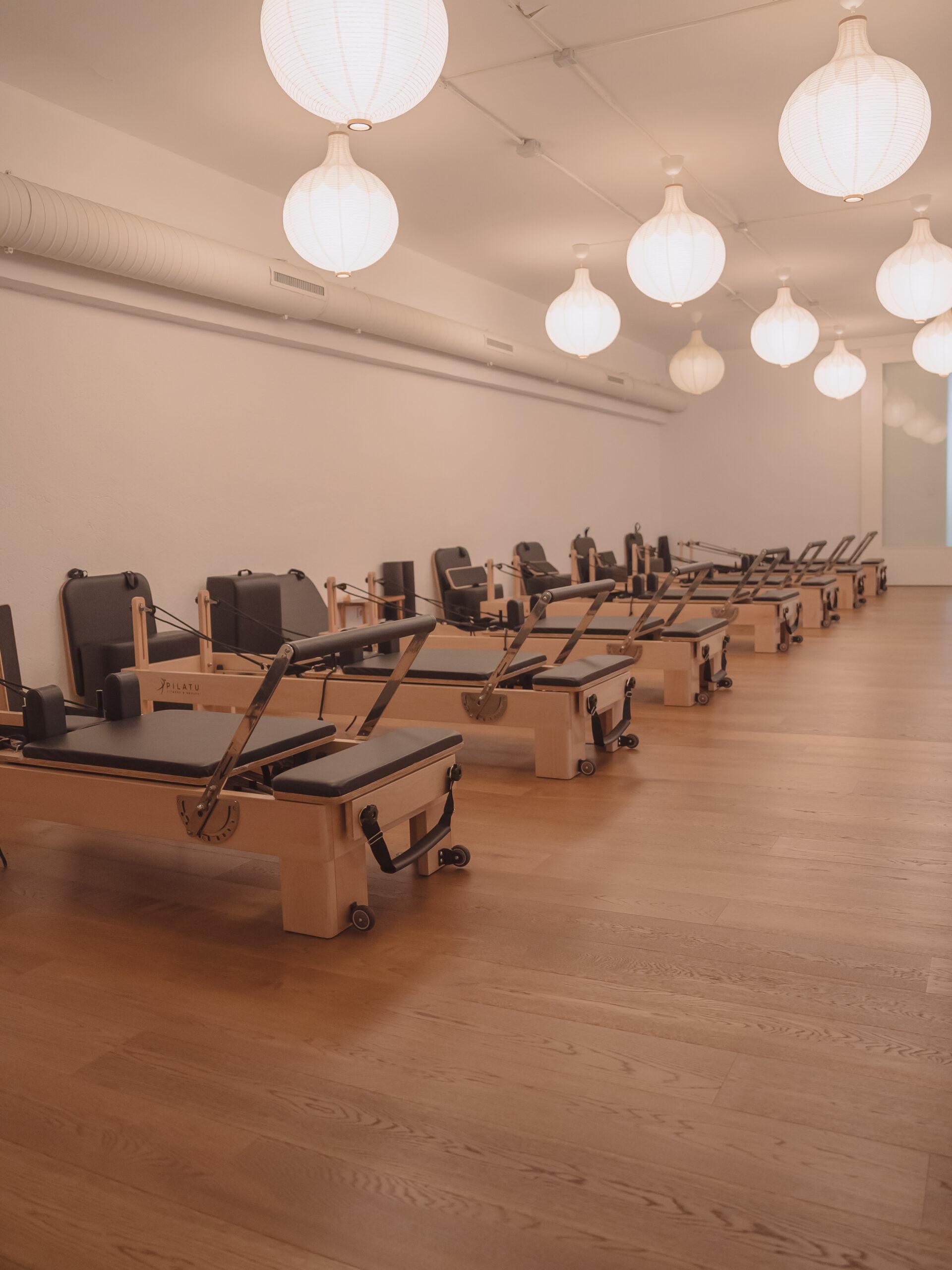
Reformer Pilates is not simply Pilates on a machine. Its mechanical characteristics make it particularly suited to people with chronic pain and low tolerance to effort.
Precisely Adjustable Resistance
The Reformer springs let you work with very low resistance, even with a support spring that assists the movement instead of resisting it. For a person with fibromyalgia who cannot support their own weight or has very reduced strength, this makes it possible to find an effective working intensity without crossing the pain threshold. Progression happens in small, controlled increments, not in jumps of intensity that trigger post-exertional pain.
Horizontal Positions That Reduce Fatigue
Much of the work on the Reformer is done lying on the back (supine) or in positions where body weight is spread across the carriage. This has a direct advantage for fibromyalgia: it reduces the demand on the cardiovascular system and on the postural muscles, which are usually permanently tense and overloaded. Working horizontally allows a significant level of muscular effort without the energy cost of staying upright.
Controlled, Predictable Movements
Reformer exercises have a path defined by the machine. The carriage glides on rails, the pulleys guide the ropes, the bar sets the range of the leg exercises. This predictability reduces uncertainty and fear of movement, two factors that, in people with kinesiophobia, raise the perception of pain. Knowing exactly what will happen in each repetition creates a safe environment that makes it easier to explore movement without anxiety.
Spring Assistance
Some Reformer exercises are done with the springs assisting the movement: the carriage helps the person complete the arc of movement, reducing the muscular effort needed. For people with fibromyalgia who have limitations in strength or joint range, this assistance makes complete, beneficial movements possible that would otherwise be out of reach.
Proprioceptive Feedback
Constant contact with the carriage, the bar and the ropes provides rich proprioceptive information about the body’s position and movement. In people with fibromyalgia, whose body perception can be distorted by central sensitisation, this feedback helps recalibrate the relationship with their own body and distinguish between the dysfunctional pain of sensitisation and the normal sensations of movement.
What the Scientific Evidence Says
Research on Pilates and fibromyalgia has clearly grown in recent years, with several randomised controlled trials (RCTs) and a recent meta-analysis that consolidates the results.
Meta-analysis by Zhao et al. (2024), published in the Journal of Clinical Medicine. It analysed 6 studies with 265 participants. The pooled analysis of Visual Analogue Scale (VAS) scores showed a significant reduction in pain (mean difference = -0.71; p = 0.023). On the Fibromyalgia Impact Questionnaire (FIQ), the standard tool for measuring the overall impact of the condition, Pilates achieved statistically significant improvements (mean difference = -7.28; 95% CI -12.06 to -2.49; p = 0.003). The authors concluded that Pilates can reduce pain and improve health-related quality of life in people with fibromyalgia.
Randomised controlled trial by Çağlayan et al. (2023), published in Reumatología Clínica (19(1), 18-25). This is the specific study on Reformer Pilates in fibromyalgia. It included 28 women with fibromyalgia who did Reformer exercise or mat Pilates at home, twice a week for 6 weeks. The Reformer group achieved significant improvements in the FIQ (clinical impact of fibromyalgia) and in the chair-stand test (lower-limb strength). The authors concluded that Reformer Pilates exercises have positive effects on clinical status and muscle strength in people with fibromyalgia.
Randomised controlled trial by Dundar et al. (2009), published in Rheumatology International. One of the first studies on Pilates in fibromyalgia. It compared Pilates with home exercise over 12 weeks. The Pilates group showed significant improvements in pain (measured by VAS) and in the FIQ at 12 weeks, although the effect on the FIQ faded at 24 weeks. The authors pointed to the importance of continued practice to maintain the benefits.
Randomised controlled trial by Ekici et al. (2017), published in the Journal of Musculoskeletal Pain. It compared clinical Pilates with and without a passive intervention (massage) in 40 women with fibromyalgia over 6 weeks. Both groups improved in pain, anxiety and quality of life. The Pilates-only group (without massage) showed improvements in pain and anxiety comparable to the combined group, which suggests that Pilates by itself has a significant effect on pain and psychological state.
The available evidence is consistent in showing that Pilates reduces pain, improves the overall impact of fibromyalgia as measured by the FIQ and has positive effects on quality of life. The key lies in adapting to each person’s individual characteristics and in continuity.
Adaptations an Instructor Makes for People with Fibromyalgia
An instructor experienced in fibromyalgia does not simply “do the usual thing in an easy version”. They adapt the whole logic of the session to the physiology and pain experience of this condition.
Starting at very low intensities. The first sessions use little resistance, few repetitions and generous rest periods. The goal is to find the level at which movement is challenging but does not trigger a post-session flare. This may mean working with a single low-resistance spring or even with spring assistance.
Monitoring pain during the session. The instructor actively asks how the student feels and adjusts in real time. A perceived effort or pain scale (for example, 0 to 10) can help set clear limits: if pain rises above 4-5, intensity is reduced or the student rests.
Avoiding overexertion out of enthusiasm. One of the most frequent mistakes in people with fibromyalgia who start to feel good during exercise is doing too much. The instructor acts as a brake: not out of paternalism, but because post-exertional pain appears hours later, not during the session, and can destroy adherence to the programme.
Prioritising mobility and body awareness over strength. The first weeks focus on gentle mobility movements, breathing and proprioceptive awareness. Load progresses once tolerance to movement is established.
Respecting bad days. Fibromyalgia fluctuates. A flare day does not mean the student can do nothing: it means that session will be gentler, shorter or focused on passive mobility movements. The instructor adapts the day’s plan to how the student arrives.
Open communication about diagnosis and treatment. Knowing the medication the student takes (some affect coordination or fatigue levels), the most sensitive points and the usual flare triggers allows the session to be personalised meaningfully.
5 Reformer Exercises Suitable for Fibromyalgia
These exercises are described in their most adapted version. At Pinar Pilates, each one is adjusted to the student’s specific situation and always under the direct supervision of the instructor.
1. Gentle Footwork
Position: lying on your back on the carriage, feet on the footbar with the knees bent. Spine neutral on the carriage.
Execution: slowly push the bar, extending the legs without fully locking the knees, and return with control. Work in parallel (feet together, feet hip-width apart) with one or two low-resistance springs. 6 to 8 repetitions per position.
Why it helps in fibromyalgia: it is the safest exercise to start with. The spine is fully supported, the path is predictable, and the springs absorb part of the load. It activates the quads, hamstrings and calves without joint impact. The horizontal position removes gravitational load on the joints and reduces cardiovascular demand. It generates muscular warmth and joint mobility that many people with fibromyalgia cannot achieve by other means.
2. Gentle Pelvic Curl
Position: lying on your back, feet flat on the bar, knees bent to 90 degrees. Arms relaxed by your sides.
Execution: on an exhale, tilt the pelvis back and lift the sacrum, then the lumbar vertebrae, lifting only very partially if there is pain. The aim is not to reach a full bridge: in the first weeks a conscious pelvic tilt may be enough. The descent is done vertebra by vertebra, slow and controlled.
Why it helps in fibromyalgia: it works segmental articulation of the lumbar spine, which is usually stiff and painful. The slow, controlled movement activates the multifidus and the transversus abdominis without creating excessive load. Progressive vertebral articulation can reduce morning lumbar stiffness, one of the most frequent symptoms in fibromyalgia.
3. Supine Arm Series
Position: lying on your back on the carriage, a strap in each hand with light springs. Arms extended towards the ceiling.
Execution: open the arms sideways as far as the pain allows and return to centre. Alternatively, lower the arms towards the thighs and raise them again. The movement is slow, exhaling on the effort and inhaling on the return. 6-8 repetitions.
Why it helps in fibromyalgia: many people with fibromyalgia have chronic tension in the shoulder girdle, the neck and the trapezius. This exercise mobilises the shoulders and gently activates the serratus anterior and the rhomboids without overloading the upper trapezius. The lying position removes postural fatigue. The light spring resistance creates enough muscular stimulation to produce benefit without pain.
4. Gentle Mermaid (Modified)
Position: seated sideways on the carriage with the legs in a comfortable position (not necessarily in the classic “mermaid” if the hips are stiff). One hand on the carriage, the other on the footbar.
Execution: gently push the bar outwards, letting the trunk stretch sideways towards the bar. The stretch should be felt, not forced. Hold for 2-3 breaths and return with control. 4-5 repetitions per side.
Why it helps in fibromyalgia: pain in the side of the trunk (flanks, intercostal area) is common in fibromyalgia. This exercise gently stretches the quadratus lumborum, the intercostals and the obliques on the side being lengthened, easing built-up tension. Deep breathing in the stretch position improves rib expansion, which in people with chronic pain is usually limited by shallow, defensive breathing.
5. Kneeling Knee Stretches
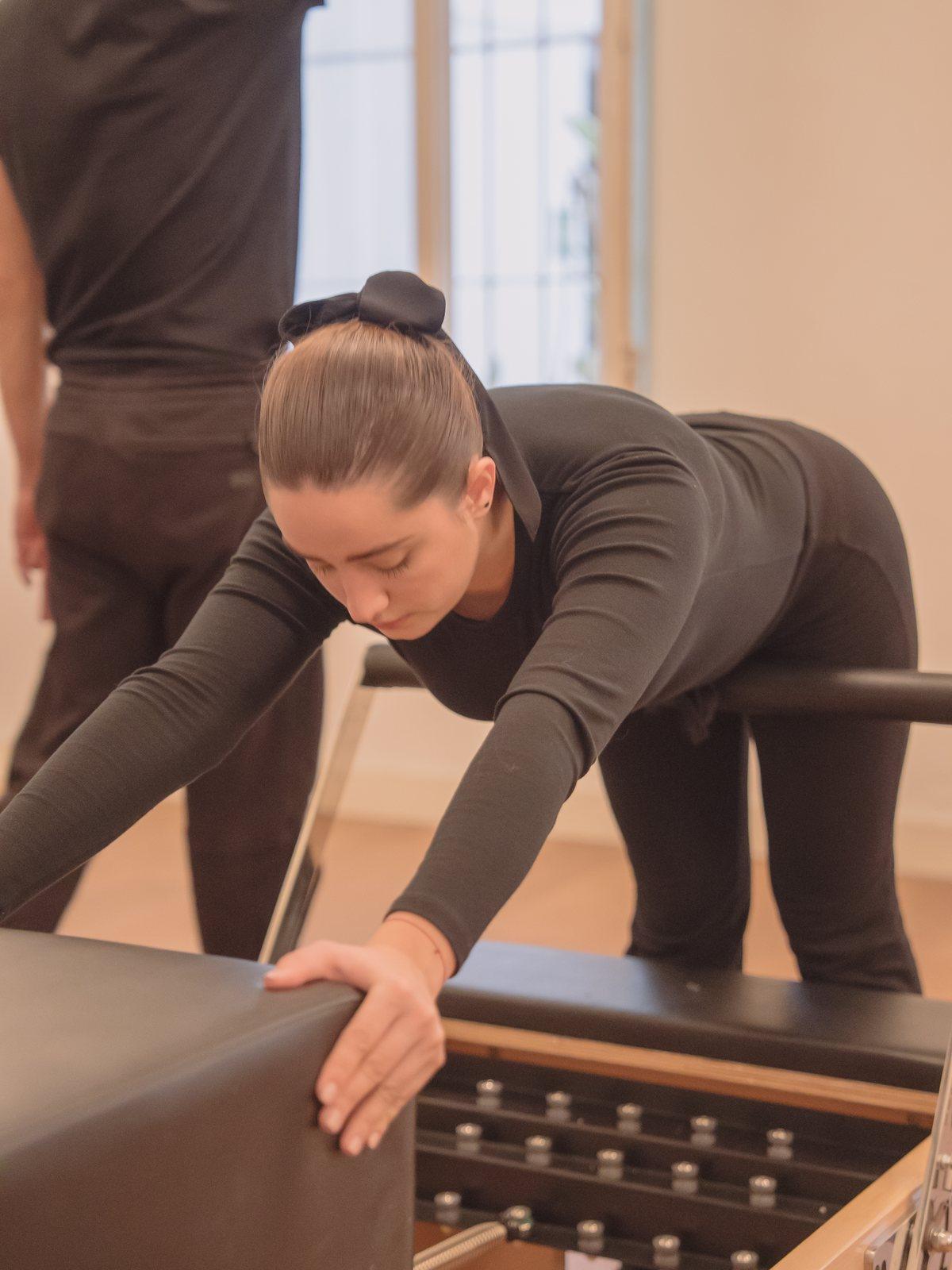
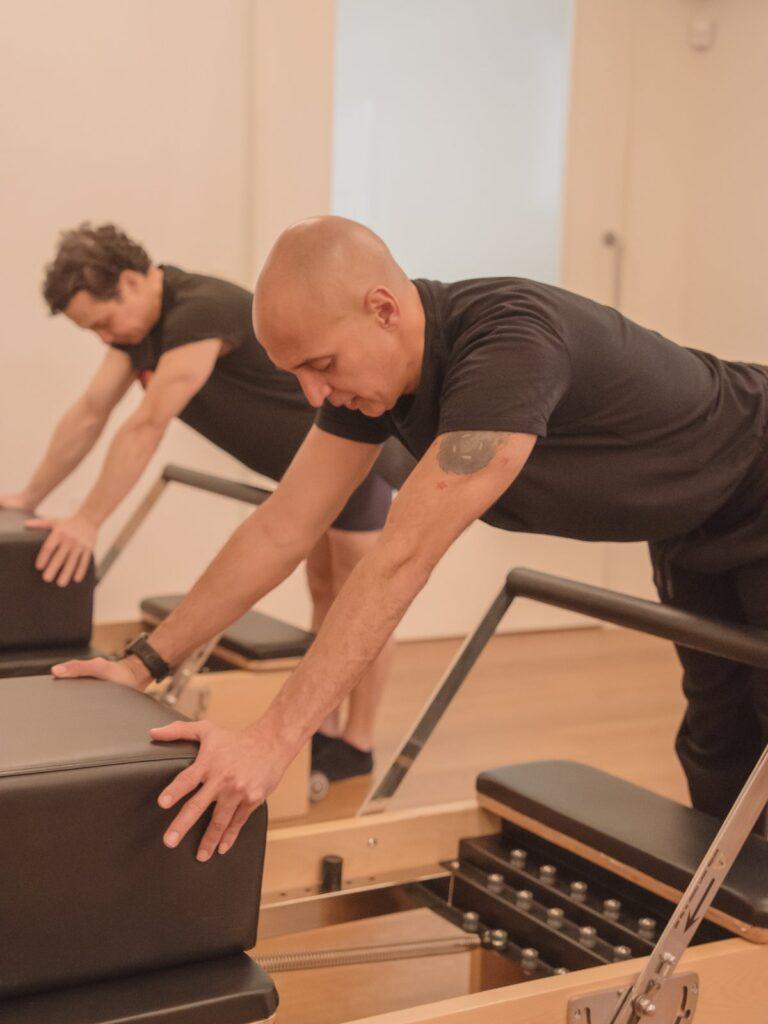
Position: kneeling on the carriage, hands on the footbar, spine neutral (flat back). One medium-resistance spring.
Execution: from all fours, flex the hips, taking the carriage back without losing the position of the spine. The range is small, 10 to 15 centimetres. Return slowly. 6-8 repetitions. The navel stays lightly drawn towards the spine throughout.
Why it helps in fibromyalgia: it is one of the best exercises for activating the transversus abdominis and the pelvic floor with minimal load on the spine. On all fours, the spine is in a medium-load position that many people with fibromyalgia tolerate better than full standing load. The controlled movement of the carriage gives immediate feedback on core stability.
How to Manage Flares and Adjust Training
Fibromyalgia flares are inevitable. What changes over time and with a well-adapted programme is their frequency, their intensity and the capacity to recover. These are the guidelines applied at Pinar Pilates:
During a mild or moderate flare: the load is halved, standing exercises are removed and gentle mobility lying down is prioritised. A 20-minute session of gentle mobility is usually more beneficial than cancelling completely: it maintains adherence to the programme and can shorten the flare.
During a severe flare: active rest. This does not mean total immobility, but very gentle movements such as light stretches in bed, diaphragmatic breathing or walking short distances if possible. Return to the Reformer when the pain drops to a manageable level (below 6 on a 0-10 scale).
After the flare: come back slowly. The most frequent mistake is going straight back to the previous training level. It is better to start from a lower level and progress over 2-3 sessions before returning to the usual load.
Keeping a record of sessions and symptoms: a simple diary (pain level before and after each session, sleep quality that night, energy level the next day) helps identify the load levels that work and those that trigger flares. This information is valuable for both the student and the instructor.
How We Work with Fibromyalgia at Pinar Pilates
At Pinar Pilates, at Calle del Pinar 8, 28006 Madrid (Salamanca district), we regularly work with students who have diagnosed fibromyalgia. Our instructors, Giuliana Di Giovanni, Gabriela Seminara, Camila T., Montserrat Sierra and Abel Gomez, have experience working with people with chronic pain and adaptations for specific conditions.
More than 490 people have rated their experience at Pinar Pilates on Google, with an average of 4.9 out of 5.
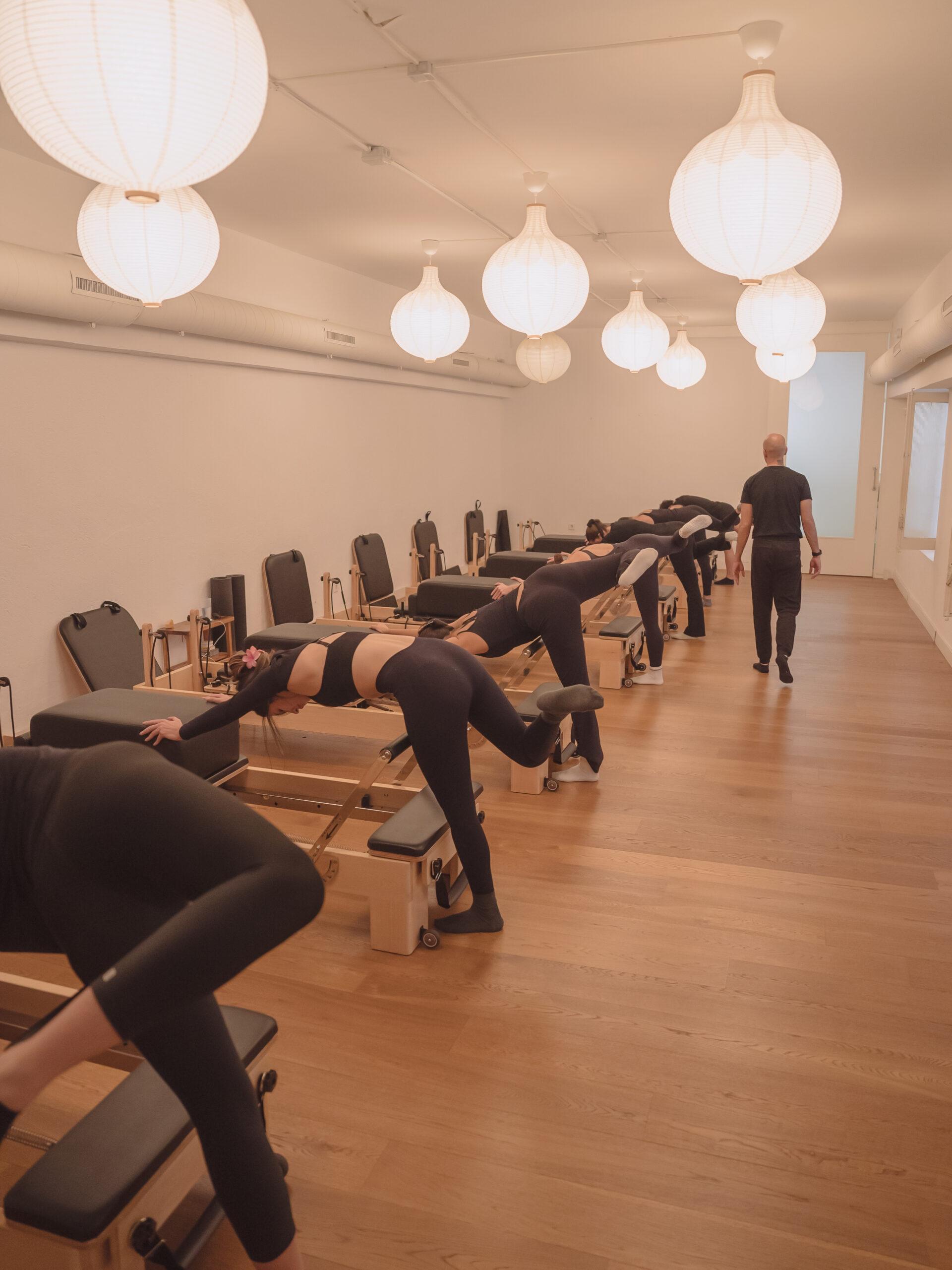
Our classes have a maximum of 8 people, which lets the instructor watch how you perform, adjust the spring resistance in real time and adapt the exercises to how you feel that day. This direct supervision is especially important in fibromyalgia, where tolerance to effort varies a lot from one session to the next. You can find more information about how we work on our small groups page.
If you are unsure whether Pilates is right for your case, you can also read our guide to contraindications of Reformer Pilates and the information on the benefits of Reformer Pilates.
We offer a first class at 50% off (€15 instead of €30), precisely so you can try with no commitment and see how your body responds before deciding.
Frequently Asked Questions
Can Reformer Pilates make fibromyalgia worse?
If it is done at an inappropriate intensity, yes, it can trigger a flare. This is not exclusive to Pilates: any poorly dosed exercise can temporarily worsen symptoms. The key is to start with very low loads, progress slowly and have an instructor who knows the condition. With correct progression, the scientific evidence shows that Pilates improves symptoms in the medium and long term.
How long does it take to notice improvement?
The studies with the best results used programmes of 6 to 12 weeks with 2 sessions a week. The first improvements are usually noticed in morning stiffness and sleep quality before in the pain itself. Some people report improved fatigue from the third or fourth week. Progression is not linear: there will be better and worse weeks, especially at the start.
Do I need medical clearance before starting?
It is advisable to tell your rheumatologist or doctor that you are going to start Reformer Pilates. In most cases, low-intensity exercise does not require specific clearance, but your doctor can give you guidance on specific limitations (for example, if you have associated arthritis, ligament hyperlaxity or other comorbidities that require additional adaptations).
Is Reformer Pilates better than mat Pilates for fibromyalgia?
For most people with fibromyalgia, yes. Floor positions require more effort to hold (getting down to and up from the floor is an effort in itself), and they do not allow the resistance to be adjusted with the Reformer’s precision. In addition, Reformer exercises offer more options for spring assistance, which allows work with very low loads that are not possible on the mat. The study by Çağlayan et al. (2023) directly compared the Reformer with Pilates at home and found advantages for the Reformer in muscle strength and clinical impact.
How many classes a week are advisable with fibromyalgia?
The usual way to start is one class a week for the first 2-3 weeks, to assess how the body responds and whether post-session pain appears. If tolerance is good, you move to 2 classes a week, which is the frequency most studies have used with good results. More than 3 sessions a week is not recommended in the early phases, since recovery time between sessions is part of the process.
Fibromyalgia makes movement hard, but it also makes movement necessary. The key is not to put up with pain in order to exercise: it is to find the way of moving that your body tolerates and that, over time, widens that tolerance. Reformer Pilates, well adapted and with professional support, can be that way for you.
If you have back pain associated with fibromyalgia, you may also be interested in our guide to Pilates for back pain in Madrid.
Book your first class at 50% off at Pinar Pilates. Tell us about your situation when you book so the instructor can prepare the session with the right adaptations.
Call us on +34 611 994 729 if you have questions before booking. We understand what a good day and a bad day mean with fibromyalgia, and our aim is for Pilates to be part of the good ones.
Pinar Pilates · Salamanca district, Madrid
Your first reformer class, €15
Groups of 8 people maximum, specialist instructors and more than 40 classes a week. Your first class is half price.
Book my first classCalle del Pinar 8, Madrid · Questions? Message us on WhatsApp