One of the most frequent questions from people about to try Reformer Pilates for the first time is: “So what do I wear?”. The short answer is: close-fitting, comfortable clothes and grip socks. The long answer is this guide.
Choosing the right clothes is not only a question of looks. In Reformer Pilates, the instructor needs to see your body to correct your alignment, the machine has springs and straps that loose clothing can catch on, and you will be moving through very varied positions: lying down, standing on the carriage, kneeling, on your side. What you wear directly affects your safety and the quality of the class.
If you are heading to your first Reformer Pilates class at Pinar Pilates, this guide tells you exactly what to wear and what to leave at home.
The Main Rule: Close-Fitting Clothes
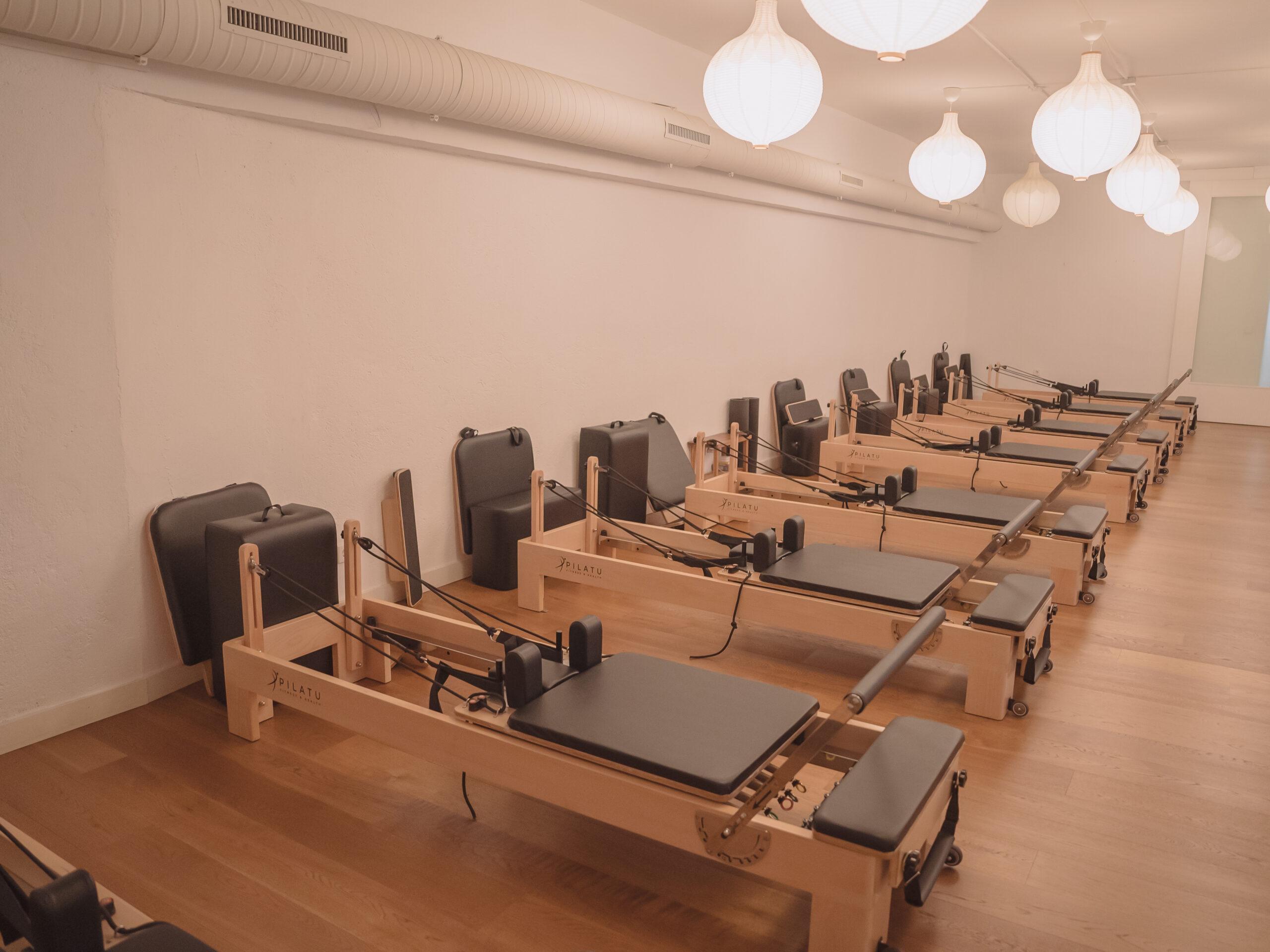
The Reformer is a machine with springs, pulleys and straps in constant motion. Loose clothing is a real problem: it can catch on the springs during footwork, wrap around the straps or get trapped under the carriage as it slides. This is not scaremongering, it is basic physics.
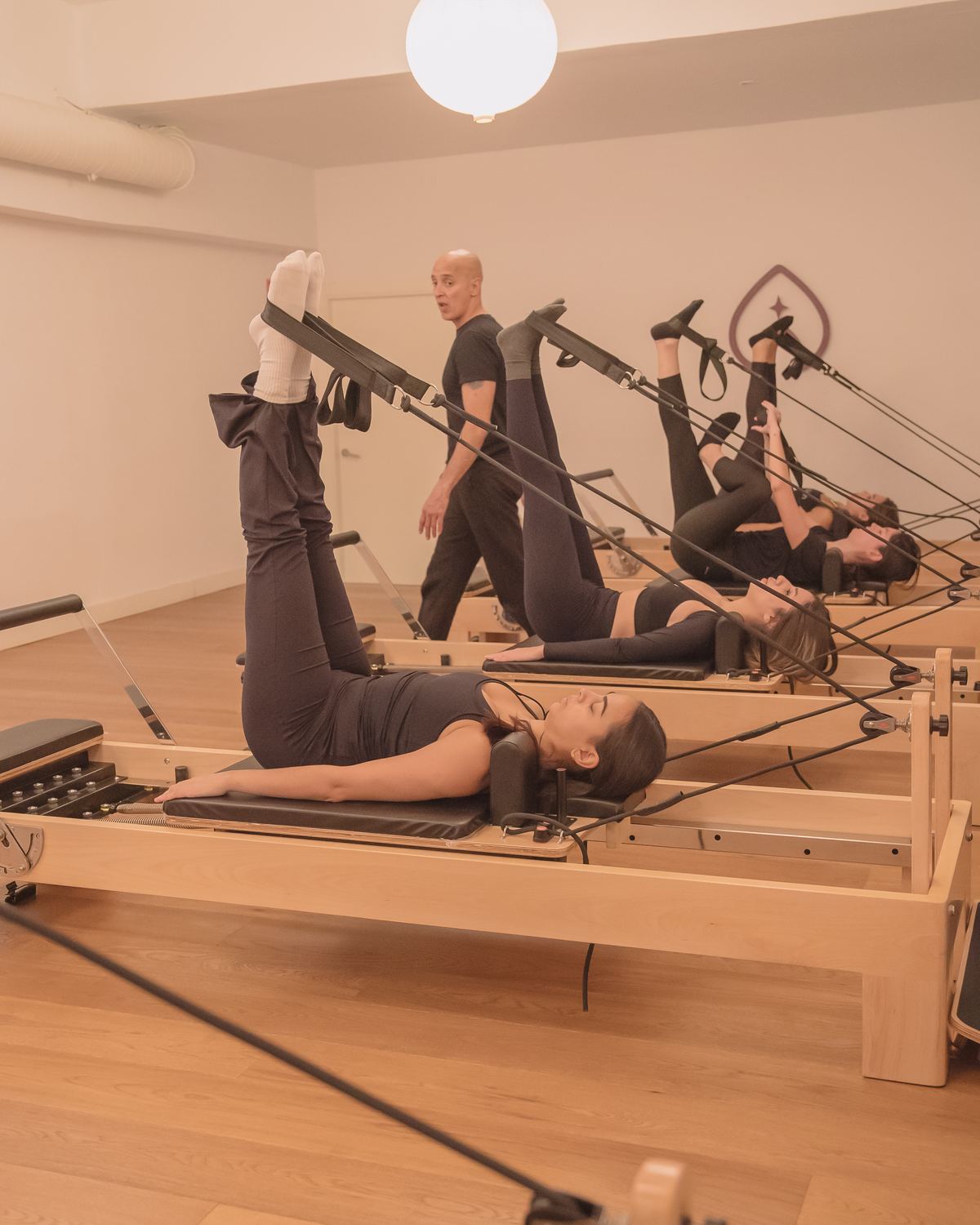
The instructor also needs to see your legs, hips, spine and shoulders to correct you. If you wear a baggy T-shirt that covers the hips or trousers that do not show the line of the leg, there is information they miss and corrections they cannot make. Close-fitting does not mean uncomfortable or tight: it means clothes that follow your body without flapping about.
What to Wear: Recommended Items
Leggings
The most recommended item for Reformer Pilates. Leggings are ideal because they cover the legs down to the ankle, which has two practical advantages: first, they protect the backs of the thighs and calves from contact with the leather or vinyl carriage of the Reformer (which can be uncomfortable in shorts); second, they show the line of the leg clearly to the instructor.
Choose leggings in four-way stretch fabric, that are not see-through when you bend, and with enough hold so they do not slide down during leg exercises.
Fitted T-shirt or sports top
A fitted T-shirt or a training top is ideal. Nothing with a loose waist that rides up when you lie on your back. What the instructor is looking at from above is the position of your ribs, the curve of your spine, whether your shoulders are tense. A baggy T-shirt hides all that information.
A lycra T-shirt, light compression top or simply something that hugs the torso works perfectly.
Sports bra
A medium- or high-support sports bra is the most comfortable. It does not need maximum support as for running, because the impact on the Reformer is low, but it should hold well when you are in inverted or side-lying positions.
What Not to Wear
- Loose or baggy clothing: oversized T-shirts, camisoles, wide tracksuit bottoms. They catch on the springs or hide you from the instructor.
- Shorts: not dangerous, but direct contact between the back of the thigh and the carriage during lying exercises can be uncomfortable or even leave marks.
- Zips, buttons or metal fastenings: they can scratch the Reformer upholstery and are uncomfortable to lie on.
- Jewellery: long earrings, necklaces and wide bracelets can get caught. Small hoops or studs that do not dangle are not a problem.
- Strong perfume: not clothing, but part of the outfit. In a small-group class in an enclosed space with conscious breathing work, an intense perfume can bother the others.
Grip Socks: Essential
Why they are compulsory
In Reformer Pilates you do not wear trainers. The carriage has a vinyl or leather surface that you rest bare or socked feet on, and the feet need to be in direct contact with that surface to control pressure, the arches and muscle activation properly.
Normal socks slip. The carriage slides, and if your feet slip on it you lose control of the movement and increase the risk of injury. Grip socks, also called non-slip socks, have silicone dots or pads on the sole that stick to the surface. The difference in stability is immediate.
Beyond safety, socks protect hygiene: everyone who uses the Reformer during the day shares the same surface, and socks act as a barrier.
What to look for in grip socks
- Silicone dots on both the sole and the toes (for footwork on the toes).
- Breathable fabric, because feet sweat.
- The right size: not loose at the heel and not tight on the toes.
- They do not need to be a specific Pilates brand. There are very functional options at reasonable prices.
Where to buy them in Madrid
You can find grip socks in sports shops such as Decathlon (options from €3-5), in specialist yoga and Pilates shops, or on Amazon. Many Pilates studios also sell them at reception. At Pinar Pilates you can check directly by calling +34 611 994 729.
Hair: A Practical Detail
If you have long hair, tie it back before class. During exercises lying on your back, loose hair gets squashed under the neck and can be uncomfortable. In some exercises with the head raised, hair becomes an obstacle. A hair tie is enough. A low ponytail or a bun works better than a high ponytail if you are going to spend a lot of time lying down.
What to Bring to Class
Apart from your clothes, bring this:
- Water bottle: although Reformer Pilates does not make you sweat as much as a HIIT class, hydration still matters. A small bottle you can keep nearby.
- Grip socks: if it is your first time and you do not have any, let us know in advance to find out whether the studio sells them.
- Hair tie: if you need one.
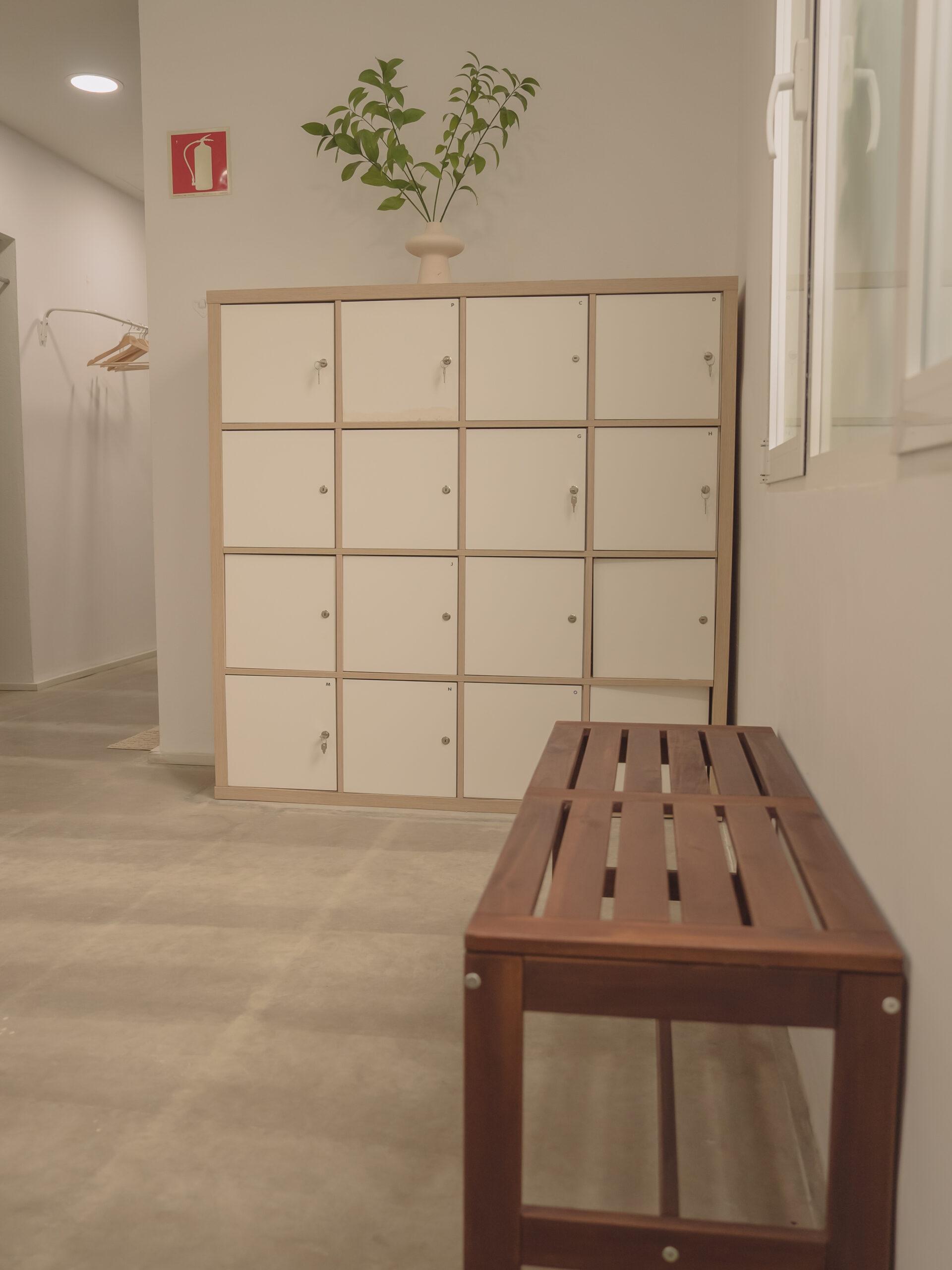
- Nothing else: bags go in the locker. You do not need a mat, towel or any specific equipment. The studio provides the Reformer.
Seasonal Considerations in Madrid
Summer
Madrid in summer can be hot inside the studio even with air conditioning. Go for technical fabrics that breathe: thin lycra leggings or perforated fabrics, sleeveless but fitted tops. Avoid pure cotton, which absorbs sweat but dries slowly and can become heavy and uncomfortable.
Winter
Arriving in winter with a cold body can make the first minutes of class slower. If you feel the cold quickly, bring a light second layer for the first warm-up exercises: a thin lycra jacket or a long-sleeved top you can take off after 10 minutes without interrupting the class. Avoid thick cotton hoodies, which are awkward to manage on the Reformer.
Clothing Guide for Men
The same logic applies. Close-fitting clothes so the instructor can see your alignment and there is no risk of snagging.
- Bottoms: compression tights or fitted running trousers are the best option. If you prefer shorts, make them cycling-style or fitted shorts. Wide tracksuit bottoms are not suitable.
- Top: a fitted technical T-shirt or compression top. A running or functional training T-shirt is perfect.
- Socks: the same grip socks as for women. Just as compulsory, just as necessary.
Frequently Asked Questions
Can I wear normal socks if I do not have grip socks?
It is not advisable. Normal socks slip on the surface of the carriage and make the exercises less controlled and less safe. If it is your first class and you have no time to get some, contact the studio in advance to see whether you can buy them there.
Do I need specific Pilates or branded clothing?
No. You do not need any brand or clothing labelled “for Pilates”. Any close-fitting sportswear works. What matters are the characteristics, not the label: that it holds, that it stretches, that it does not flap about.
Can I buy grip socks at the studio?
It depends on the studio. At Pinar Pilates you can call +34 611 994 729 to confirm availability before your class.
Can I wear trainers?
No. Trainers are not worn in Reformer Pilates. Footwork requires direct contact with the surface of the carriage for the exercises to be effective. Grip socks or bare feet (depending on the studio) are the norm.
Can I wear normal shorts?
Technically yes, if they are fitted. The practical problem is the contact between the back of the thigh and the carriage during lying exercises, which can be uncomfortable. Leggings are more comfortable for most Reformer exercises.
Summary: Your Reformer Pilates Clothing Checklist
- Leggings or fitted tights
- Fitted T-shirt or sports top
- Medium- to high-support sports bra
- Grip socks
- Hair tied back
- Water bottle
No zips, no loose clothing, no dangling jewellery, no trainers.
If you want to know more about what a full session is like before you arrive, read about what Reformer Pilates is or the guide for beginners in Pilates on machines.
Try Your First Class at Pinar Pilates
At Pinar Pilates, at Calle del Pinar 8 (Salamanca district, Madrid), classes have a maximum of 8 people. That means the instructor can see you, correct you and help you from day one, whatever your level.
More than 490 people have rated their experience at Pinar Pilates on Google, with an average of 4.9 out of 5.
If you have any questions about what to wear or how to prepare, call us on +34 611 994 729 and we will explain.
Book your first class at 50% off
The first class costs €15. No commitment. With everything you need to know to arrive prepared.
Pinar Pilates · Salamanca district, Madrid
Your first reformer class, €15
Groups of 8 people maximum, specialist instructors and more than 40 classes a week. Your first class is half price.
Book my first classCalle del Pinar 8, Madrid · Questions? Message us on WhatsApp